Weight Loss Drugs Covered by Insurance: What to Know
Medically reviewed by Dr. Kavya Patel, MD. Pricing is accurate as of August 2026 and subject to change.
Key Takeaways
- Only about 36% of large employers cover GLP-1 drugs for weight loss, coverage depends on your employer's plan, not your insurer's name.
- Medicare now covers Wegovy, Zepbound (KwikPen), and Foundayo for a flat $50/month copay through the Medicare GLP-1 Bridge, running July 2026–December 2027.
- Medicaid coverage varies by state; check your state's preferred drug list directly.
- Tricare covers Wegovy and Zepbound after documented step therapy, but you pay 100% of the negotiated cost, no subsidy applies.
- If insurance says no, manufacturer savings cards, self-pay vials, compounded medication, and HSA/FSA funds are all still on the table.
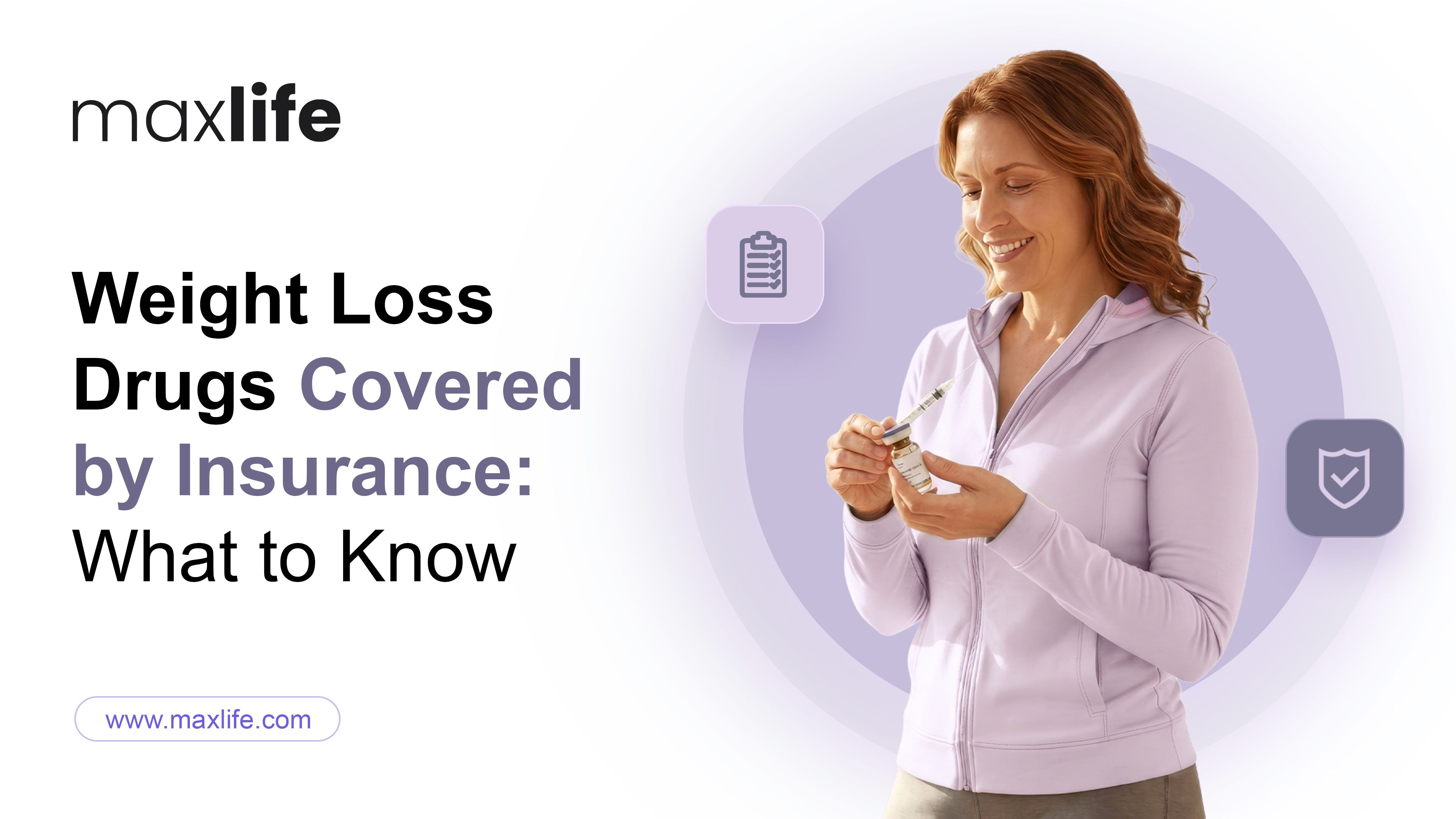
Weight loss drugs covered by insurance exist, but coverage is the exception rather than the rule. Most commercial plans treat weight-loss medication as an excluded benefit, and even plans that do include it attach prior authorization requirements, step therapy conditions, and quantity limits that make approval difficult.
This article covers which drugs are FDA approved for weight loss, what commercial plans, Medicare, Medicaid, and Tricare actually pay for, how to get insurance to cover weight loss medication step by step, and your realistic options if your plan says no.
Quick Answer: Are Weight Loss Drugs Covered by Insurance?
Coverage depends on your specific plan and why the drug is prescribed. Plans are far more likely to cover a GLP-1 medication when it is prescribed for type 2 diabetes than for weight loss alone, because most employers treat weight-loss coverage as an optional benefit they choose not to purchase.
As of 2025, only about 36% of large employers covered GLP-1 medications for weight management, according to the International Foundation of Employee Benefit Plans. Even when a plan includes them, prior authorization, step therapy requiring you to try cheaper drugs first, and quantity limits almost always apply.
People who are denied still have realistic paths forward. Manufacturer savings programs, self-pay vial options, compounded medications through telehealth providers, and your HSA or FSA are all viable routes. The rest of this article walks through each one.
Which Weight Loss Drugs Are FDA Approved?
Insurance coverage, when it exists at all, applies only to FDA-approved products. Here are the medications currently approved by the FDA specifically for chronic weight management or short-term weight loss.
| Medication | Type | Use duration |
|---|---|---|
| Wegovy (semaglutide) | GLP-1 receptor agonist (injection) | Long-term |
| Zepbound (tirzepatide) | GIP/GLP-1 dual agonist (injection) | Long-term |
| Saxenda (liraglutide) | GLP-1 receptor agonist (injection) | Long-term |
| Foundayo (orforglipron) | GLP-1 receptor agonist (oral pill) | Long-term |
| Contrave (bupropion/naltrexone) | Non-GLP-1 combination | Long-term |
| Qsymia (phentermine/topiramate) | Non-GLP-1 combination | Long-term |
| Orlistat (Xenical / Alli) | Lipase inhibitor | Long-term |
| Imcivree (setmelanotide) | MC4R agonist | Long-term |
| Phentermine | Stimulant | Short-term |
| Benzphetamine | Stimulant | Short-term |
| Diethylpropion | Stimulant | Short-term |
| Phendimetrazine | Stimulant | Short-term |
A separate category exists for drugs prescribed off-label for weight loss. Ozempic and Mounjaro contain the same active ingredients as Wegovy and Zepbound respectively, but they are approved for type 2 diabetes, not weight management. Metformin and topiramate are also sometimes prescribed off-label for weight. The coverage consequence is significant: insurers are less likely to pay for a drug used for a purpose the FDA has not approved it for, and many plans explicitly exclude off-label weight-loss prescriptions.
What Commercial and Employer Plans Cover
Most people in the US are covered through employer-sponsored commercial insurance, and this is where weight loss drugs covered by insurance vary the most. Major insurers including Blue Cross Blue Shield, Cigna, Aetna, UnitedHealthcare, Kaiser Permanente, Elevance, Centene, and Molina may cover weight-loss medication, but whether your specific plan does depends almost entirely on what your employer purchased, not which insurer's name appears on your card.
Four questions determine what you actually pay:
- Is the drug on your plan's formulary?
- Is it covered for your specific diagnosis?
- What tier is it on?
- Have you met your deductible?
One point that surprises most people: on a high-deductible plan, "covered" can still mean paying several hundred dollars a month. If your deductible is $3,000 and your plan covers Wegovy once you reach it, you are paying full pharmacy price for most of the year before coverage changes anything. Coverage on paper and meaningful cost reduction are two different things.
Does Medicare Cover Weight Loss Drugs?
Medicare has historically been barred from covering medications prescribed solely for weight loss. Standard Part D coverage for GLP-1 medications applies when they are prescribed for type 2 diabetes or another qualifying medical condition, not for weight management alone.
Medicare GLP-1 Bridge (July 2026 - December 2027)
CMS launched the Medicare GLP-1 Bridge on July 1, 2026. This time-limited program gives eligible Part D beneficiaries access to Wegovy, Zepbound (KwikPen only), and Foundayo for a flat $50 monthly copay. The $50 does not count toward your deductible or your yearly out-of-pocket maximum, according to CMS.
Eligibility requires active Part D coverage, age 18 or older, meeting BMI-based clinical criteria, and not currently receiving a GLP-1 through your Part D plan. The program excludes beneficiaries with a diagnosis of type 2 diabetes or moderate-to-severe obstructive sleep apnea, who may already qualify for GLP-1 coverage through standard Part D. The Bridge runs through December 2027 and is not a permanent expansion of Medicare coverage.
BALANCE Model (Medicare Part D)
The BALANCE payment model, which was intended to expand ongoing Medicare Part D coverage for GLP-1 medications, was indefinitely postponed in April 2026. CMS required at least 80% of Part D plans to participate, and that threshold was not met. No successor program is currently confirmed for the period after the Bridge expires in 2027.
Does Medicaid Cover Weight Loss Drugs?
There is no single answer because there are 56 separate Medicaid programs across the states, the District of Columbia, and the territories, each with its own formulary and preferred drug list. Some states list Wegovy as a covered medication, typically with prior authorization and quantity limits. Coverage for GLP-1s prescribed for type 2 diabetes is near-universal across Medicaid programs; coverage for obesity varies significantly by state.
The BALANCE model's Medicaid component is proceeding separately from the Medicare Part D delay. CMS is working with participating states and manufacturers to expand GLP-1 access through negotiated pricing, with participation voluntary for both states and manufacturers. If your state participates, this may expand what your Medicaid plan covers and at what monthly cost.
To find out what your state's Medicaid covers, check your state's preferred drug list directly. That is the only reliable answer.
Does Tricare Cover Weight Loss Drugs?
Tricare publishes specific prior authorization criteria for weight-loss GLP-1 coverage. Wegovy and Zepbound may be covered under eligible Tricare plans if you meet all of the following:
- BMI of 30 or higher, or 27 or higher with a weight-related condition such as hypertension or sleep apnea
- Six months of documented diet and exercise attempts without achieving the desired outcome
- A prior trial of and failure on at least one other FDA-approved oral weight-loss medication such as Qsymia or Contrave, or a documented contraindication to those medications
Note that Tricare does not apply standard cost-sharing to weight loss drugs. According to tricare.mil, you pay 100% of the negotiated cost even with an approved prior authorization, this is not the same as paying list price, since Tricare's negotiated rates apply. Through Tricare Pharmacy Home Delivery, the 2026 brand-name copay for a 90-day supply is $44. For type 2 diabetes, Tricare may also cover Trulicity, Ozempic, Mounjaro, and Victoza under separate criteria without the weight-management-specific step therapy above.
How to Get Insurance to Cover Weight Loss Medication
Getting approval for a weight-loss drug through insurance is a paperwork process. It takes weeks, it may end in a denial, and following up persistently matters more than luck. Knowing how to get insurance to cover weight loss medication is mostly about documentation and preparation. The four steps below give you the strongest possible case before you submit anything.
Step 1: Check Your Formulary
Before submitting anything, look up your plan's formulary. This is the official drug list that determines what your insurance will pay for. Check whether weight-loss medications appear at all, whether the specific drug your prescriber recommended is listed, and whether it comes with conditions such as prior authorization or step therapy requirements. If the drug is excluded entirely, ask your prescriber whether you qualify under a different approved indication, such as diabetes or cardiovascular risk reduction.
The fastest shortcut: call the member services number on the back of your insurance card and ask directly whether your specific drug is covered for weight management under your plan. Ask them to confirm whether any clinical criteria are attached. Get the answer documented.
Step 2: Build Your Documentation
Insurers require specific evidence before approving a weight-loss GLP-1. Gather the following before your prescriber submits the request:
- Your current BMI, typically 30 or higher, or 27 or higher with a weight-related condition such as hypertension, high cholesterol, prediabetes, or sleep apnea
- Documentation of prior weight-loss attempts through diet and exercise
- Records of other weight-loss medications you have tried, with outcomes
- Clinical notes from your prescriber about your health history and current risk profile
Some plans also require enrollment in a supervised weight-management program as a condition of approval. Ask your prescriber whether your plan has this requirement before the request goes in. Missing documentation is the most common reason for a first denial, and the easiest to fix in advance.
Step 3: Submit Prior Authorization
Prior authorization requires your prescriber to document medical necessity before your plan will agree to pay. Your prescriber submits the request rather than you, but you help by making sure all documentation is in order before they do. The form typically asks for your diagnosis, BMI, prior treatment history, and clinical justification for this specific medication over cheaper alternatives.
Some plans require step therapy, meaning you must try and fail on a lower-cost drug before the plan will approve a more expensive one. If your plan has this requirement, ask your prescriber which drugs qualify and whether you have documentation of having tried any of them. After submission, follow up. An outstanding request does not automatically progress.
Step 4: Appeal If You Are Denied
A denial is not a final answer. Request the written denial letter, which must state the specific reason your claim was rejected. Then:
- Ask your prescriber for a letter of medical necessity that directly addresses the stated denial reason. If the denial cited insufficient documentation of prior treatment, the letter should detail what was attempted and why it was inadequate.
- Write your own statement describing the real functional and health impact of your weight and the risks of going untreated.
- File the internal appeal as quickly as possible. Appeal windows start from the denial date and are typically between 60 and 180 days depending on your plan.
- If the internal appeal also fails, pursue external review. In most states, an independent third party reviews the decision and their determination is binding on the insurer.
The full process often takes four to eight weeks. Many people complete it and still receive a denial. If that is where you end up, the next section covers what remains.
What to Do If Your Insurance Says No
Many people go through the full process, including an appeal, and still end up paying cash. That outcome is common, and it is not the end of the road. Three paths remain.
Manufacturer Savings Programs
Two options exist, and they work differently.
Copay savings cards from Novo Nordisk and Eli Lilly can bring out-of-pocket costs down to as little as $25 a month. These require commercial insurance that already covers the drug, which rules out most people who have been denied for weight-loss coverage. They are not available to Medicare or Medicaid patients.
Zepbound self-pay vials through Eli Lilly's Self Pay Journey Program on LillyDirect are available without insurance. Current 2026 pricing starts at $299 a month for the 2.5 mg dose, $399 for 5 mg, and $449 for higher doses. These rates apply when you refill within 45 days. Prices and eligibility rules are subject to change; verify at lilly.com before relying on these figures.
Compounded Medication and Telehealth
Compounded semaglutide and compounded tirzepatide contain the same active ingredients as their brand-name counterparts. They are prepared by licensed compounding pharmacies and require a prescription from a licensed provider. Because they bypass brand-name manufacturing and distribution costs, the monthly price is substantially lower.
One point to state clearly: compounded medications are not FDA-approved and are not covered by insurance. This is a cash-pay route by definition, not a coverage workaround. The FDA does not review compounded medications for efficacy, safety, or manufacturing consistency the way it reviews brand-name drugs.
Before committing to any provider, check the following:
- Is the provider licensed in your state?
- Are the pharmacy partners named and independently verifiable?
- Is the total monthly price transparent, including supplies and shipping?
- Is there a long-term contract or a cancellation fee?
Providers like MaxLife name their licensed pharmacy partners, include supplies and free overnight shipping in the monthly price, and do not require long-term contracts.
Use Your HSA or FSA
This is the most underused option on this page. When your insurance declines to cover a weight-loss drug, it does not stop being a qualified medical expense under IRS rules. Prescription medications are eligible expenses under both health savings accounts and flexible spending accounts, which means you can pay with pre-tax dollars even when your plan will not cover the cost.
MaxLife plans are FSA and HSA eligible. If your insurance denies coverage, using pre-tax account funds reduces your effective cost by your marginal tax rate before you even start comparing prices. Keep your prescription and all receipts. Your plan administrator may ask for documentation if you use HSA or FSA funds for a prescription your insurance declined. IRS Publication 502 defines qualified medical expenses if you need the reference.
Is Paying Cash Actually Cheaper Than Using Insurance?
For some people, yes. The math is worth doing honestly.
On a high-deductible commercial plan, a covered GLP-1 can still cost several hundred dollars a month until you reach your deductible, plus the weeks of waiting that prior authorization adds before you can fill your first prescription. There is also no guarantee you reach the end of that process with an approval.
Compare that to transparent cash pricing. At MaxLife, compounded semaglutide starts at $89 a month and compounded tirzepatide starts at $120 a month on a 3-month starter package, then $155 and $195 a month after that. Both prices include medication, supplies, licensed provider review, and free overnight shipping. No prior authorization required.
The conclusion is not that cash pay always wins. For someone with genuinely good coverage and a copay card bringing their monthly cost to $25, insurance is the better deal. For someone on a high-deductible plan facing a months-long approval process with real odds of a denial, cash pay can be both cheaper and faster. The number worth comparing is your actual out-of-pocket cost under insurance, accounting for where you are in your deductible, not the sticker price on your plan's drug list.
Start Without Waiting on Insurance
The insurance approval process can take weeks and carries a real chance of ending in a no. Checking eligibility through MaxLife takes minutes, requires no prior authorization, and comes with a clear price before you commit.
Compounded tirzepatide at MaxLife starts at $120 a month on a 3-month starter package, then $195 a month, with medication, supplies, licensed provider review, and free overnight shipping included. Plans are FSA and HSA eligible, so a coverage denial does not have to mean paying with fully taxed income. No long-term contract is required.
Conclusion
Whether weight loss drugs covered by insurance apply to your plan depends on your specific coverage and the diagnosis attached to your prescription. Here is where each payer stands:
- Commercial: Coverage varies by employer, not insurer. Most plans exclude weight-loss medications or attach prior authorization and step therapy requirements.
- Medicare: Covers GLP-1s through the Bridge program at a $50 monthly copay for eligible Part D enrollees through December 2027. Standard Part D does not cover weight loss.
- Medicaid: Varies by state and is expanding through the BALANCE model in participating programs.
- Tricare: Covers Wegovy and Zepbound after step therapy is met, for eligible plan types. You pay 100% of the negotiated cost with no Tricare subsidy on weight loss drugs.
If coverage does not come through, savings programs, self-pay options, and your HSA or FSA are all still on the table. For a full overview of available GLP-1 weight loss programs, MaxLife covers both semaglutide and tirzepatide without requiring insurance or prior authorization.
Weight Loss Drug Insurance FAQs
Why does insurance cover Ozempic but not Wegovy?
Ozempic is FDA approved for type 2 diabetes, and diabetes coverage is nearly universal across commercial insurance, Medicare, and Medicaid. Wegovy contains the same active ingredient, semaglutide, but at a higher dose and with an FDA approval specifically for weight management. Most plans treat weight loss as an excluded or optional benefit, so the approved indication of the drug determines which coverage rules apply. Prescribing Ozempic off-label for weight loss does not turn it into a covered weight-loss drug. What matters to the insurer is the diagnosis code on the prescription, not the molecule in the pen.
What BMI do you need for insurance to cover weight loss medication?
Most plans that cover weight-loss medication require a BMI of 30 or higher, or 27 or higher with at least one weight-related condition such as hypertension, sleep apnea, high cholesterol, or prediabetes. Tricare uses these same thresholds. The Medicare GLP-1 Bridge has BMI-based eligibility criteria detailed on CMS.gov. Some plans set stricter requirements or require documented evidence of prior weight-loss attempts in addition to the BMI threshold.
Is compounded tirzepatide covered by insurance?
No. Compounded tirzepatide is not FDA-approved and is not covered by any insurance plan. It is a cash-pay medication by definition. The fact that it contains the same active ingredient as Zepbound does not make it eligible for insurance reimbursement. HSA and FSA funds can still be used to pay for it as a prescribed medication under IRS rules, but insurance coverage is not available regardless of your plan or diagnosis.
Can I use my HSA or FSA if my insurance denies coverage?
Yes. A prescription medication denied by your insurance is still a qualified medical expense under IRS Publication 502, which means it remains eligible for payment with health savings account or flexible spending account funds. MaxLife plans are FSA and HSA eligible. Keep your prescription and all receipts in case your account administrator requests documentation.
How long does prior authorization for a GLP-1 take?
Standard prior authorization requests typically take between 3 and 10 business days, though urgent requests can be processed faster. That timeline does not include appeals, which can add weeks or months. Many people spend four to eight weeks navigating the full process, including an initial submission, a denial, and an internal appeal. Following up proactively reduces delays, but there is no guaranteed timeline.
What should I do if my appeal is denied?
Request the denial reason in writing. You then have the right to pursue external review in most states, where an independent organization makes a final binding determination. Your state insurance commissioner's office can direct you to the external review process. In parallel, ask your prescriber whether a different medication, indication, or additional documentation might support a different outcome if you reapply in a future plan year.
Skip the Wait. Check Your Eligibility With MaxLife
Compounded medications are not FDA-approved and are not covered by insurance. Pricing and availability are subject to change.
Check Your EligibilityThis article is for informational purposes only and is not a substitute for professional medical advice, diagnosis, or treatment. Insurance coverage, program eligibility, and pricing described here - including the Medicare GLP-1 Bridge, Tricare criteria, and Medicaid formularies, are subject to change; verify current details with your insurance provider, CMS, Tricare, or the relevant manufacturer before making treatment decisions.
Sources
- International Foundation of Employee Benefit Plans (IFEBP): 2025 survey on employer GLP-1 coverage
- CMS/Medicare: Medicare GLP-1 Bridge fact sheet
- CMS: Medicare GLP-1 Bridge, information for Part D plans
- Tricare: 2026 Pharmacy Program costs
- IRS Publication 502: Medical and Dental Expenses
- Eli Lilly: LillyDirect Self Pay Journey Program
- FDA: Drugs@FDA database (approval status lookup)