Tirzepatide vs Saxenda: 7 Differences to Know
Medically reviewed by Dr. Kavya Patel, MD. Pricing is accurate as of August 2026 and subject to change.
Key Takeaways
- Tirzepatide and Saxenda have never been tested head to head. All comparisons come from separate trials with different designs and durations.
- SURMOUNT-1 found roughly 21% average body weight loss on tirzepatide 15mg at 72 weeks. SCALE found roughly 8% on Saxenda 3.0mg at 56 weeks.
- Tirzepatide is injected once a week. Saxenda requires a daily injection.
- Saxenda is FDA-approved for adolescents 12 and older. Tirzepatide for weight management is adults only.
- Both carry a boxed warning for thyroid C-cell tumors and are contraindicated with a personal or family history of MTC or MEN 2.
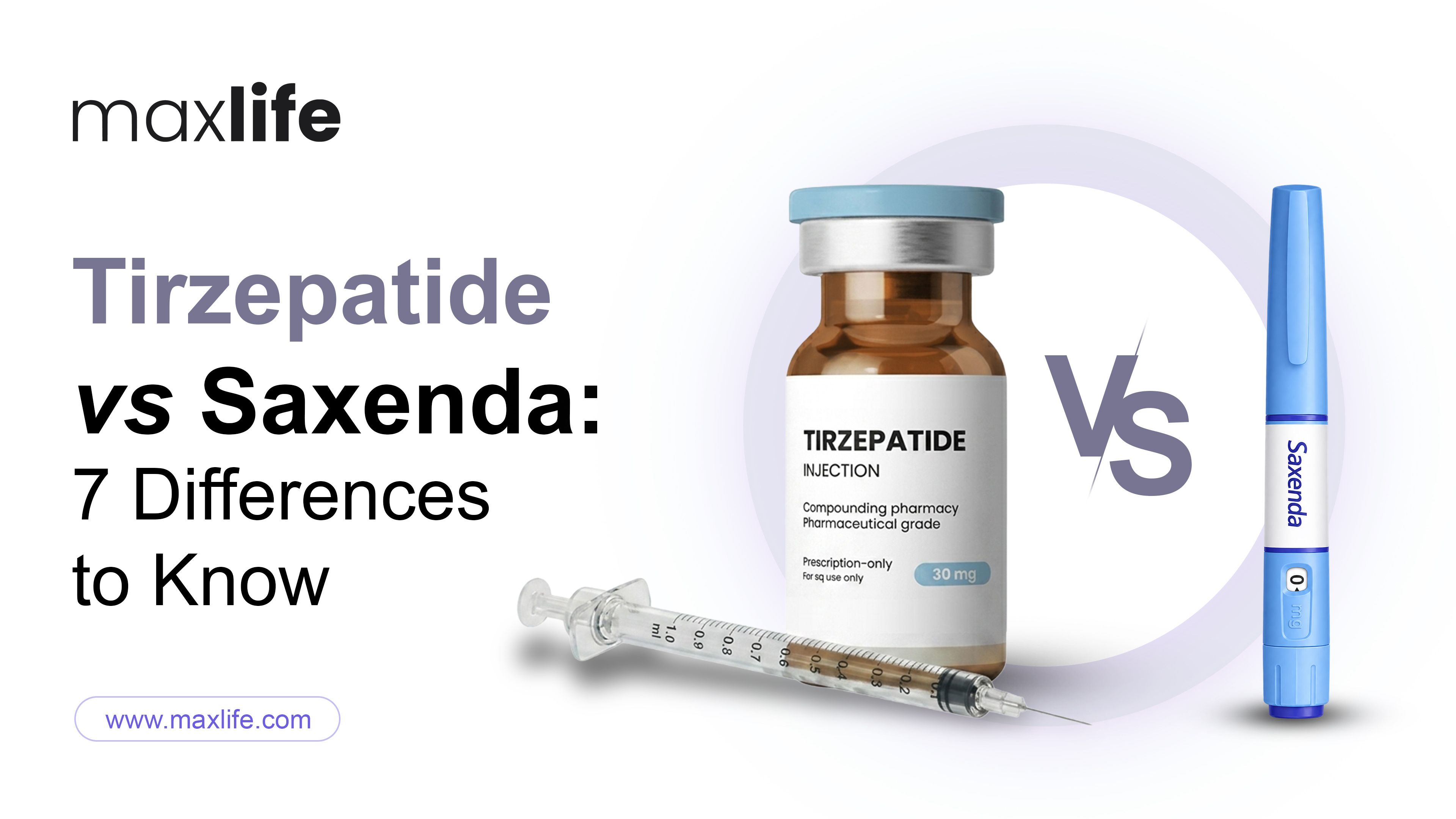
In the tirzepatide vs Saxenda comparison, tirzepatide activates two hormone receptors while Saxenda activates one, and tirzepatide is injected once a week while Saxenda requires a daily injection. Trial data point to roughly 21 percent average body weight loss on tirzepatide versus about 8 percent on Saxenda, though the two have never been tested head to head in a single study.
Below you will find seven key differences, what the evidence says about switching, and how to choose between them for your situation.
Quick Answer: Which Is Better, Tirzepatide or Saxenda?
Tirzepatide produces substantially more weight loss in trials and requires one injection per week rather than seven. Those are meaningful advantages for most adults. Saxenda has genuine edges of its own: it is approved for adolescents aged 12 and older, which tirzepatide is not; it has a longer track record as a chronic weight management medication; and its shorter duration of action means side effects clear faster if it does not suit you.
The honest boundary is this: tirzepatide and Saxenda have never been tested head to head. Every number in this article comes from separate placebo-controlled trials with different designs and durations. The choice between them is a clinical decision that belongs with a prescriber who knows your health history, age, and tolerance.
Tirzepatide vs Saxenda at a Glance
| Category | Tirzepatide | Saxenda |
|---|---|---|
| Active ingredient | Tirzepatide | Liraglutide |
| Brand names | Mounjaro (diabetes), Zepbound (weight loss) | Saxenda (weight loss), Victoza (type 2 diabetes) |
| Medication class | Dual GIP and GLP-1 receptor agonist | GLP-1 receptor agonist |
| FDA-approved uses | Chronic weight management (Zepbound); type 2 diabetes (Mounjaro) | Chronic weight management (Saxenda); type 2 diabetes and cardiovascular risk (Victoza) |
| Approved for adolescents | No. Adults only for weight management | Yes. Aged 12 and older, at least 132 lbs, obesity |
| Injection frequency | Once weekly | Once daily |
| Device type | Single-dose pen; also available in vials | Multi-dose pen (pen needles sold separately) |
| Dose range | 2.5 mg to 15 mg weekly | 0.6 mg to 3.0 mg daily |
| Average weight loss | ~21% body weight (15 mg, 72 weeks) | ~8% body weight (3.0 mg, 56 weeks) |
Figures come from separate placebo-controlled trials (SURMOUNT-1 for tirzepatide and SCALE for liraglutide) not a direct comparison. The trials differed in duration, population, and design.
1. They Have Different FDA-Approved Uses
Both drugs contain active ingredients sold under two brand names each, and understanding which brand is which prevents most of the confusion in this comparison.
Liraglutide appears as Saxenda for chronic weight management in adults and adolescents, and as Victoza for type 2 diabetes in adults and for reducing the risk of major cardiovascular events in certain patients. The molecule is identical; the approved indication and label differ between them.
Tirzepatide follows the same pattern. Zepbound is the brand approved for chronic weight management and obstructive sleep apnea in adults. Mounjaro is the brand approved for type 2 diabetes. Prescribing Mounjaro to someone without type 2 diabetes is off-label. Which brand name appears on your prescription determines what the label supports, what the prescriber can justify, and what insurance is most likely to cover.
The practical point: if weight management is your goal, Saxenda and Zepbound are the brands to compare. Mounjaro and Victoza are the diabetes versions of the same molecules.
2. Different People Are Eligible
The eligibility difference between these two medications is a real decision factor, not a footnote.
Saxenda is approved for adults with a BMI of 30 or greater, or a BMI of 27 or greater with at least one weight-related condition such as high blood pressure, high cholesterol, or type 2 diabetes. It is also approved for adolescents aged 12 and older who weigh at least 132 pounds and are considered obese, per the Saxenda prescribing information.
Tirzepatide for weight management is approved for adults only. Zepbound has no pediatric indication.
The consequence is direct. If you are under 18, Saxenda is the approved option of the two. Tirzepatide's efficacy numbers are real, but they are not relevant when the medication is not approved for the patient's age group. A parent researching injectable options for a teenager should start with that eligibility fact and discuss appropriate options with a pediatric specialist.
3. They Work on Different Hormones
Both drugs work by mimicking natural gut hormones called incretins. When you eat, your gut releases these hormones to tell the pancreas to produce insulin, reduce how much sugar the liver releases into the blood, slow food moving through the stomach, and act on appetite centers in the brain. Both Saxenda and tirzepatide replicate those signals in ways that lower blood sugar and reduce hunger.
The difference is how many receptors each drug targets. Saxenda mimics GLP-1 only, acting on one receptor type. Tirzepatide is a dual agonist: it activates both GLP-1 and GIP receptors at the same time. GIP is a second incretin hormone with its own effects on insulin secretion, fat tissue, and appetite regulation.
Activating two receptors rather than one is the underlying biological reason tirzepatide consistently produces larger effects on appetite and body weight in clinical trials. The dual mechanism explains the efficacy gap.
4. Tirzepatide Produces More Weight Loss
Tirzepatide and Saxenda have never been compared in a head-to-head clinical trial. All numbers below come from separate studies with different designs, durations, and populations. The figures are indicative, not a direct contest.
In the SURMOUNT-1 trial, adults without type 2 diabetes taking tirzepatide 15 mg lost a mean of roughly 21 percent of body weight over 72 weeks. Lower doses produced around 13 to 16 percent weight loss.
In the SCALE trial, adults without type 2 diabetes taking liraglutide 3.0 mg lost an average of about 8 percent of body weight over 56 weeks.
One important difference in design: the tirzepatide trial ran 72 weeks, the Saxenda trial ran 56 weeks. A longer trial window tends to produce more total weight loss, which means comparing these numbers directly overstates tirzepatide's advantage to some degree.
Even adjusting for that, the gap between approximately 21 percent and approximately 8 percent is large enough that the direction of the comparison is not seriously in doubt. In the Saxenda vs tirzepatide question on weight loss, tirzepatide's results are substantially stronger.
5. One Injection a Week vs One a Day
Tirzepatide stays active in the body for approximately five days after injection. That long half-life is why it only needs to be given once weekly, on the same day each week, at any time of day, with or without food.
Saxenda must be injected once every single day. The difference in annual injection count is significant: 52 doses a year on tirzepatide versus 365 on Saxenda.
Injection burden is a documented adherence factor. Missed doses are one of the most common reasons people drift off injectable weight management medications, and weekly regimens are consistently easier to maintain than daily ones in real-world use.
Saxenda's shorter action does have one practical advantage: if side effects are significant, stopping Saxenda leads to faster resolution. Tirzepatide's longer half-life means it clears the body more slowly once you stop.
6. Different Pens, Different Supplies
Tirzepatide brand pens are single-dose devices with the needle already attached. Each pen is used once and then discarded. Tirzepatide is also available as a vial, including compounded vials through telehealth providers, which require your own syringes and needles and proper sterile technique for drawing the dose.
Saxenda comes as a multi-dose pen containing 18 mg of liraglutide in a 3 mL cartridge. You use the same pen for multiple doses, attaching a new pen needle before each injection and purchasing the needles separately. A Saxenda pen must never be shared with another person, even with a needle change, because of the risk of bloodborne infection.
The travel difference is practical. One tirzepatide pen covers an entire week. A Saxenda user on a seven-day trip packs seven separate doses plus needles, a sharps container, and appropriate cold storage, which is considerably more to manage.
7. Cost and Coverage Differ
Both medications are expensive at brand-name retail pricing, and weight management drugs are frequently excluded from insurance plan benefits or subject to prior authorization requirements.
Brand-name Saxenda typically has a lower retail price than brand-name tirzepatide, though neither is inexpensive without coverage. Medicare does not generally cover weight management medications under Part D. Some Medicaid programs and private plans cover one or both, depending on state rules and plan design.
Compounded tirzepatide through a telehealth provider changes the calculation for many people. Out-of-pocket costs are often substantially lower than brand-name pricing, starting at $120 a month at MaxLife. Compounded medications are not FDA-approved and are not covered by insurance, so the comparison with a brand covered by a plan may go in either direction.
When comparing total monthly cost, include provider fees and account for the number of injections required per month. The supplies associated with a daily medication add up over time in ways that a weekly one does not.
Saxenda vs Tirzepatide for Weight Loss: Which Should You Choose?
The answer depends on your age, health history, tolerance, and the trade-offs that matter most to you.
If you are an adult whose priority is maximum weight loss with fewer injections, the trial data favour tirzepatide. The efficacy gap is substantial, and the dosing burden difference is dramatic.
If you are under 18, Saxenda is the approved option of the two. That eligibility fact settles the comparison for this group, regardless of the efficacy numbers.
If you have had trouble tolerating GLP-1 side effects in the past, Saxenda's shorter duration of action may be easier to manage. Because it clears the body faster, stopping it if side effects are severe produces faster relief than stopping a weekly medication would.
If cost is the deciding factor, compare the all-in monthly price of the compounded tirzepatide route against Saxenda's current pricing, including any manufacturer savings programs your prescriber can access.
In the Saxenda vs tirzepatide decision, all of these factors intersect. The final answer belongs with a licensed prescriber who knows your complete picture.
Can You Switch From Saxenda to Tirzepatide?
Switching from Saxenda to tirzepatide is common in clinical practice, particularly for people who have plateaued on Saxenda or want to reduce injection frequency. The switch is clinically feasible.
There is no standard dose conversion between the two medications. Even someone who has been on Saxenda's full 3.0 mg dose for an extended period will almost certainly start tirzepatide at the 2.5 mg initiation dose and titrate upward from there. The 2.5 mg dose is the required starting point for tirzepatide regardless of prior treatment. Your prescriber sets the timing of the changeover and the titration schedule.
The two medications should never be taken at the same time. Both act on GLP-1 receptors, and combining them increases the risk of nausea, vomiting, and diarrhea without providing additional clinical benefit. There is no indication for overlapping them.
Do not stop Saxenda and start tirzepatide on your own. The transition requires prescriber guidance to manage the timing, monitor your response, and account for your full medication list.
Side Effects and Safety Warnings
Both medications most commonly cause nausea, vomiting, diarrhea, constipation, and decreased appetite. These effects are typically worst when starting treatment or after a dose increase and tend to ease over several weeks as the body adjusts. Slow, stepwise dose escalation is the standard clinical approach to reducing their severity.
Both Saxenda and tirzepatide carry a boxed warning about thyroid C-cell tumors observed in rodent studies. This has not been shown to occur in humans, but both are absolutely contraindicated for anyone with a personal or family history of medullary thyroid carcinoma or multiple endocrine neoplasia syndrome type 2. Both conditions are rare but the contraindication applies without exception.
Both also carry warnings for pancreatitis, gallbladder disease, acute kidney injury, and low blood sugar when combined with insulin or insulin secretagogues.
One tirzepatide-specific point: tirzepatide can reduce the effectiveness of oral hormonal contraceptives due to its effect on gastric emptying. The prescribing information recommends switching to a non-oral contraceptive method or adding a barrier method for four weeks after starting tirzepatide and for four weeks after each dose increase. Non-oral hormonal contraceptives are not affected by this interaction.
How Does Semaglutide Compare?
Semaglutide targets the GLP-1 receptor only, placing it in the same mechanistic category as Saxenda. The key difference is that semaglutide is injected once weekly rather than daily and produces substantially more weight loss than liraglutide in trials.
In clinical studies of weekly semaglutide for weight management, average body weight reductions have run around 15 to 17 percent. That puts it in the middle: considerably stronger than Saxenda on weight outcomes, and generally associated with somewhat fewer or less intense gastrointestinal side effects than tirzepatide at comparable stages of treatment, while tirzepatide still leads on average results.
For people looking at a lower-cost weekly option, compounded semaglutide at MaxLife starts at $89 a month through the quarterly plan.
Get Tirzepatide With Medical Guidance
Choosing between injectable weight management options depends on your age, health history, tolerance, and budget, exactly the factors a licensed provider evaluates before making a recommendation. MaxLife offers a provider-guided program for compounded tirzepatide that includes eligibility review, a titration schedule starting from the 2.5 mg initiation dose, and ongoing support for side effects. The program is available for adult weight management only.
Disclaimer: MaxLife does not treat type 2 diabetes and does not offer tirzepatide to patients under 18.
Conclusion
In the tirzepatide vs Saxenda comparison, tirzepatide activates two receptors instead of one, requires one injection per week instead of seven, and produced roughly 21 percent average body weight loss in trials versus about 8 percent for Saxenda, though the two have never been compared directly. Saxenda's genuine advantages are its approval for adolescents aged 12 and older and the faster clearance of side effects when it is stopped. Both carry the same boxed warning for thyroid C-cell tumors and produce similar gastrointestinal side effects.
The right choice belongs to a licensed prescriber. For adults managing weight, a GLP-1 program through MaxLife offers provider-guided access to tirzepatide.
Tirzepatide vs Saxenda FAQs
Is tirzepatide stronger than Saxenda?
Trial data indicate tirzepatide is substantially more effective for weight loss. In SURMOUNT-1, people on tirzepatide lost a mean of roughly 21 percent of body weight at 15 mg over 72 weeks. In the SCALE trial, people on Saxenda lost an average of about 8 percent over 56 weeks. The two have never been tested head to head, so this comparison draws from separate studies with different durations and populations. Even accounting for those differences, the direction is not in doubt: tirzepatide produces meaningfully more weight loss.
Can I switch from Saxenda to tirzepatide, and what dose do I start on?
Yes, switching is feasible and common, particularly for people who have plateaued on Saxenda. There is no standard dose conversion. Most people starting tirzepatide after Saxenda begin at the 2.5 mg initiation dose regardless of the Saxenda dose they were on, and then titrate upward over several weeks according to their prescriber's schedule. Do not stop Saxenda and start tirzepatide on your own. The transition needs to be managed with your full medication list and health history in view.
Can you take tirzepatide and Saxenda together?
No. Both act on GLP-1 receptors, and combining them increases the risk of nausea, vomiting, and diarrhea without providing additional clinical benefit. There is no indication for using them simultaneously. If you are switching from Saxenda to tirzepatide, your prescriber determines the timing so there is an appropriate gap between stopping one and starting the other.
Why am I not losing weight on Saxenda?
Several factors can limit results on Saxenda. Some people do not tolerate or reach the full 3.0 mg dose, and at lower doses weight loss tends to be more modest. Weight plateaus are also common on any GLP-1 medication after several months of treatment. Diet, physical activity, and individual metabolic factors all affect outcomes. If you have been at the target dose for several months and progress has stalled, discuss it with your prescriber. Switching to a dual agonist such as tirzepatide is one option worth raising.
Is Saxenda cheaper than tirzepatide?
Brand-name Saxenda typically costs less at retail than brand-name tirzepatide, though both are expensive without coverage. Compounded tirzepatide through a telehealth provider can bring the monthly cost well below brand Saxenda for many people, starting at $120 a month at MaxLife. Compounded medications are not FDA-approved and are not covered by insurance. When comparing costs, factor in provider fees and the supplies associated with a daily versus weekly medication, since pen needles and more frequent injection schedules add to Saxenda's total cost of use.
Is Saxenda or tirzepatide better for teenagers?
For patients under 18, Saxenda is the approved option of the two. Saxenda is FDA-approved for adolescents aged 12 and older who weigh at least 132 pounds and have obesity. Tirzepatide is not approved for weight management in anyone under 18. Tirzepatide produces more weight loss in adults, but that advantage is not relevant when the medication is not indicated for the patient's age group. Adolescent weight management should be directed by a pediatric specialist or adolescent medicine provider.
Get Tirzepatide With Medical Guidance
Compounded medications are not FDA-approved and are not covered by insurance. Pricing and availability are subject to change.
Check Your EligibilityThis article is for informational purposes only and is not a substitute for professional medical advice, diagnosis, or treatment. Tirzepatide and Saxenda are prescription medications that have not been compared in a head-to-head clinical trial. Figures cited here come from separate studies. Do not start, stop, or switch between them without guidance from a licensed prescriber. MaxLife does not treat type 2 diabetes and does not offer tirzepatide to patients under 18.
Sources
- New England Journal of Medicine: "Tirzepatide Once Weekly for the Treatment of Obesity" (SURMOUNT-1)
- New England Journal of Medicine: "A Randomized, Controlled Trial of 3.0 mg of Liraglutide in Weight Management" (SCALE)
- FDA: Saxenda prescribing information (adolescent indication, dosing)
- FDA: Zepbound prescribing information (oral contraceptive interaction, boxed warning)
- FDA: Victoza prescribing information
- FDA: Drugs@FDA database (approval status lookup)