Trulicity vs Tirzepatide: 6 Key Differences to Know
Medically reviewed by Dr. Kavya Patel, MD. Pricing is accurate as of August 2026 and subject to change.
Key Takeaways
- Tirzepatide activates two hormone receptors, GLP-1 and GIP. Trulicity activates only GLP-1.
- In head-to-head trial data, tirzepatide reduced A1C by 2.4 to 2.8%, versus 1.3% for Trulicity at its lowest dose.
- Only tirzepatide is FDA-approved for weight loss, as Zepbound. Trulicity carries no weight-loss indication.
- Trulicity's advantage: it is FDA-approved to reduce cardiovascular risk in adults with type 2 diabetes and established heart disease.
- Tirzepatide meaningfully reduces the effectiveness of oral birth control. A backup method is needed for four weeks after starting or increasing dose.
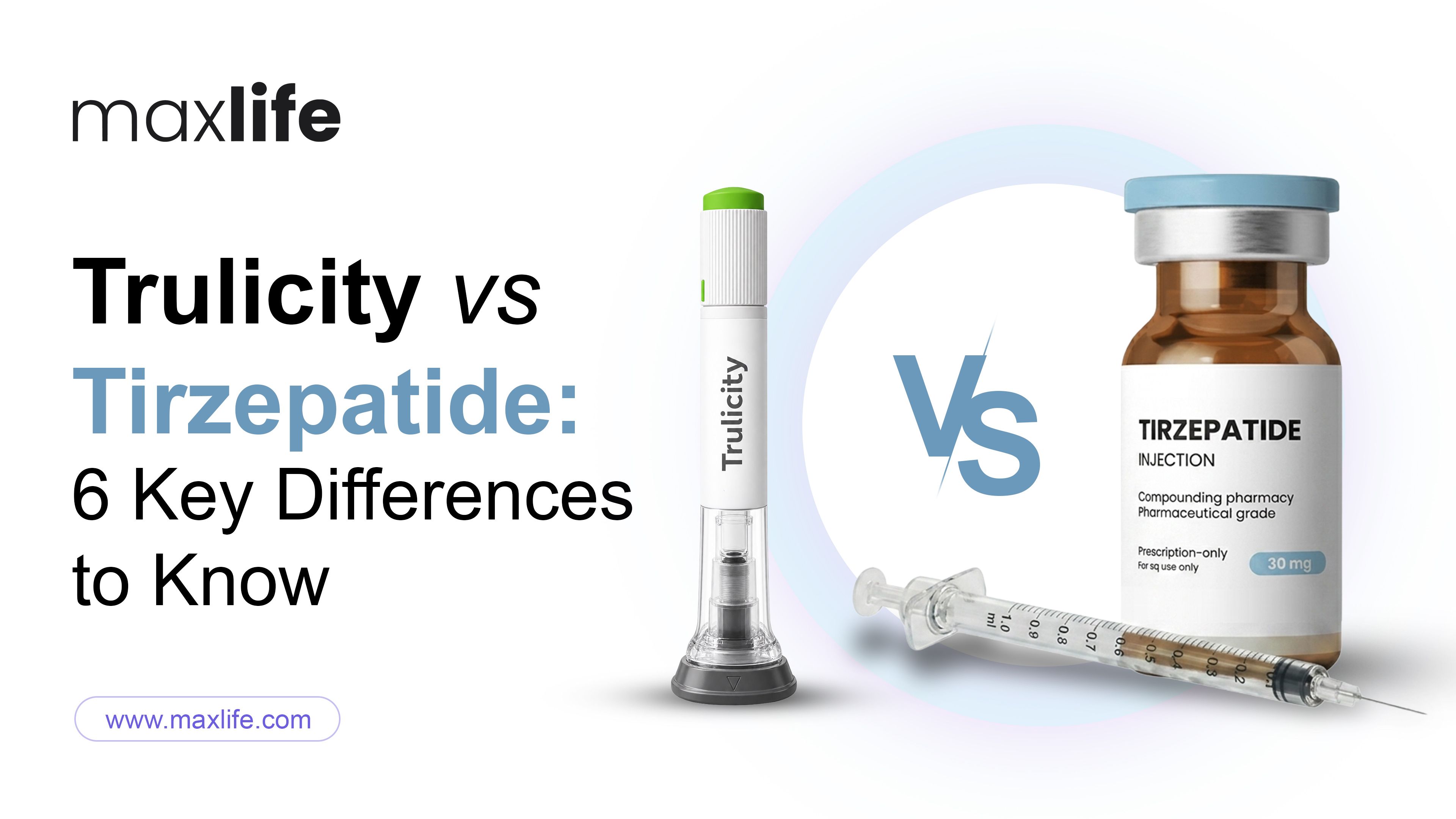
In the trulicity vs tirzepatide comparison, the most important fact comes first: tirzepatide acts on two hormone receptors while Trulicity acts on one, and only tirzepatide is FDA-approved for weight loss. Head-to-head trial data from SURPASS J-mono show tirzepatide delivers greater A1C reduction and substantially more weight loss at every dose tested.
Below you will find six key differences, what the data say about switching, how the two compare for weight loss specifically, and where MaxLife fits for people pursuing weight management.
Quick Answer: Which Is Better, Trulicity or Tirzepatide?
For weight loss, tirzepatide is the stronger option and the only one of the two FDA-approved for that purpose. For type 2 diabetes, both are effective once-weekly injections, but trial data show tirzepatide produces greater A1C reduction across all doses compared.
Trulicity holds one meaningful edge: it is approved to reduce the risk of major cardiovascular events, including cardiovascular death, nonfatal heart attack, and nonfatal stroke, in adults with type 2 diabetes who have established cardiovascular disease or multiple cardiovascular risk factors.
Tirzepatide does not carry this cardiovascular outcomes approval. In the trulicity vs tirzepatide decision, the right answer depends on your diagnosis, cardiovascular profile, and what your prescriber determines is appropriate for you.
Trulicity vs Tirzepatide at a Glance
| Category | Trulicity | Tirzepatide |
|---|---|---|
| Active ingredient | Dulaglutide | Tirzepatide |
| Brand names | Trulicity | Mounjaro (diabetes), Zepbound (weight loss) |
| Medication class | GLP-1 receptor agonist | Dual GIP and GLP-1 receptor agonist |
| FDA-approved uses | Type 2 diabetes; cardiovascular risk reduction in certain adults with T2D | Type 2 diabetes (Mounjaro); chronic weight management and sleep apnea in adults (Zepbound) |
| Approved for weight loss | No | Yes, as Zepbound |
| Dosage form | Prefilled single-dose pen | Single-dose pens and vials |
| Dose range | 0.75 mg to 4.5 mg weekly | 2.5 mg to 15 mg weekly (adults) |
| Average A1C reduction | ~1.3% (head-to-head trial) | ~2.4% to 2.8% (head-to-head trial) |
| Average weight loss | ~1 lb (head-to-head trial) | ~12 to 25 lbs (clinical trial data) |
A1C and weight figures come from clinical studies and reflect averages, not individual guarantees. The head-to-head trial (SURPASS J-mono) compared tirzepatide against Trulicity's lowest approved dose of 0.75 mg. Higher Trulicity doses have produced better outcomes in separate studies. Mounjaro clinical data reflects body weight as a secondary endpoint in T2D trials.
1. They Work on Different Hormones
Trulicity and tirzepatide both mimic natural gut hormones that regulate blood sugar and appetite. Both signal the pancreas to release insulin after eating, reduce how much sugar the liver releases into the bloodstream, slow gastric emptying, and act on appetite centers in the brain. These shared actions explain why both drugs lower blood sugar and reduce hunger.
The core difference is the number of receptors each drug activates. Trulicity activates GLP-1 receptors only. Tirzepatide activates both GLP-1 and GIP receptors, making it a dual agonist. GIP is a second gut hormone with effects on insulin secretion, fat tissue, and appetite regulation. Engaging both receptors rather than one is the underlying reason tirzepatide consistently produces larger effects on blood sugar and body weight in clinical trials.
2. They Have Different FDA-Approved Uses
Both medications are FDA-approved for type 2 diabetes in adults and in pediatric patients aged 10 and older. Beyond that shared indication, their approved uses differ significantly.
Trulicity carries an additional approval to reduce the risk of major cardiovascular events, specifically cardiovascular death, nonfatal heart attack, and nonfatal stroke, in adults with type 2 diabetes who have established cardiovascular disease or multiple cardiovascular risk factors. Tirzepatide does not carry this cardiovascular outcomes approval.
The distinction most readers care about most is this: tirzepatide is approved for chronic weight management under the brand name Zepbound, while dulaglutide is not approved for weight loss under any brand name. Mounjaro is the diabetes brand of tirzepatide, and prescribing it for weight management in someone without type 2 diabetes is off-label. Anyone comparing tirzepatide vs trulicity for weight loss starts from an uneven baseline: only one of the two has an FDA indication for that purpose.
3. Tirzepatide Produces More Weight Loss
The SURPASS J-mono trial provides the most direct side-by-side comparison. In that head-to-head study, people on tirzepatide lost an average of roughly 12 to 24 pounds depending on dose, while those on Trulicity at 0.75 mg lost approximately 1 pound.
One caveat changes the comparison somewhat. SURPASS J-mono used Trulicity's lowest approved dose, not its highest. Separate clinical data for Trulicity's higher doses show average weight losses of approximately 10 pounds. That is a more meaningful result, but it still falls well below what tirzepatide produces at comparable trial durations.
In dedicated weight management trials, tirzepatide has produced even larger effects. At higher doses, average body weight reductions have approached or exceeded 20 percent of baseline in some studies. Across all available clinical data, tirzepatide consistently leads on weight loss regardless of which Trulicity dose it is compared against.
For anyone asking about tirzepatide vs trulicity for weight loss specifically, the answer from the data is clear: tirzepatide is more effective for weight, and it is the only one of the two actually indicated for that purpose.
4. Tirzepatide Lowers A1C More
A1C measures average blood sugar over roughly two to three months. For people with type 2 diabetes, lowering it is the central treatment goal.
In SURPASS J-mono, tirzepatide reduced A1C by 2.4 to 2.8 percent depending on dose, compared to 1.3 percent for Trulicity at 0.75 mg. The same caveat applies here as it does for weight: that trial used Trulicity's starting dose. Separate clinical data for Trulicity's higher doses show A1C reductions of up to about 1.8 percent.
Even adjusting for the dose difference in the trial, tirzepatide likely maintains its advantage on blood sugar control. Individual response varies, and some people on Trulicity reach their A1C targets without needing a switch. For those not meeting their glycemic goals on Trulicity, the clinical evidence suggests tirzepatide offers meaningfully stronger blood sugar reduction.
5. They Come in Different Doses and Forms
Trulicity comes as a prefilled single-dose pen in four strengths: 0.75 mg, 1.5 mg, 3 mg, and 4.5 mg. All are injected once weekly. The pen is self-contained and requires no separate needles or syringes.
Tirzepatide offers more flexibility. It comes in six dose strengths: 2.5 mg (for treatment initiation only), 5 mg, 7.5 mg, 10 mg, 12.5 mg, and 15 mg. The smaller increments between doses allow finer titration as the body adjusts. It is available as a prefilled single-dose pen and in vial form, including compounded tirzepatide through telehealth providers, which requires a separate needle and syringe.
Both are injected once weekly. The practical difference is that tirzepatide's more granular dose ladder gives prescribers more options to slow the escalation when managing side effects, and the availability in vials adds flexibility for patients who prefer drawing their own doses.
6. Side Effects Are Similar, but Tirzepatide's Can Hit Harder
Both medications most commonly cause nausea, diarrhea, vomiting, and abdominal pain. Decreased appetite is also common with both. Constipation and indigestion appear more frequently in tirzepatide trials than in Trulicity trials.
Trial data show that tirzepatide produces gastrointestinal side effects more often at higher doses, particularly 10 mg and 15 mg. More people on tirzepatide report nausea and diarrhea than people on Trulicity, and a higher proportion of patients stop treatment due to GI effects. This is in part what comes with the stronger efficacy at higher doses.
Side effects are typically most pronounced when starting treatment or stepping up to a higher dose and tend to ease over several weeks as the body adjusts. Slow titration is the clinical standard for managing this. Both drugs require starting at the lowest dose and increasing gradually, which most prescribers follow regardless of which medication they are using.
Tirzepatide vs Trulicity for Weight Loss: Which Should You Choose?
The answer depends on why you are looking at these two drugs.
If weight loss is your primary goal and you do not have type 2 diabetes, Trulicity is not a realistic option. It is not approved for weight loss, is rarely prescribed for that purpose, and produces far less weight reduction than tirzepatide in every clinical comparison. Zepbound is the appropriate medication in this situation.
If you have type 2 diabetes and also want to lose weight, tirzepatide addresses both goals more aggressively. Your cardiovascular profile still matters. Trulicity's cardiovascular risk reduction approval is a genuine point in its favor for patients with established heart disease or multiple cardiovascular risk factors, and it is worth raising with your prescriber before making any change.
If you are already on Trulicity and not meeting your goals for blood sugar or weight, switching is a legitimate clinical question. That decision belongs with your prescriber, who has your full health picture, medication list, and clinical history.
Can You Switch From Trulicity to Tirzepatide?
Switching from Trulicity to tirzepatide is feasible and is occurring with increasing frequency in clinical practice. Evidence suggests people who are not meeting their A1C or weight goals on Trulicity often see further improvement after switching. The transition is manageable but requires prescriber guidance.
There is no standard dose conversion between these two medications. Even someone on Trulicity's highest dose will typically start tirzepatide at 2.5 mg and titrate upward over weeks according to their prescriber's schedule. The 2.5 mg starting dose exists specifically to give the body time to adjust before progressing to a therapeutic dose.
Do not stop Trulicity and start tirzepatide on your own. Both medications affect blood sugar, insulin response, and other metabolic processes. The transition needs to be managed with your full medication list and health history in view, and your prescriber needs to determine the right starting dose and titration plan for you.
Safety Warnings Both Medications Share
Both Trulicity and tirzepatide carry a boxed warning about thyroid C-cell tumors observed in rodent studies. This effect has not been demonstrated in humans, but both medications are absolutely contraindicated for anyone with a personal or family history of medullary thyroid carcinoma or multiple endocrine neoplasia syndrome type 2. These conditions are rare but the contraindication applies regardless.
Both share additional warnings covering pancreatitis, low blood sugar when combined with insulin or insulin secretagogues, acute kidney injury, gallbladder disease, and diabetic retinopathy complications. Both also delay gastric emptying, which can affect how the body absorbs other oral medications taken around the same time.
One tirzepatide-specific warning is clinically important. Tirzepatide significantly reduces peak concentrations of oral hormonal contraceptives, which can impair their effectiveness. The prescribing information advises switching to a non-oral contraceptive method or adding a barrier method for four weeks after starting tirzepatide and for four weeks after each dose increase. Non-oral hormonal contraceptives are not affected by this interaction. Anyone using oral birth control should discuss this with their prescriber before starting tirzepatide.
How Does Semaglutide Compare?
Semaglutide targets the GLP-1 receptor only, placing it in the same mechanistic category as Trulicity. The key difference is that semaglutide is approved for weight loss under the brand name Wegovy, which Trulicity is not, and it produces substantially more weight reduction than dulaglutide in clinical data.
As a practical reference point, semaglutide sits between Trulicity and tirzepatide for weight outcomes. Tirzepatide typically leads in average weight loss in head-to-head data, with semaglutide in the middle. Some people find semaglutide's side effect profile somewhat more manageable than tirzepatide's at comparable stages of treatment, though both cause similar types of gastrointestinal effects.
For people who want a lower-cost route to weight management, compounded semaglutide at MaxLife starts at $89 a month through the quarterly plan.
Get Tirzepatide With Medical Guidance
Choosing between GLP-1 options for weight management depends on your health history, what you can tolerate, and what a licensed provider determines is appropriate after reviewing your eligibility.
MaxLife offers a provider-guided program for compounded tirzepatide that includes eligibility review, a structured titration schedule, and ongoing support for side effects. The program is for weight management only. Anyone managing type 2 diabetes should keep that care with their prescribing physician. MaxLife does not treat diabetes.
Conclusion
In the trulicity vs tirzepatide comparison, tirzepatide acts on two receptors instead of one, lowers A1C by 2.4 to 2.8 percent compared to 1.3 percent for Trulicity at the trial dose, and produces substantially greater weight loss across every clinical comparison. Trulicity's clearest edge is its cardiovascular risk reduction approval, which tirzepatide does not carry.
Trulicity is not approved for weight loss under any brand name, while tirzepatide is approved for that purpose as Zepbound.
Both share a boxed warning for thyroid tumors and similar gastrointestinal side effects, though tirzepatide's tend to be stronger at higher doses.
The right choice belongs with a licensed prescriber. For those managing weight, a GLP-1 program through MaxLife offers provider-guided access to tirzepatide.
Trulicity vs Tirzepatide FAQs
Is Trulicity approved for weight loss?
No. Trulicity (dulaglutide) is FDA-approved for type 2 diabetes in adults and pediatric patients aged 10 and older, and to reduce the risk of major cardiovascular events in certain adults with type 2 diabetes. It is not approved for weight management under any brand name. Prescribing Trulicity for weight loss would be off-label, and clinical data show it produces substantially less weight reduction than tirzepatide at every dose compared.
How much more weight can you lose on tirzepatide than Trulicity?
In the SURPASS J-mono head-to-head trial, people on tirzepatide lost an average of roughly 12 to 24 pounds depending on dose, while those on Trulicity at its lowest 0.75 mg dose lost approximately 1 pound. That trial used Trulicity's starting dose. Separate data for Trulicity's highest doses show average losses of about 10 pounds, which is more meaningful but still well below tirzepatide. In dedicated weight management trials, tirzepatide has produced average body weight reductions approaching or exceeding 20 percent of baseline at higher doses.
Can I switch from Trulicity to tirzepatide, and what dose do I start on?
Yes, switching is clinically feasible and is occurring with increasing frequency. There is no standard dose conversion between Trulicity and tirzepatide. Most people beginning tirzepatide after Trulicity start at 2.5 mg, the approved initiation dose, and titrate upward every four weeks or as directed. Do not stop Trulicity and start tirzepatide without involving your prescriber. The transition needs to be managed with your full health history and current medications in view.
Is Mounjaro the same as tirzepatide?
Yes. Tirzepatide is the active ingredient. Mounjaro is the brand name under which tirzepatide is sold for the treatment of type 2 diabetes. Zepbound is the brand name under which the same active ingredient is sold for chronic weight management and obstructive sleep apnea in adults. The molecule is identical between both brands. The FDA approvals and indications differ between them.
Which has worse side effects, Trulicity or tirzepatide?
Both most commonly cause nausea, diarrhea, vomiting, and abdominal pain. Tirzepatide produces these effects more often, particularly at higher doses of 10 mg and 15 mg, and a higher proportion of patients discontinue treatment due to gastrointestinal side effects compared to Trulicity. Symptoms are typically worst when starting or after a dose increase and tend to ease over several weeks. Slow titration reduces severity for most people.
Is compounded tirzepatide the same as Zepbound?
Compounded tirzepatide contains the same active ingredient as Zepbound but is prepared by a licensed compounding pharmacy rather than manufactured by Eli Lilly. It is not FDA-approved. Compounded medications are not reviewed by the FDA for safety, efficacy, or manufacturing consistency the way brand-name drugs are. They are not covered by insurance. The active ingredient is the same; the regulatory oversight and approval status differ.
Get Tirzepatide With Medical Guidance
Compounded medications are not FDA-approved and are not covered by insurance. Pricing and availability are subject to change.
Check Your EligibilityThis article is for informational purposes only and is not a substitute for professional medical advice, diagnosis, or treatment. Trulicity and tirzepatide are prescription medications. Do not start, stop, or switch between them without guidance from a licensed prescriber. Individual results vary, and the clinical data referenced here reflect trial averages, not guaranteed outcomes.
Sources
- Lancet Diabetes & Endocrinology: "Efficacy and safety of tirzepatide monotherapy compared with dulaglutide in Japanese patients with type 2 diabetes (SURPASS J-mono)"
- FDA: Trulicity (dulaglutide) prescribing information
- FDA: Zepbound (tirzepatide) prescribing information, including oral contraceptive interaction warning
- FDA: Mounjaro (tirzepatide) prescribing information
- Eli Lilly: Trulicity cardiovascular outcomes indication (REWIND trial results)
- FDA: Drugs@FDA database (approval status lookup)