Where to Inject Semaglutide (Ozempic and Wegovy): Sites, Steps and Rotation
Pricing is accurate as of November 2026 and subject to change.
Key Takeaways
- In a 2018 analysis of 1,612 adults from five Ozempic trials, the injection site had no clinically relevant effect on semaglutide levels.
- On the Wegovy single-dose pen, the second click means the injection is still going: keep pressing until the yellow bar stops.
- Injection site reactions were reported in 1.4% of adults on Wegovy and 1% on placebo in the weight-loss trials.
Inject semaglutide under the skin of your stomach, the front of your thigh or your upper arm. Those are the three sites in the Ozempic® prescribing information and the Wegovy® prescribing information, both revised in June 2026 and checked in November 2026, and both labels say semaglutide reaches similar levels in the blood from each of them. On the stomach, stay at least 2 inches from your belly button. Pick a new spot every week. One catch: the instructions for the single-dose prefilled syringes say the back of the upper arm needs someone else's help.
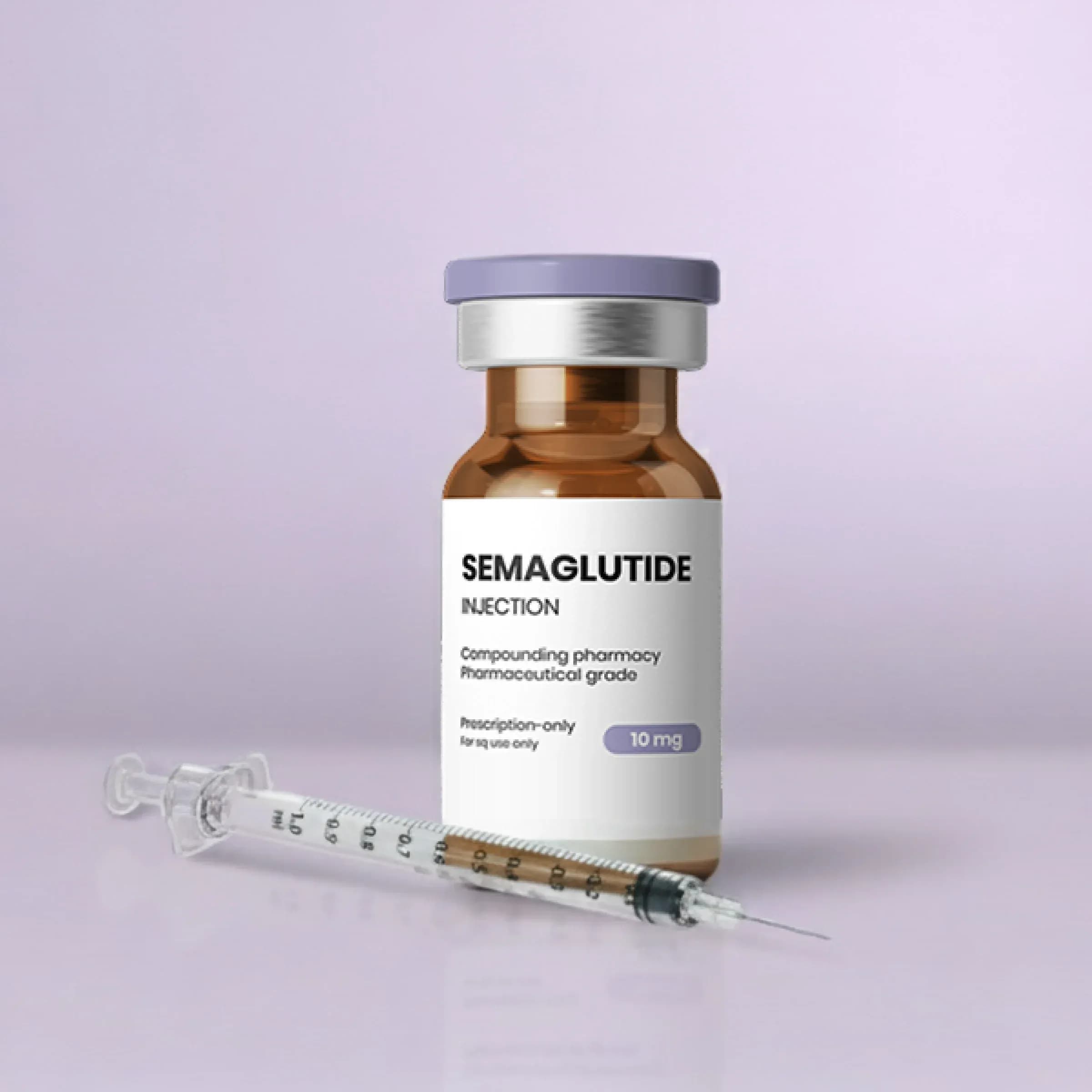
The same sites apply to compounded semaglutide, which you draw from a vial in the amount printed on your pharmacy label. A licensed pharmacy prepares it for one patient's prescription, and it is not FDA-approved. If you take tirzepatide instead (Zepbound® or Mounjaro®), see where to inject tirzepatide.
Where Can You Inject Ozempic and Wegovy?
Semaglutide is a subcutaneous shot: it goes into the layer of fat just under the skin. Both Medication Guides say not to inject it into a muscle or a vein. The labels name three areas, and the Instructions for Use (IFU) that come with each device add the details:
Injection sites
Where to inject semaglutide
The same three areas for Ozempic®, Wegovy® and compounded semaglutide. All three give similar levels of medicine in the blood, according to the labels.
- Stomach areaAnywhere with soft, healthy skin at least 2 inches, or 5 cm, from your belly button. The Wegovy® pen instructions say the lower stomach.
- Front of the thighThe upper leg, between hip and knee. Easy to reach on your own.
- Back of the upper armListed on both labels. The single-dose prefilled syringe instructions say “only with help from someone else.”
Every week: a new spot, at least 1 inch from the last one. Never into a muscle or a vein, and never into skin that is tender, bruised, red, hard or scarred.
Sources: Ozempic® and Wegovy® prescribing information and Instructions for Use on DailyMed, labels revised June 2026; MedlinePlus, National Library of Medicine, on injections under the skin. Checked November 2026. The instructions for your own device and your prescriber come first.
Use healthy skin. The Wegovy pen instructions say not to inject where the skin is "tender, bruised, red, or hard," and to avoid scars and stretch marks. For the arm, MedlinePlus, the National Library of Medicine's health site, places shots at least 3 inches below the shoulder and 3 inches above the elbow.
Can you inject Ozempic or Wegovy in your arm?
Yes. Both labels and both Medication Guides list the upper arm, and the Wegovy pen instructions name it as a site you may use. The Ozempic and Wegovy single-dose prefilled syringes add a condition: their IFUs, approved in May 2026, list the "back of upper arm (only with help from someone else)." If no one can help, the stomach and thighs are the sites those instructions let you reach yourself.
Is It Better to Inject Ozempic in the Stomach or Thigh?
Neither is better. The Wegovy label says: "Similar exposure was achieved with subcutaneous administration of semaglutide in the abdomen, thigh, or upper arm." Exposure means how much medicine reaches your blood over time. The same label adds that "the injection site can be changed without the need for a dosage modification."
More data comes from Ozempic's diabetes trials. A 2018 analysis of blood levels in 1,612 adults with type 2 diabetes across five SUSTAIN trials, lasting 30 to 104 weeks, entered each person's most-used injection site into the model. Site had "no clinically relevant effects" on exposure; body weight was the only factor that mattered. The authors, who work for Novo Nordisk, concluded that sites "can therefore be chosen interchangeably."
So choose by comfort and reach. Some websites say the stomach absorbs better or that the thigh causes less nausea, but neither label ties any site to more weight loss or fewer side effects. If one area keeps stinging or bruising, use another and mention it to your provider.
How Do You Rotate Semaglutide Injection Sites?
Use a different spot each week. The Ozempic label tells patients to "use a different injection site each week when injecting in the same body region," and the Wegovy pen instructions say you may use the same body area each week, "but make sure it is not in the same spot each time." MedlinePlus suggests keeping each new spot at least 1 inch from the last one.
Three habits make it easy:
- Log it. Put the date and spot in your phone's calendar on injection day, for example "left stomach, lower."
- Move in a circle. On the stomach, work your way around the belly button, staying outside the 2-inch circle. On the thighs, switch legs from week to week.
- Skip sore skin. If last week's spot is still tender, bruised or lumpy, go somewhere else.
If you also take insulin with Ozempic, the label says to give them as separate injections and never mix them. They can go in the same body area, but not right next to each other.
Which Semaglutide Device Do You Have?
The steps depend on the device, and the June 2026 labels list five brand devices:
| Device | Your dose | How you know it's done |
|---|---|---|
| Ozempic pen (several weekly doses) | 0.25, 0.5, 1 or 2 mg, dialed | Counter shows 0, then count 6 seconds |
| Ozempic prefilled syringe (one dose) | 0.25, 0.5 or 1 mg, preset | Plunger at the bottom |
| Wegovy single-dose pen | 0.25 to 2.4 mg, or 7.2 mg (Wegovy HD), preset | Yellow bar stops moving |
| Wegovy FlexTouch pen (4 doses) | 2.4 mg, dialed | Counter shows 0, then count slowly to 6 |
| Wegovy prefilled syringe (one dose) | 0.25 to 2.4 mg, preset | Plunger at the bottom |
| Compounded vial and insulin syringe | The units or mL on your pharmacy label | Plunger pushed all the way in |
The Wegovy label asks providers to train each patient on the specific device they will use, and to train them again if the device changes. Ask for that before your first dose. For how the two brands differ, see Ozempic vs Wegovy. If you take the Wegovy pill or the Ozempic pill, there is nothing to inject: see Wegovy pill vs injection.
How to Use the Ozempic Pen
The Ozempic pen is a dial-a-dose pen that holds several weekly doses. It comes with NovoFine® Plus needles, and you attach a new one for every shot. Here are the steps from the June 2026 IFU, in short:
- Check the pen. Wash your hands, check the name and colored label, pull off the pen cap and make sure the medicine is clear and colorless.
- Attach a new needle. Screw it on, then take off both needle caps: keep the outer one, throw away the inner one. With either cap still on, no medicine goes in.
- Check the flow, only with a new pen. Turn the selector to the flow check symbol, hold the pen needle up and press until the counter shows 0. A drop should appear at the tip.
- Dial your dose. Turn the selector until your dose lines up with the pointer. Go by the dose counter, not the sound: the IFU says "Do not set the dose by counting the number of clicks you hear."
- Inject. Wipe the spot with an alcohol swab and let it dry. Insert the needle the way your provider showed you, keeping the counter in view.
- Hold. Press and hold the button until the counter shows 0, then keep holding and count 6 seconds. Pull out too soon and medicine can stream from the tip, so the full dose doesn't go in.
- Finish. Remove the needle from your skin, then release the button. Unscrew the needle into a sharps container and put the pen cap back on.
Never use a syringe to pull medicine out of an Ozempic pen, and throw the pen away 56 days after its first use, even if medicine is left. Our Ozempic storage guide covers the rest of the storage rules.
With the Ozempic prefilled syringe
The current label also lists single-dose prefilled syringes of 0.25, 0.5 and 1 mg, with instructions approved in May 2026. Each holds one full dose. Check the dose on the label and the expiration date, and that the liquid is clear and colorless; small air bubbles are normal, and the IFU says not to try to remove them. Pull the needle cap straight off, pinch a fold of skin, insert the needle all the way at a 45-degree angle and push the plunger down until it stops. Pull the syringe out at the same angle and drop it in a sharps container.
How to Use the Wegovy Pen
The Wegovy single-dose pen, including Wegovy HD (the 7.2 mg pen), has a preset dose and a hidden needle. The Wegovy IFU steps, in short:
- Check the pen. It should look unused and undamaged, the medicine clear and colorless, the date not passed. Wash your hands.
- Clean the spot with an alcohol swab or soap and water, let it dry and don't touch it again.
- Pull the cap straight off only when you're ready. Taking it off and putting it back on makes the pen unsterile, the IFU says.
- Press the pen firmly against your skin. The injection starts when the needle cover is pressed in.
- Listen for two clicks. Click 1 means the injection has started. Click 2 means "the injection is ongoing," not that it's finished. Keep pressing until the yellow bar in the window stops moving, then lift the pen slowly.
- Throw the whole pen into a sharps container.
If the yellow bar doesn't start, press more firmly. If medicine lands on your skin or squirts from the needle, the pen probably came off early or wasn't pressed firmly the whole time; the needle cover locks, so the same pen can't be restarted. Call your provider before using another pen for that week. If the lower stomach is hard to inject, the IFU suggests standing up or switching to a firmer site, such as the thigh or upper arm.
With the Wegovy FlexTouch pen
FlexTouch, a four-dose pen that only gives 2.4 mg, appears in the June 2026 label. It works like the Ozempic pen: a new needle each time, a flow check before the first dose of each new pen, dial to 2.4, then press until the counter shows 0 and "count slowly to 6" before lifting. If the counter stops before 2.4, there isn't a full dose left, so start a new pen. The label doesn't recommend FlexTouch for self-injection by people with vision problems.
With the Wegovy prefilled syringe
The single-dose Wegovy syringes, 0.25 mg to 2.4 mg, follow the same steps as the Ozempic syringe above: pinch, 45 degrees, plunger all the way down.
How to Inject Compounded Semaglutide From a Vial
Compounded semaglutide often comes in a multi-dose vial that you draw with an insulin syringe. Your provider prescribes a dose in milligrams; the syringe is marked in units; the vial's strength connects the two. Strengths vary from one pharmacy to another, so the number to draw comes from the label on the vial you have and from your prescriber, never from a chart, a friend or an old vial. Our semaglutide dosage chart explains the math, and the dosage calculator converts your dose for the strength on your label.
The technique itself is standard for drawing from a vial, as MedlinePlus describes it:
- Wash your hands. Swab the rubber top of the vial and the skin where you'll inject, and let both dry.
- With a new syringe, pull in air up to your dose line and push that air into the vial.
- With the vial upside down, pull the plunger to your line. Flick the syringe so air bubbles rise, push the air out and read the line once more.
- Hold a fold of skin between two fingers and slide the needle in at a right angle, or at 45 degrees where there's little fat. Press the plunger down fully, then withdraw.
- Put the syringe in a sharps container without recapping it.
Partner pharmacies that publish their own guides have semaglutide steps and units tables on our pharmacy instructions page; if their directions differ from the list above, follow the pharmacy.
The FDA has explained why the measuring step matters. In a July 2024 alert about compounded semaglutide in multi-dose vials, it described people who drew 5 to 20 times their intended dose, often because they hadn't drawn from a vial before, mixed up milliliters, milligrams and units, or had a syringe much larger than their dose. Its advice: ask your provider or pharmacy to show you how to measure your dose with the syringe you were given. Two more FDA rules for vials: a fresh sterile needle and syringe each time, and a vial that goes in the trash 28 days after its first use, whatever is left inside. For storage, follow the directions on your pharmacy's label.
Injecting Compounded Semaglutide With MaxLife
If a licensed provider prescribes compounded semaglutide through MaxLife, a licensed partner pharmacy prepares it and ships the vial with syringes, alcohol swabs and printed instructions. One of the questions members ask most once they start is how many units to draw. The answer is on the label of the vial in your hands, because units depend on that vial's strength. Two tips our care team often gives: draw each dose right before you inject instead of filling syringes ahead of time, and if more than 2 weeks have passed since your last injection, contact the care team before your next dose.
Compounded semaglutide through MaxLife is $89 a month, flat, the same price at every dose, with supplies and free expedited shipping included and no membership fee. MaxLife is a patient management platform, not a pharmacy, and a licensed provider decides whether it's right for you. If your insurance covers Wegovy, the FDA-approved brand may cost you less.
What Should You Avoid When Injecting Semaglutide?
- Going into a muscle or a vein. Semaglutide belongs in the fat under the skin.
- Repeating last week's spot, or using skin that is tender, bruised, red, hard, scarred or stretch-marked.
- Counting clicks to set an Ozempic or FlexTouch dose, or drawing medicine out of a pen with a syringe.
- Sharing a pen, even with a new needle. Both labels warn this can spread blood-borne infections.
- Reusing needles or syringes.
- Mixing semaglutide and insulin in one syringe, or injecting them right next to each other.
- Taking a second dose because you're unsure the first one went in. Call your provider or pharmacist first.
If you inject too much, the Medication Guides say to call your healthcare provider or Poison Help at 1-800-222-1222, or go to the nearest emergency room right away.
What If the Injection Site Gets Red, Itchy or Bruised?
Skin reactions are uncommon with semaglutide. In the Wegovy weight-loss trials, 1.4% of adults on Wegovy had an injection site reaction, such as itching, redness, inflammation, hardening or irritation, compared with 1% on placebo. In Ozempic's placebo-controlled trials the rate was 0.2%. A small drop of blood can also appear; press lightly with gauze or a cotton ball and don't rub. Tell your provider if a reaction spreads, keeps coming back or doesn't fade.
Get emergency help for signs of a serious allergic reaction: swelling of the face, lips, tongue or throat, trouble breathing or swallowing, a severe rash or itching, fainting or dizziness, or a very fast heartbeat.
What Do You Do With Used Pens and Needles?
Put used needles, syringes and single-dose pens in an FDA-cleared sharps container right away. With a multi-dose pen, only the needle goes in after each shot; the pen itself goes in once it's empty or past its 56 days. No sharps container? The IFUs allow a heavy-duty plastic household container with a tight, puncture-resistant lid that stays upright and doesn't leak, labeled as hazardous waste.
The FDA's sharps disposal page recommends getting rid of the container once it is about three-quarters full, following your community's rules: drop-off sites such as pharmacies, hospitals, health departments and police or fire stations, household hazardous waste sites, mail-back programs or special pick-up. Don't recycle the container, and don't put it in household trash unless your community allows it.
How we made this page: we researched it from the sources listed below. The MaxLife operations team reviews every page before it goes live, and a licensed clinician also reviews our medical articles.
Frequently Asked Questions
Compounded Semaglutide: $89/mo Flat, All-Inclusive
MaxLife compounded semaglutide: $89 a month, flat. All-inclusive, no membership fee, the same price at every dose. A licensed provider decides.
Check Your EligibilityThis article is for informational purposes only and is not a substitute for professional medical advice, diagnosis, or treatment. Individual results vary. Pricing, insurance coverage, and compounding regulations described here are subject to change; verify current details with your insurance provider, the manufacturer, or your prescriber before making treatment decisions. Compounded medications are not FDA-approved.
Why trust our experts

April Foster, DO MPH
Reviewer
Board Certified Family Medicine Physician licensed nationwide providing collaborative oversight to NPs, PAs, and RN. Also specializing in telemedicine services nationwide.
Sources
- Ozempic (semaglutide) injection prescribing information, Medication Guide and Instructions for Use, DailyMed (label effective June 2026; checked November 2026)
- Wegovy (semaglutide) prescribing information, Medication Guide and Instructions for Use for the pen, Wegovy HD, prefilled syringe and FlexTouch, DailyMed (label effective June 2026; checked November 2026)
- Carlsson Petri KC et al. Semaglutide s.c. once-weekly in type 2 diabetes: a population pharmacokinetic analysis. Diabetes Therapy, 2018
- MedlinePlus, National Library of Medicine: Subcutaneous (SQ) injections (checked November 2026)
- MedlinePlus, National Library of Medicine: Drawing medicine out of a vial (checked November 2026)
- FDA: FDA alerts health care providers, compounders and patients of dosing errors associated with compounded injectable semaglutide products (July 2024)
- FDA: FDA's concerns with unapproved GLP-1 drugs used for weight loss (content current October 2026)
- FDA: Best way to get rid of used needles and other sharps (checked November 2026)
Semaglutide Dosage Chart for Weight Loss: Doses, Schedule and Units
November 5, 20269 min
Does Ozempic Need to Be Refrigerated? Semaglutide Storage Guide
November 14, 20268 min
Ozempic vs Wegovy: Same Drug, Different Doses and Uses
November 14, 202610 min
Where to Inject Tirzepatide: Best Sites and How to Inject
November 7, 20268 min