Indiana guide · Updated November 2026

Best Tirzepatide Providers in Indiana

Tirzepatide, sold as Zepbound® and Mounjaro®, is made by Eli Lilly and Company, an Indianapolis company, yet most Hoosiers pay cash for it. Indiana Medicaid doesn't cover it for weight loss alone, and the State employee plan stopped covering GLP-1s for weight loss on January 1, 2026. This guide compares the best tirzepatide providers in Indiana; MaxLife, which wrote it, charges $120 a month flat for compounded tirzepatide, all-inclusive, the same price at every dose. Compounded tirzepatide is not FDA-approved. Looking for tirzepatide near you? Online visits reach every county, from Gary and South Bend to Evansville.

$120/mo flatMaxLife tirzepatide. All-inclusive, same price at every dose

Last updated

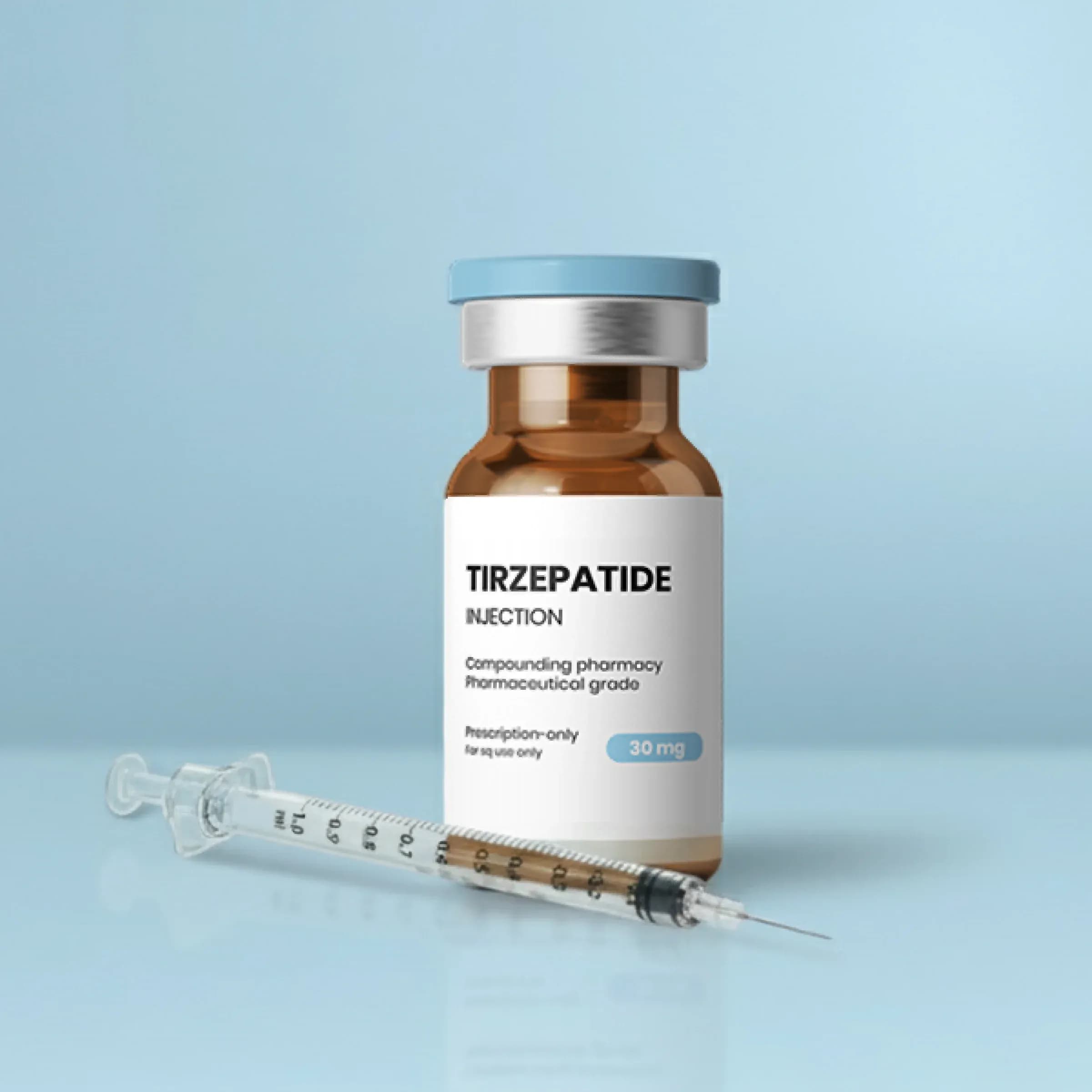
Tirzepatide medication vial with syringe

MaxLife Tirzepatide

Physician-guided weight loss, shipped to your door

$120/mo flatFlat price

All-inclusive, same price at every dose

(949) 704-1000

4.7on Trustpilot · 620+ reviews

  • All-inclusive
  • Same price at every dose
  • No membership fee
  • No hidden fees
  • Free online consultation
  • Free medical support

Health wins from weight loss

10%

Less liver fat and inflammation

Losing 7% to 10% can reduce liver inflammation and scarring (NIH)

General findings from the CDC, NIH and American Diabetes Association about losing this share of body weight. Not a promise or a result of MaxLife's program or any one medicine; individual results vary.

Check Your Eligibility

Compounded medications are not FDA-approved. A licensed provider decides if treatment is right for you.

Who wrote this guide

MaxLife, a telehealth company in Irvine, California, wrote this guide and is one of its options. We have no office in Indiana and serve Hoosiers by mail. Each price and rule links to its source with the month we checked it (November 2026), and our own fine print is on the page too.

Two Indiana timelines: where tirzepatide is made, and who pays for it

Lilly is building in Lebanon, Boone County, a site it says will make tirzepatide's active ingredient from 2027, and its Indiana commitments since 2020 pass $21 billion (Lilly, May 6, 2026). Over the same years, who pays in Indiana changed: the State employee plan dropped weight-loss coverage, Medicaid covers these drugs only for certain conditions while a federal obesity program waits for a start date, and Medicare added a $50 option.

Two Indiana timelines

Made in Indiana, paid for in Indiana: 2022 to 2027

  • Made in Indiana
  • Paid for in Indiana
  • Planned or scheduled
  • Now: November 2026

Tap an event for what happened and its source.

  1. Eli Lilly and Company planned to invest $2.1 billion and create up to 500 jobs at the LEAP district in Lebanon, Boone County, as Indiana's economic development agency later recounted.

    Source: IEDC, May 24, 2024

  2. At the April 2023 groundbreaking, Lilly added $1.6 billion and 200 jobs at the Lebanon site.

    Source: IEDC, May 24, 2024

  3. Lilly brought its Lebanon investment to $9 billion to make active ingredients for its newest diabetes and obesity medicines; the Associated Press reported that the site "will make tirzepatide, the main ingredient behind both Mounjaro and Zepbound."

    Source: IEDC; AP via Indiana Public Media

  4. Lilly added $4.5 billion across its Indiana sites, putting its Indiana capital commitments since 2020 above $21 billion, and said it plans to make Foundayo™ at its Lebanon API site too.

    Source: Lilly, May 6, 2026; IEDC

  5. Lilly says its Lebanon API site, where it plans to make tirzepatide, opens in 2027 and will be "the largest API production site in U.S. history."

    Source: Lilly, May 6, 2026

  6. The FDA declared the national tirzepatide shortage over; compounders' grace periods ended March 5, 2025 for state-licensed pharmacies (503A) and March 19, 2025 for outsourcing facilities (503B).

    Source: FDA

  7. CVS Caremark, the pharmacy benefit manager for Indiana University's medical plans, removed Zepbound® from the formulary and moved existing approvals to Wegovy®.

    Source: IU Today, June 5, 2025

  8. "Effective January 1, 2026, GLP-1 drugs used for weight loss will no longer be covered under the State's pharmacy benefit," the State Personnel Department says; the 2027 plan year keeps that rule.

    Source: Indiana State Personnel Department

  9. Governor Mike Braun signed Senate Enrolled Act 282 (P.L.136-2026), Indiana's law on compounding and medical spas.

    Source: Indiana Senate, Summary of New Laws 2026

  10. Compounders must now use bulk ingredients from FDA-registered makers, with a certificate of analysis naming the country of manufacture, and follow federal law and USP standards.

    Source: Indiana Code, Title 16

  11. Indiana Medicaid's criteria cover Zepbound® for moderate to severe sleep apnea and Wegovy® for heart risk or MASH liver disease, with prior authorization, and not for weight loss alone.

    Source: Optum Rx, Indiana Medicaid GLP-1 criteria

  12. Eligible Part D members pay $50 a fill for Wegovy®, the Zepbound® KwikPen® or Foundayo™, through December 31, 2027.

    Source: CMS

  13. Governor Braun directed FSSA to join CMS's BALANCE model at $245 per member per month, of which Indiana pays $85.16; eligibility criteria and timing "will be announced as the agreement is finalized."

    Source: Governor's release

  14. New GLP-1 prior authorization criteria apply to Indiana Medicaid requests from this day, and medical spas must register with the Medical Licensing Board to do business in Indiana.

    Source: IHCP bulletin BT2026184; SEA 282

Dates and facts from each event's source, checked in November 2026. Hollow dots are planned or scheduled. Plan coverage on this timeline means brand-name drugs; MaxLife bills no plan, and no plan here pays for compounded tirzepatide.

Our picks for Hoosiers

Tirzepatide providers for Hoosiers, by situation

Our test for "best": a prescriber licensed in Indiana, a pharmacy registered with Indiana's Board of Pharmacy, a single published price with every fee in it, and care after the first fill. Each one has a drawback, listed on its card. Prices as read in November 2026; MaxLife, the author of this guide, is one of the three.

1MaxLife

One flat price, the same price at every dose: $120 a month

Compounded tirzepatide costs $120 a month, flat: all-inclusive and the same price at every dose, with no membership fee and no hidden fees. The provider review, medicine if prescribed and free expedited shipping anywhere in Indiana are included.

No membership fee
Same price at every dose
Free expedited shipping
Help in Spanish

MaxLife price

$120 /mo flat

all-inclusive, the same at every dose

Good to know: Cancel anytime with notice before your next billing period. Compounded tirzepatide is not FDA-approved.

Check if you qualify
2Good Life Meds

A promotional rate held for 12 months, with no membership

A limited-time offer locks $129 a month, at any dose, for your first 12 months, and there are no membership fees. Indiana isn't on its list of excluded states; its terms ask for a device with a video camera.

Same price at every dose
HSA and FSA cards accepted

Good Life Meds

$129/mo

locked in for 12 months at sign-up

Watch for: Neither the formula nor the price after month 12 is stated.

3Pomegranate Health

A no-additive formula, with a lower rate on 6 months

Its no-additive formula, which ships to Indiana, is $139 billed monthly or $629 for 6 months (about $104.83 a month), and there's no membership.

No membership
FSA and HSA accepted

Pomegranate Health

$139/mo

month to month; $104.83/mo on 6 months

Watch for: Auto-renewing plans; an Advanced tier at $169 a month, with no dose list for it.

Indiana price table

Tirzepatide providers that serve Indiana, with their published prices

Each program's own published prices and terms, as we read them in November 2026. The first price column is billed a month or 4 weeks at a time; the second applies only when you pay for several months up front. Brand Zepbound® is FDA-approved; compounded tirzepatide is not.

ProgramMonth to monthIf you prepayVisitNotes
MaxLife$120/mo flatall-inclusive; no hidden feesNo prepay discountthe flat price is the priceOnline intake and records reviewusually within 24 hours; video visit on requestNo membership feesame price at every dose; help in Spanish
Collective$69/mo + $199/yrnot truly month to month: $199 yearly membership up front; about $86 a monthNot offeredA US-licensed doctor reviews an online health formusually within a day or twoServes 44 statesIndiana isn't among the six it leaves out; no formula stated
Good Life Meds$129/mopromo rate held for 12 monthsNot publishedsays multi-month discounts existOnline visit reviewed by a licensed providerits terms ask for a device with a video cameraNo price given from month 13 onformula not stated
Pomegranate Health$139/mono-additive formula; no membership$104.83/mo on 6 months$629 billed once; $329 for 3 monthsOnline, in its words "100% online"$169/mo on its higher tierrenews automatically; no-additive option closed to 9 states
Eden$129/mothe same at every dose; no membershipNot offeredOnline consultation with a providerafter a short medical questionnaireB vitamins or glycine "when appropriate"one product, adjusted by the provider; all 50 states
Wellmedr$129 per 4 weekscheckout price; about $139.75 a month$852 for a 12-month supplyit shows $71 a month; $378 for 3 months, $738 for 6A provider reviews your intakepayment is taken before the reviewSame price regardless of dosepre-Black Friday sale; Indiana on its state list
GalaExact price at checkoutvaries by state; a November checkout for Colorado showed $299 per 4 weeksAt checkoutthe same checkout: $2,327 a year, about $193.92 a monthVideo or messaging, by patient and statewhen video is required, it's usually the first visitSame price at every doseprovider visit and shipping included
SunlightFrom $179 per 4 weeksmenu price; its home page shows a $139 saleNot offeredOnline; appointments only in some casesvideo visits with clinicians availableNo membership feean $80 clinical fee if you cancel after review
Gentle Health$169/mofirst dose band; two-month minimumNot offeredA doctor licensed in Indiana reads your intakeand decides whether a video visit is needed$219 or $269 at the higher bandsIndiana page
Mochi Health$169/mo$90 medicine at the first dose step plus a $79 membership$127.67/mo on 12 months$588 yearly membership up front, with 3-month suppliesLive 30-minute video visitwith a medical providerMedicine price rises with the doseno Indiana state page
Way Less Weight Loss ClinicIn person, Merrillville$225 per 4 weeksstarting dose, limited-time price, plus a $99 monthly membership or a $99 visitNot offeredIn the Merrillville clinic or virtualfree monthly visits for membersShips to Indiana and Illinois for $18free for members; price rises with the dose
Nexa Med SpaIn person, Greenwood$349/mostarting tier; follow-up visits includedNot published$250 consult and labs waived on a 3-month prepayIn person: labs and a consultation firstUp to $549 at the top tiersays its compounded medications aren't FDA-approved
LillyDirect (brand Zepbound®)FDA-approved$299 to $449per 28-day fill; national pricesNot offeredthe $449 price needs a refill within 45 daysA prescription from your own clinicianFree home delivery or Walmart pickupneedles cost extra
Medicare GLP-1 BridgeMedicare Part D$50 a fillZepbound® KwikPen®, Wegovy® or Foundayo™Not applicableYour prescriber, with prior authorizationJuly 1, 2026 to December 31, 2027eligible Part D members only

Our Indiana read covered 391 programs, options, clinics and chains; each program here says on its own pages that it serves Indiana or is located here. Sales come and go, so check the price at sign-up; being in this table isn't an endorsement.

What tirzepatide costs in Indiana

Month to month, the compounded programs in our table run from about $86 (Collective, counting its yearly membership) to $349 a month at Nexa Med Spa in Greenwood. MaxLife's $120/mo flat is lower than the month-to-month price at 9 of the 10 other compounded programs in our table that show one. Collective is the exception: $69 a month plus a $199 yearly membership, about $86 a month together. Paying up front brings two others below $120: Pomegranate Health ($629 for 6 months, about $104.83 a month) and Wellmedr at its pre-Black Friday sale price ($852 for a 12-month supply, shown as $71 a month). Of the 46 online programs serving Indiana that published a month-to-month price when we read them in November 2026, one charged less than $120 a month; the median was about $207. Where a program sells a formula without additives, we list that one.

In person. Indiana clinics rarely publish a price: of the clinic entries we read, 13 showed a tirzepatide price, none of them in west central or southern Indiana. The two in our table, in Merrillville and Greenwood, charge $225 per 4 weeks plus fees and $349 a month at their starting doses.

Our national list of the most affordable tirzepatide online has more programs.

A year of tirzepatide

What 12 months cost in Indiana, program by program

Red lines: the price holds only if you pay for several months up front, not month to month.

  1. Wellmedrits 12-month supply billed once, at its pre-Black Friday sale price$852
  2. CollectiveNot truly month to month: a $199 yearly membership is paid up front, plus $69 a month$1,027
  3. Pomegranate Healthtwo 6-month plans of $629, no-additive formula$1,258
  4. MaxLife$120/mo flat$1,440
  5. Mochi Health12-month membership up front plus 3-month supplies at its first dose step$1,532
  6. Eden12 monthly charges, the same at every dose$1,548
  7. Good Life Meds12 monthly charges at its locked promotional rate$1,548
  8. Gentle Health12 monthly charges at its starting dose band$2,028
  9. Sunlight13 four-week charges at its menu price$2,327

Prices checked in November 2026. Brand Zepbound® at LillyDirect, $5,637 for 13 on-time fills, is left off this scale, as are the two clinics, whose prices rise with the dose, and Gala, whose Indiana price shows only at checkout. Compounded tirzepatide is not FDA-approved.

Paying out of pocket in Indiana?

$120 a month, flat: all-inclusive, no membership fee and free expedited shipping, from Gary to Evansville. A licensed provider decides.

Check if you qualify

Who pays for tirzepatide in Indiana, plan by plan

None of these plans pays for compounded tirzepatide, and MaxLife doesn't bill insurance. The table sums up each plan; the details and sources follow it.

Who pays

Your Indiana plan in one line

Who paysFor weight loss nowWhat's next
Indiana MedicaidHIP, Hoosier Healthwise and moreNot for weight loss alone

Zepbound® for moderate to severe sleep apnea and Wegovy® for heart risk or MASH, with prior authorization.

Optum Rx criteria, July 1, 2026
New criteria January 1, 2027

BALANCE was announced July 30, 2026; eligibility criteria and a start date weren't published.

State employee planState of Indiana agenciesNot covered for weight loss

Stopped January 1, 2026, under the CVS Caremark pharmacy benefit.

State Personnel Department
No change announced

The 2027 open-enrollment page repeats the exclusion.

Indiana UniversitySelf-funded, CVS CaremarkCheck with IU

Zepbound® left IU's formulary on July 1, 2025, and approvals moved to Wegovy®; ask IU Human Resources what applies now.

IU Today, June 5, 2025
Set by IU

A self-funded plan sets its own rules; Indiana insurance law doesn't reach it.

Job plansInsured or self-fundedYour employer decides

No Indiana law requires coverage; CVS Caremark restored Zepbound® on October 1, 2026 for employers that buy it.

CVS Health, May 28, 2026
No Indiana mandate

Three 2025 obesity bills died in committee.

Your own planHealthCare.gov marketplaceExcluded

Indiana's benchmark plan excludes "Any Drug which is primarily for weight loss."

CMS benchmark plans, 2025 to 2027
Same benchmark through 2027

2027 sign-up runs November 1, 2026 to January 15, 2027.

MedicarePart D and the GLP-1 Bridge$50 a fill if you qualify

Wegovy®, the Zepbound® KwikPen® or Foundayo™, with BMI criteria.

Medicare.gov
Runs to December 31, 2027

The Bridge is federal and the same in every state.

TRICARE, VA, tribal careMilitary, veterans, Pokagon BandWith criteria

TRICARE covers Wegovy®, Saxenda® and Zepbound® for weight management, not under TRICARE For Life; the VA sets its own criteria.

TRICARE, updated August 6, 2026
Federal rules

Indiana law doesn't reach federal plans.

Sources: each plan's own document or the statute, read in November 2026. Coverage, where a plan offers it, is for brand-name drugs only. Compounded tirzepatide isn't covered by any of them; MaxLife is cash-pay.

Indiana Medicaid: HIP, Hoosier Healthwise, Hoosier Care Connect and PathWays

Indiana Medicaid covered 1,417,317 Hoosiers in October 2026 (FSSA enrollment report). Its rule excludes "Anorectics or any agent used to promote weight loss" (405 IAC 5-24-3, quoted in the IHCP pharmacy module), and one drug list applies to every Medicaid plan (drug list, November 1, 2026). Under the criteria in force since July 1, 2026, Zepbound® is covered with prior authorization for moderate to severe obstructive sleep apnea in adults with a BMI of 30 or more and no diabetes, and Wegovy® after a heart attack, stroke or artery disease, or for MASH liver disease; both are labeled "NOT COVERED EXCLUSIVELY FOR WEIGHT LOSS" (Optum Rx criteria). New GLP-1 criteria apply to requests from January 1, 2027 (bulletin BT2026184); their text wasn't published when we checked. Members under 21 can be considered case by case (LSA fiscal note, HB 1202).

On July 30, 2026 Governor Mike Braun directed FSSA to join CMS's BALANCE model: drugmakers supply select GLP-1s "for $245 per member per month," and "Indiana will pay just $85.16 per person per month." "Additional implementation details, including eligibility criteria and timing, will be announced as the agreement is finalized" (Governor's release). CMS lists the KwikPen® form of Zepbound®, not the vials, and says the model "will not guarantee coverage for any individual" (CMS, BALANCE). Until Indiana publishes its criteria, Medicaid covers no GLP-1 for weight loss alone.

The State employee plan

"Effective January 1, 2026, GLP-1 drugs used for weight loss will no longer be covered under the State's pharmacy benefit," the State Personnel Department says (INSPD, prescription coverage). The 2026 CVS Caremark certificate lists "Anti-Obesity GLP1 Drugs" among its exclusions (CVS Caremark plan certificate 2026), the 2027 open-enrollment page repeats the rule (INSPD, 2027 open enrollment), and cash purchases "cannot be applied toward your deductible and out of pocket maximum."

Universities and job plans

Indiana University's plans pay their own claims; CVS Caremark removed Zepbound® from IU's formulary effective July 1, 2025 and moved existing approvals to Wegovy® (IU Today, June 5, 2025), so ask IU Human Resources what applies now. Purdue covers weight-loss drugs only through its Center for Healthy Living program, where Zepbound® costs $159 a month in 2026 (Purdue HR).

No Indiana law requires any plan to cover obesity drugs. Three 2025 bills died in committee: HB 1202 (Medicaid coverage), HB 1138 (State employee plan coverage) and SB 132 (a childhood obesity study) (HB 1202; HB 1138; SB 132). Self-funded job plans follow federal law, not Indiana's (our reading). CVS Caremark added Zepbound® back to its commercial lists on October 1, 2026 "for plan sponsors who elect to provide coverage" (CVS Health, May 28, 2026). If your plan does cover a GLP-1, a 2025 Indiana law makes insured plans answer drug prior-authorization requests within 48 hours, 24 if urgent, and keep an approval for at least a year (SEA 480-2025, Indiana Code, Title 27).

Plans you buy yourself

Indiana's benchmark plan for 2025 to 2027 excludes "Any Drug which is primarily for weight loss" (CMS, benchmark plans). For 2027, four carriers sell marketplace plans (Anthem, Coordinated Care, UnitedHealthcare and, new, AmeriHealth Caritas); Cigna and CareSource leave, and approved rates rise 17.5% on average (Indiana Department of Insurance). Open enrollment runs November 1, 2026 to January 15, 2027; enroll by December 15 for coverage from January 1 (HealthCare.gov).

Medicare and the GLP-1 Bridge

1,428,729 Hoosiers had Medicare in July 2026 (CMS enrollment data). Part D members 18 or older who meet its BMI criteria pay $50 a fill for Foundayo™, Wegovy® or the Zepbound® KwikPen® until December 31, 2027; it excludes type 2 diabetes, moderate to severe sleep apnea and fatty liver disease, and single-dose Zepbound® vials or pens (Medicare.gov; CMS). Compounded drugs aren't on its list. Free help: Indiana SHIP, (800) 452-4800 (Indiana SHIP).

TRICARE, the VA and tribal care

TRICARE "covers Wegovy, Saxenda, and Zepbound for weight management" with a network prescriber and prior authorization, but not for TRICARE For Life beneficiaries (TRICARE FAQ, updated August 6, 2026). VA health care's criteria for Zepbound® are a BMI of 27 or more, a weight-related condition and a lifestyle program (VA criteria for use, April 2026); Indiana's VA medical centers are in Indianapolis, Marion and Fort Wayne (VA Indiana; VA Northern Indiana). Pokagon Band Health Services in Dowagiac, Michigan, serves Native Americans in northern Indiana (Pokagon Band).
When an Indiana plan says no: appeals and reviews

These rules reach insured plans that the Indiana Department of Insurance regulates. In our reading they don't reach self-funded job plans, Medicare, Medicaid fee-for-service, TRICARE or the VA.

Outside review. After the plan's own appeal you have 120 days to ask for an external review by an independent review organization. You pay nothing, a standard review is decided within 15 business days and an urgent one within 72 hours, and the decision binds the insurer (IC 27-8-29, Indiana Code, Title 27). But the chapter "does not add to or otherwise change the terms of coverage," so a plain weight-loss exclusion usually stays a no; review helps when a covered drug is denied as not medically necessary. Help: the Department of Insurance's consumer line, 1-800-622-4461 (IDOI, complaints).

If your plan simply excludes these drugs, see the cash options in our guide to GLP-1 medication without insurance.

No plan coverage for weight loss?

MaxLife compounded tirzepatide: $120 a month, flat, the same price at every dose, with no membership fee. A licensed provider decides.

Check if you qualify

Brand Zepbound®: LillyDirect, pharmacies and the Bridge

Lilly is in Indiana, but its self-pay prices are the same in every state; we found no Lilly price or program limited to Hoosiers. At LillyDirect, Zepbound® vials or KwikPens cost $299 at the starting dose and $399 at the second, then $449 a fill at higher doses if each refill comes within 45 days; 13 on-time fills come to $5,637 for the drug alone (our math). Prescriptions go to LillyDirect Pharmacy at 1555 S Harding St in Indianapolis, and Lilly says four dispensing pharmacies fill them: Amazon Pharmacy, Fuze Health, Gifthealth and Walmart Pharmacy (LillyDirect FAQ). At retail pharmacies, Lilly's KwikPen® self-pay card covers up to 11 fills a year and expires December 31, 2026 (Lilly). Lilly's once-daily pill Foundayo™ is orforglipron, a different drug, from $149 a month (LillyDirect, Foundayo).

Picking it up in Indiana. LillyDirect orders can be picked up free at Walmart, whose Indiana facts list 125 pharmacies, Sam's Club included (Walmart). Costco's 9 Indiana warehouses all have a pharmacy open to non-members (Costco), and Amazon Pharmacy lists the KwikPen® from $299 at the starting dose (Amazon Pharmacy), with same-day delivery in the Indianapolis area (Amazon Pharmacy, delivery).

Online visits in Indiana: the rules, the license and where you sit

Indiana counts "store and forward technology" as telehealth and lets a prescriber prescribe a drug that isn't a controlled substance "if the patient has not been examined previously by the prescriber in person," once the standard of care is met (IC 25-1-9.5-6 and -8, Indiana Code, Title 25). But "telehealth" doesn't include an "Internet questionnaire" or an "Internet consultation" "unless the practitioner has an established relationship with the patient," and for physicians, treatment "based solely on an on-line questionnaire or consultation is prohibited" (844 IAC 5-3-3).

What a first visit must include. The provider must note where you are, give their name and license, get your consent and medical history, "Discuss with the patient" the diagnosis, the evidence for it and the risks and benefits of the options, keep a record, give follow-up instructions and a visit summary, and, if you agree, tell your primary care provider about a prescription (IC 25-1-9.5-7).

An Indiana license, no certificate. Indiana ended its out-of-state telehealth certificates on July 1, 2024: "all practitioners must still be properly licensed in the state of Indiana" (IPLA, June 7, 2024). Indiana is in the Interstate Medical Licensure Compact and the Nurse Licensure Compact (NCSBN), not the PA or APRN compacts (PA Compact). Nurse practitioners prescribe under a practice agreement with a collaborating practitioner (848 IAC 5-1-1), physician assistants under a collaborative agreement with a physician licensed in Indiana.

Be in Indiana at the visit. A practitioner who decides whether to prescribe for "an individual who is located in Indiana" is practicing in Indiana (IC 25-1-9.5-9). So for Hoosiers who work in Chicago, Louisville or Cincinnati, a visit taken at the office is care in that state, and one taken at home is Indiana care (our reading).

Ads. An ad that names an Indiana clinician "must prominently state the profession or license" (IC 25-1-10.3-7), and the Medical Licensing Board allows physician advertising only if it "is dignified and confines itself to the existence, scope, nature, and field of practice of the practitioner" (844 IAC 5-2-13). So the card at the top of this page shows public health findings, not promised results.

MaxLife's visit in Indiana: A licensed provider reviews your online intake, health history and clinical records, usually within 24 hours, can follow up with questions, and you can ask for a video visit. Completing the intake doesn't guarantee a prescription.

License check

Check an Indiana prescriber in 3 steps

  1. Get the name and license

    Indiana's telehealth law requires the provider to give you both; an ad that names a clinician must state the license.

  2. Search IPLA's lookup

    Open IPLA's free Search and Verify and search the person's name: physician, nurse or physician assistant.

  3. Read the record

    Look for an Indiana license with an active status. A license from another state alone isn't enough while you're in Indiana.

Pharmacies are in the same lookup; see the pharmacy section for those steps. IPLA's own summary of the rules: IPLA, information on telehealth.

SEA 282: Indiana's 2026 compounding law, and how to check a seller

Senate Enrolled Act 282, signed March 5, 2026 (P.L.136-2026), wrote compounding rules into Indiana law (SEA 282, enrolled act). Since July 1, 2026, a compounder must use bulk ingredients made at an FDA-registered establishment, with "a valid certificate of analysis" that includes "The country where the bulk drug substance was originally manufactured," quality-tested and never research or veterinary grade, and must follow federal law and USP standards (IC 16-42-22.5-3, Indiana Code, Title 16). Sections 503A and 503B of federal law are now Indiana law too, the Board of Pharmacy has "primary authority to investigate," and an out-of-state pharmacy must show its records when the Board asks.

Med spas. "Beginning January 1, 2027, a medical spa is required to be registered under this chapter in order to do business in Indiana." A medical spa under the law gives injected prescription drugs and holds itself out as focused on cosmetic or lifestyle treatments, "including ... (A) Weight loss"; physician offices are excluded, and the registry will be public (SEA 282; IPLA, medical spas).

The first numbers. The Department of Health's first oversight report, for July and August 2026, counted 6 compounding investigations, no disciplinary actions for improper marketing of compounded drugs and no registered med spas yet (IDOH, September 1, 2026).

The Attorney General. Indiana's Attorney General joined nearly 40 attorneys general in February 2025 asking the FDA to act on counterfeit and illegally sold GLP-1s (WFYI, March 3, 2025), and signed a 20-state letter on September 17, 2026 about foreign-sourced ingredients in compounded GLP-1s (letter of September 17, 2026).

Federally, the FDA ended the tirzepatide shortage on December 19, 2024; its grace period for compounding ended on March 5, 2025 for state-licensed (503A) pharmacies and on March 19, 2025 for outsourcing facilities (503B) (FDA), and the Fifth Circuit upheld the FDA's decision on August 27, 2026. Since then, routine compounding of copies of an approved drug isn't allowed, but a state-licensed (503A) pharmacy may still compound tirzepatide for one patient when the prescriber orders a change that makes a significant difference for that patient; SEA 282 made section 503A part of Indiana law. Compounded tirzepatide is not FDA-approved. Read our response to FDA Warning Letter 721453.

Before you buy, in our words

  • Is there a prescription from a prescriber licensed in Indiana?
  • Is the pharmacy on the label registered and Active with Indiana's Board, at that address?
  • Does the label show a toll-free pharmacist number? Out-of-state pharmacies must print one.
  • Is the full price, memberships and fees included, shown before you pay?
  • Does the seller call a compounded drug FDA-approved or "generic"? It isn't either.
  • Is it offered "for research," or without any prescription? Walk away.

Pharmacies that ship into Indiana

As many pharmacies ship into Indiana as operate in it. In November 2026, Indiana's license lookup listed 1,371 active nonresident (out-of-state) pharmacy permits against 1,335 active in-state pharmacy permits (IPLA, Search and Verify; our count). They come from 46 states, led by Florida (157) and Texas (129); the four neighbours, Illinois, Ohio, Kentucky and Michigan, supply 27.5% of them. About 35% of today's out-of-state permits were first issued in 2024 to 2026 (our estimate from permit numbers).

Ohio County, home to 5,994 people, is the only one of Indiana's 92 counties with no active pharmacy permit; statewide there are 1.91 permits per 10,000 residents. Counting only stand-alone drugstores, Indiana had 1.06 per 10,000 in 2023, against 1.24 nationally (Census Bureau, County Business Patterns 2023); that count leaves out grocery, big-box, hospital and government pharmacies.

A pharmacy outside Indiana must register with the Board of Pharmacy "prior to shipping into the state of Indiana" (IPLA, pharmacy licensing). It files its latest home-state inspection report, or one from an approved third party if its home state hasn't inspected it within 365 days, and lists "the location, names, and titles of all principal corporate officers and pharmacists who are dispensing drugs to residents of Indiana." It must run a toll-free line attended by a pharmacist at least six days and 40 hours a week, with the number on every container's label, and needs NABP accreditation if more than 25% of its prescriptions come through the Internet (IC 25-26-17, Indiana Code, Title 25).

The table lists pharmacies that a public source ties to compounded tirzepatide and whose Indiana nonresident permit reads Active at the same street address: 10 businesses at 11 sites.

Pharmacies

Pharmacies with an Active Indiana permit that a public source ties to compounded tirzepatide

PharmacySiteIndiana permitTie to tirzepatide
Hallandale PharmacyFort Lauderdale, FloridaActive, since 2018Programs' Indiana pages name it
Absolute RxLutz, FloridaActive, since 2015A program's Indiana page names it (record: Absolute Pharmacy, LLC)
Promise PharmacyPalm Harbor, FloridaActive, since 2018Its own Indiana tirzepatide page, written for prescribers
Empower PharmacyHouston, TexasActive, since 2013Its own tirzepatide product page and Indiana page
Southend PharmacyHouston, TexasActive, record at this site from November 2026Its own tirzepatide product page
Drug CraftersFrisco, TexasActive, since 2024One program lists it as a tirzepatide pharmacy option
Strive PharmacyFenton, Missouri; Tampa, FloridaActive, since 2024; record at this site from November 2026The company's tirzepatide page doesn't say which site fills an order
OptioRxColumbus, OhioActive, since 2021Listed as SBH Medical; one program names OptioRx without naming the site
RXCompoundStore.comMiami, FloridaActive, since 2024Linked to tirzepatide through one program's announcement
Manifest PharmacyGreer, South CarolinaActive, since 2022Linked to tirzepatide through one program's announcement

Indiana's license lookup (IPLA), nonresident pharmacy permits, read in November 2026; each permit matches the street address the public source names. A public source is the pharmacy's own page or a program that names it. Being listed isn't an endorsement, and the list doesn't show which pharmacies fill any program's prescriptions.

Who fills Indiana's prescriptions

  • 1,371active out-of-state pharmacy permits
  • 1,335active in-state pharmacy permits
  • 46states the out-of-state pharmacies are in
  • 1county with no active pharmacy: Ohio County

Check a pharmacy in 3 steps

  1. Read the label

    An out-of-state pharmacy must print its toll-free pharmacist number on every container; the label also shows its name and address. Or ask the program which pharmacy fills your prescription.

  2. Search the permit

    Open IPLA's facility search, choose "Pharmacy Board" and "Non-Resident Pharmacy" ("Pharmacy" for one in Indiana), and type the first word of the name with *.

  3. Match the record

    Look for Active status, an expiration of 12/31/2027 and the street address on your label. "Pending Application" isn't a permit.

Permits: IPLA's license lookup, November 2026, our count. Indiana Board of Pharmacy: 402 West Washington Street, Room W072, Indianapolis.

One flat price across Indiana

MaxLife compounded tirzepatide: $120 a month, flat, from Fort Wayne to Terre Haute. All-inclusive, no membership. A licensed provider decides.

Check if you qualify

One week in March: Indiana weather and your delivery

Zepbound®'s label sets two limits. "Do not freeze ZEPBOUND. Do not use ZEPBOUND if frozen." In the fridge it belongs at 36°F to 46°F, and a single-dose pen or vial may be kept unrefrigerated "at temperatures not to exceed 30°C (86°F) for up to a total of 21 days" (Zepbound label, DailyMed). Those are the brand's rules; a compounded vial follows the storage and beyond-use date on its own pharmacy label.

In Indiana both limits can arrive in the same week. At Indianapolis's airport the low was 16°F on March 17, 2026; five days later the high was 88°F, and the next night it fell to 32°F (NOAA, ACIS station data; NWS Indianapolis, seasonal summary).

One week in March

Indianapolis airport, March 16 to 23, 2026: each day's low to high

  • Below 32°F: the label says do not freeze
  • 36°F to 46°F: fridge (label)
  • Between the two limits
  • Above 86°F: past the label's room-temperature limit
  1. Mon, Mar 16

    21°F to 43°F froze

  2. Tue, Mar 17

    16°F to 24°F never above 32°F

  3. Wed, Mar 18

    23°F to 51°F froze

  4. Thu, Mar 19

    39°F to 72°F

  5. Fri, Mar 20

    52°F to 78°F

  6. Sat, Mar 21

    45°F to 78°F

  7. Sun, Mar 22

    38°F to 88°F 86°F or more

  8. Mon, Mar 23

    32°F to 46°F froze

  • 16°F to 88°FIndianapolis's airport: a low of 16°F on March 17, 2026, and a high of 88°F five days later, on March 22.
  • 88°F, then 32°FThe night after the 88°F day, it froze again: 32°F on March 23. NWS Indianapolis lists the spring's high as 88 on March 22 and its low as 16 on March 17.
See the eight days in a table
Day, 2026LowHighAgainst the label
Mon, Mar 1621°F43°Ffroze
Tue, Mar 1716°F24°Fnever above 32°F
Wed, Mar 1823°F51°Ffroze
Thu, Mar 1939°F72°Fbetween the limits
Fri, Mar 2052°F78°Fbetween the limits
Sat, Mar 2145°F78°Fbetween the limits
Sun, Mar 2238°F88°F86°F or more
Mon, Mar 2332°F46°Ffroze

NOAA ACIS daily highs and lows for Indianapolis International Airport (calendar days, no missing days). The 32°F and 86°F lines and the fridge band come from Zepbound®'s label; compounded products follow their own pharmacy's label. The chart shows the weather only, not any program's packing or shipping.

Winter. From December 2025 to February 2026, Indianapolis's airport froze on 71 of 90 nights, Fort Wayne's on 81 and Evansville's on 69, and from January 22 to February 5 the high never got above 32°F at Fort Wayne and South Bend, 15 days running (NOAA; our recount). The lake-effect belt gets the snow: South Bend measured 94.8 in. in the 2025-26 season, against a normal 64.5, while Evansville had 14.7 in. (NWS Northern Indiana, South Bend summary).

Summer. From June to September 2026, the airports passed 86°F on at least 68 days at Evansville, 53 at Indianapolis and 32 at South Bend, and the hottest days came in early September (NOAA; our recount). NWS Indianapolis counts 89 tornadoes in Indiana in 2026 through November 11, a state record on its preliminary count; Indiana averages 22 a year (NWS Indianapolis, tornado records).

Mail. All 11 members of Indiana's congressional delegation wrote to the Postmaster General on February 13, 2025 that "Constituents have reported late deliveries of medications" through USPS's Indianapolis processing center (Rep. Shreve, delegation letter). USPS posted new Indianapolis delays on September 21, 2026 while it installed package sorters, with an update on November 3 (USPS PostalPro), and Winter Storm Fern stopped UPS pickup and delivery in "more than 3,000 ZIP codes" in five states, Indiana among them, in January 2026 (Supply Chain Dive).

Warm or frozen on arrival? Don't inject it. The FDA advises against using "any injectable GLP-1 drug that arrives warm or with insufficient refrigeration" (FDA), and Zepbound®'s label rules out a frozen pen or vial. Phone the pharmacy first.

If you run short. An Indiana pharmacist may refill a drug that isn't a controlled substance without the prescriber's OK once per prescription in six months, for up to 30 days or your last fill if smaller, only at the pharmacy that filled it, and not if the prescriber wrote "No Emergency Refill" (IC 25-26-13-25). Whether that reaches a pharmacy outside Indiana is unclear, so reorder early.

A delivery plan for both seasons

  • Track the box and be there. Don't let it sit overnight on a porch, in the cold or in the sun.
  • Unpack it the same day. Feel the cold packs and look for ice in the medicine, then put it in the fridge.
  • Warm or frozen? Don't use it. Call the pharmacy first.
  • Watch storm weeks. Order a few days early when snow or severe weather is forecast.
  • Mind the hour. In the 12 Central Time counties, an Eastern time window is an hour earlier.
  • Reorder early. Indiana's emergency refills are limited and come with conditions.

Delivered to your Indiana address

$120 a month, flat, the same price at every dose. Shipping is free and expedited, in an insulated container. A licensed provider decides.

Check if you qualify

Indiana's eight regions and two time zones

We group Indiana's 92 counties into eight regions built from the state health department's preparedness districts (IDOH, preparedness districts). Central Indiana, the Indianapolis metro, holds 29.2% of Hoosiers on 8.5% of the land (Census Bureau, 2025 estimates). Twelve counties in the northwest and southwest corners, home to 17.3% of Hoosiers, are on Central Time; the other 80 are on Eastern (49 CFR 71.5), so a 9 a.m. Eastern appointment is 8 a.m. in Gary or Evansville.

Indiana's adult obesity rate was 37.5% in 2025, the sixth highest of the 48 states and jurisdictions that reported, against a median of 33.6% (CDC BRFSS). By county it runs from 30.8% in Tippecanoe to 47.3% in Cass (CDC PLACES). Those are population figures: whether treatment suits you is for a licensed provider to decide.

29.0% of Hoosiers live in a primary care shortage area (HRSA), and 89.9% of households have broadband, though in LaGrange County 32.2% have no internet access at all (Census Bureau, ACS B28002). Tap a region on the map, or switch to the time-zone or obesity layer.

Eight regions

Indiana's regions, people and access

Eight regions

Tap a region on the map to see its people, health estimates and what to know.

  • Northwest 840,037 people
  • Michiana 665,105 people
  • Northeast 773,908 people
  • West Central 657,567 people
  • Central 2,039,511 people
  • East Central 632,696 people
  • South Central and Southeast 871,937 people
  • Southwest 492,572 people
Tap the map

1. Northwest Indiana (the Region)

Jasper, Lake, LaPorte, Newton, Porter

  • 840,037people, 2025
  • 39.6%adult obesity (estimate)
  • 12.2%diabetes (estimate)
  • 23.2%in a primary care shortage area
  • All five counties are on Central Time: the Region, Chicago's Indiana suburbs and the lakeshore.
  • LaPorte's station measured 79.8 in. of snow in 2025-26, and Valparaiso stayed at or below 32°F for 15 days running.
  • Lake County logged 17 tornado segments from January 2024 to July 2026, the most of the 92 counties.

2. North Central Indiana (Michiana)

Elkhart, Fulton, Kosciusko, Marshall, Pulaski, St. Joseph, Starke

  • 665,105people, 2025
  • 39.8%adult obesity (estimate)
  • 11.7%diabetes (estimate)
  • 25.6%in a primary care shortage area
  • South Bend's airport measured 94.8 in. of snow from July 2025 to May 2026, 30.3 in. above normal.
  • Elkhart County has the region's highest adult obesity estimate, 44.1%, and the highest Spanish share of any county, 15.1%.
  • Starke County is on Central Time; the rest of the region is Eastern.

3. Northeast Indiana (Fort Wayne)

Adams, Allen, DeKalb, Huntington, LaGrange, Miami, Noble, Steuben, Wabash, Wells, Whitley

  • 773,908people, 2025
  • 40.0%adult obesity (estimate)
  • 11.4%diabetes (estimate)
  • 32.1%in a primary care shortage area
  • Fort Wayne's airport froze on 81 of 90 winter nights and never got above freezing for 15 days running.
  • Allen County has 4,033 residents born in Burma (Myanmar).
  • In LaGrange County 32.2% of households have no internet access, the highest share in Indiana.

4. West Central Indiana and the Wabash Valley

Benton, Carroll, Cass, Clinton, Fountain, Montgomery, Tippecanoe, Warren, White, Clay, Greene, Owen, Parke, Putnam, Sullivan, Vermillion, Vigo

  • 657,567people, 2025
  • 38.8%adult obesity (estimate)
  • 11.8%diabetes (estimate)
  • 51.0%in a primary care shortage area
  • Purdue's Tippecanoe County has the state's smallest county obesity estimate, 30.8%, and Cass County the largest, 47.3%.
  • Primary care shortage areas cover 51.0% of residents, the most of the eight regions.
  • Terre Haute's airport passed 86°F on 47 days in summer 2026, Lafayette's on 42.

5. Central Indiana (Indianapolis metro)

Boone, Hamilton, Hancock, Hendricks, Johnson, Marion, Morgan, Shelby

  • 2,039,511people, 2025
  • 36.8%adult obesity (estimate)
  • 11.2%diabetes (estimate)
  • 14.3%in a primary care shortage area
  • Home to 29.2% of Hoosiers and the fastest growth: up 5.7% since April 2020, Boone and Hancock 14.0%.
  • The smallest obesity estimate of the regions, 36.8%, and the largest broadband share, 92.9%.
  • Indianapolis's airport passed 86°F on 53 days in summer 2026; it is also home to FedEx's second-largest hub.

6. East Central Indiana

Blackford, Delaware, Fayette, Grant, Henry, Howard, Jay, Madison, Randolph, Rush, Tipton, Union, Wayne

  • 632,696people, 2025
  • 39.1%adult obesity (estimate)
  • 12.1%diabetes (estimate)
  • 37.6%in a primary care shortage area
  • The oldest region: 20.9% of residents are 65 or older.
  • Richmond recorded the winter's coldest reading at a complete NWS station, -21°F, on January 28 and 29, 2026.
  • Twelve of the 13 counties have a whole-county primary care shortage designation.

7. South Central and Southeast Indiana

Bartholomew, Brown, Jackson, Lawrence, Monroe, Orange, Washington, Clark, Dearborn, Decatur, Floyd, Franklin, Harrison, Jefferson, Jennings, Ohio, Ripley, Scott, Switzerland

  • 871,937people, 2025
  • 39.0%adult obesity (estimate)
  • 10.9%diabetes (estimate)
  • 13.8%in a primary care shortage area
  • Bloomington and Columbus, plus the Louisville side (Jeffersonville, New Albany) and the Cincinnati edge.
  • Brown County is Indiana's oldest county: 28.9% are 65 or older.
  • The region logged the most tornado segments of the eight, 50 from January 2024 to July 2026.

8. Southwest Indiana (Evansville)

Crawford, Daviess, Dubois, Gibson, Knox, Martin, Perry, Pike, Posey, Spencer, Vanderburgh, Warrick

  • 492,572people, 2025
  • 38.4%adult obesity (estimate)
  • 10.9%diabetes (estimate)
  • 43.9%in a primary care shortage area
  • Six counties, Evansville's among them, are on Central Time and six on Eastern.
  • Evansville's airport passed 86°F on at least 68 days in summer 2026 and hit 102°F on September 5.
  • Ten of the 12 counties have a whole-county primary care shortage designation.

Two time zones

  • Central Time 12 counties, 17.3% of Hoosiers: Jasper, Lake, LaPorte, Newton, Porter and Starke in the northwest; Gibson, Perry, Posey, Spencer, Vanderburgh and Warrick in the southwest
  • Eastern Time the other 80 counties

49 CFR 71.5(b). Indiana has observed daylight saving time statewide since 2006. A 9 a.m. Eastern slot is 8 a.m. in Gary or Evansville.

Adult obesity, by county

  • Under 35% (4 counties)
  • 35% to 37.9% (19 counties)
  • 38% to 40.9% (36 counties)
  • 41% to 43.9% (27 counties)
  • 44% or more (6 counties)

Adults, age-adjusted, CDC PLACES (2025 release, 2023 model-based estimates). From 30.8% in Tippecanoe County to 47.3% in Cass. On a computer, hover over a county for its value; the table below has each region's estimate.

The eight regions in numbers

RegionPeople, 2025ShareAdult obesityDiabetesDrugstores per 10,000Shortage areaBroadbandSpanish at homeCentral Time counties
Northwest5 counties840,03712.0%39.6%12.2%1.2623.2%90.5%8.2%5 of 5
Michiana7 counties665,1059.5%39.8%11.7%1.14*25.6%88.7%9.0%1 of 7
Northeast11 counties773,90811.1%40.0%11.4%0.94*32.1%88.1%4.2%None
West Central17 counties657,5679.4%38.8%11.8%1.01*51.0%87.7%4.4%None
Central8 counties2,039,51129.2%36.8%11.2%0.9414.3%92.9%6.8%None
East Central13 counties632,6969.1%39.1%12.1%1.09*37.6%88.3%2.4%None
South Central and Southeast19 counties871,93712.5%39.0%10.9%1.28*13.8%88.6%3.1%None
Southwest12 counties492,5727.1%38.4%10.9%1.24*43.9%88.4%2.3%6 of 12

People: Census, July 1, 2025. Obesity and diabetes: MaxLife's estimate for each region, from CDC PLACES county values (age-adjusted) weighted by each county's adults. Drugstores per 10,000: counts for published counties only (County Business Patterns 2023); * marks regions with unpublished counties. Shortage area: residents of designated primary care shortage areas (HRSA). Broadband and Spanish spoken at home: Census ACS 2020 to 2024. Map schematic.

Your rights: deceptive sales, renewals and health data

Deceptive sales. Indiana's Deceptive Consumer Sales Act bars a seller from claiming a product has approval, performance or benefits it doesn't have. After written notice and 30 days without an offer to fix it, you can sue for your actual damages or $500, whichever is greater, and more for a willful act (IC 24-5-0.5, Indiana Code, Title 24).

Automatic renewals. Indiana has no automatic-renewal or online-cancellation law. The FTC's 2024 "click-to-cancel" rule was vacated by a federal appeals court on July 8, 2025, and in March 2026 the FTC asked for comments on a new approach (FTC, Negative Option Rule). Read the billing and cancellation terms before you sign up.

Health data. Since January 1, 2026, the Indiana Consumer Data Protection Act treats "a mental or physical health diagnosis made by a health care provider" as sensitive data that a covered business may not process without your consent; businesses covered by HIPAA are exempt (Indiana Attorney General, consumer data rights).

Complaints. About billing, a subscription or an ad: the Attorney General's Consumer Protection Division, (317) 232-6330 or (800) 382-5516 (file a complaint). About a clinician or a pharmacy: the same office's licensing enforcement unit.

En español

Tirzepatida en Indiana: lo esencial

¿Quién paga?

Indiana Medicaid (HIP, Hoosier Healthwise) no cubre estos medicamentos solo para bajar de peso; cubre Zepbound® para la apnea del sueño moderada a grave, con autorización previa. El plan de los empleados del Estado dejó de cubrirlos el 1 de enero de 2026. Si tiene Medicare Parte D y califica, el programa puente GLP-1 cuesta $50 por surtido hasta el 31 de diciembre de 2027 (Medicare en español).

¿Cuánto cuesta?

La tirzepatida compuesta de MaxLife cuesta $120 al mes, precio fijo, todo incluido y el mismo en cualquier dosis. La tirzepatida compuesta no tiene aprobación de la FDA.

Frío y calor

La etiqueta de Zepbound® dice que no se congele y que fuera del refrigerador no pase de 86°F (30°C). Si el paquete llega congelado o caliente, no lo use y llame a la farmacia.

En su idioma

El 5.5% de los habitantes de Indiana de 5 años o más hablan español en casa, y el 15.1% en el condado de Elkhart. En MaxLife hay personal que habla español.

What MaxLife offers Hoosiers

MaxLife is a telehealth company in Irvine, California that serves all 50 states, Indiana included, by mail; we have no Indiana office. Compounded tirzepatide costs $120 a month, flat: all-inclusive and the same price at every dose, with no membership fee and no hidden fees. The provider review, ongoing support, medicine if prescribed, supplies and free expedited shipping in an insulated container are included, and a licensed partner pharmacy authorized to ship to Indiana fills the prescriptions. Cancel anytime with notice before your next billing period. Learn more about MaxLife's compounded tirzepatide program.

A licensed provider reviews your online intake, health history and clinical records, usually within 24 hours, can follow up with questions, and you can ask for a video visit. Completing the intake doesn't guarantee a prescription.

About 353,000 Hoosiers speak Spanish at home, 5.5% of residents 5 and over (U.S. Census Bureau). MaxLife has Spanish-speaking staff who can guide you through the program.

If Medicare, TRICARE, the VA or your job plan covers Zepbound® or Wegovy® for you, your share may cost less than cash. MaxLife is a patient management platform, not a pharmacy or a drug maker, and independent licensed providers decide whether a prescription is right for you.

MaxLife pricing

What MaxLife tirzepatide costs in Indiana

One flat price: all-inclusive, the same at every dose, with no membership fee.

Flat price

Every month, every dose

$120/mo flat

All-inclusive and the same price at every dose, with no membership fee and no hidden fees.

  • Free online consultation
  • Medicine, if prescribed
  • Supplies and free expedited shipping
  • Free ongoing medical support
Check if you qualify →
Cancel anytime

Same price every month

$120/mo flat

Flat $120 a month. Cancel anytime with notice before your next billing period.

  • No insurance needed
  • HSA and FSA may be eligible
  • Same price at every dose
  • Spanish-speaking team
See the tirzepatide program

MaxLife's fine print, in plain words

  • $120/mo flat, the same price at every dose.
  • Cancel anytime with notice before your next billing period.
  • Medicine costs are not refundable.
  • You may be able to use HSA or FSA funds. Check with your plan.
  • Already a MaxLife member? We offer a price match for existing customers.

Frequently asked questions

Hoosiers' questions about tirzepatide

It depends on your coverage. Without insurance, compounded tirzepatide in our table costs from about $86 a month to $349 a month month to month, and some programs cost less if you pay months up front; MaxLife is $120 a month, flat, the same price at every dose. MaxLife's $120/mo flat is lower than the month-to-month price at 9 of the 10 other compounded programs in our table that show one. Collective is the exception: $69 a month plus a $199 yearly membership, about $86 a month together. Paying up front brings two others below $120: Pomegranate Health ($629 for 6 months, about $104.83 a month) and Wellmedr at its pre-Black Friday sale price ($852 for a 12-month supply, shown as $71 a month). At LillyDirect, brand Zepbound® runs $299 to $449 a fill. Few Indiana plans cover weight loss; for eligible Medicare Part D members the GLP-1 Bridge is $50 a fill. Compounded tirzepatide is not FDA-approved.
It depends on how you want to start. Online, a clinician licensed in Indiana can see you anywhere in the state while you're in Indiana, and a pharmacy registered with Indiana's Board mails the medicine; MaxLife is one online option, with no Indiana office and free expedited shipping if a provider prescribes. In person, few Indiana clinics publish a price; two that do are Way Less Weight Loss Clinic in Merrillville and Nexa Med Spa in Greenwood. For brand Zepbound®, LillyDirect orders can be picked up at Walmart, and Amazon Pharmacy delivers same day in the Indianapolis area.
Yes, if you qualify. The GLP-1 Bridge runs July 1, 2026 to December 31, 2027 and charges Part D members $50 a fill for the Zepbound® KwikPen®, Wegovy® or Foundayo™ at a BMI of 35 or more, or 30 or 27 with certain heart, blood pressure, kidney or blood sugar conditions. It isn't open to people with type 2 diabetes, moderate to severe sleep apnea or fatty liver disease, whose own Part D plan may cover a GLP-1. Indiana SHIP gives free help at (800) 452-4800.
No, not for weight loss alone. Indiana's Medicaid rule excludes "Anorectics or any agent used to promote weight loss," and the same drug list applies to HIP, Hoosier Healthwise, Hoosier Care Connect and PathWays. Zepbound® is covered with prior authorization for moderate to severe sleep apnea, and Wegovy® after a heart attack, stroke or artery disease, or for MASH. Medicaid doesn't pay for compounded tirzepatide, and MaxLife doesn't bill Medicaid or any insurer.
Yes, you can buy it there, but it isn't cheaper here. LillyDirect sells Zepbound® vials and KwikPens for $299, $399 and $449 per 28-day fill, with the $449 price at higher doses if you refill within 45 days, and the prices are the same in every state. You need a prescription from your own clinician.
It depends on the plan. Anthem runs Indiana Medicaid plans, which follow the state's weight-loss exclusion, and administers the State employee plans, whose CVS Caremark drug benefit stopped covering weight-loss GLP-1s on January 1, 2026. Plans you buy yourself follow Indiana's benchmark, an Anthem small-group plan that excludes "Any Drug which is primarily for weight loss," and in job plans the employer decides. Ask Anthem for your plan's drug list and criteria.
Not yet known. On July 30, 2026 Governor Braun directed FSSA to join the federal BALANCE model, at $245 per member per month with Indiana paying $85.16, but eligibility criteria and a start date hadn't been announced when we checked in November 2026. New Medicaid GLP-1 criteria apply to requests from January 1, 2027.
No. Since January 1, 2026, GLP-1 drugs used for weight loss aren't covered under the State's pharmacy benefit, and the 2027 open-enrollment materials keep that rule. GLP-1s for diabetes and other covered uses go through CVS Caremark's usual rules, and cash purchases don't count toward the plan's deductible.
Yes, under conditions. A prescriber licensed in Indiana must prescribe it, a pharmacy outside Indiana needs a nonresident permit from the Board of Pharmacy, and since July 1, 2026 compounders must use ingredients from FDA-registered makers with a certificate of analysis and follow federal law and USP standards. The FDA ended the tirzepatide shortage on December 19, 2024, so routine copies of Zepbound® aren't allowed; a pharmacy may compound it for one patient when the prescriber orders a change that makes a significant difference for that patient. Compounded tirzepatide is not FDA-approved.
Yes. Indiana lets a prescriber prescribe a drug that isn't a controlled substance without an earlier in-person exam if the standard of care is met, but not from an online questionnaire alone, and the provider must discuss the diagnosis and the options with you. A licensed provider reviews your online intake, health history and clinical records, usually within 24 hours, can follow up with questions, and you can ask for a video visit.
Use IPLA's free Search and Verify lookup. Search the prescriber's name, or use the facility search for a pharmacy; a pharmacy outside Indiana should show an Active "Non-Resident Pharmacy" permit at the address on your label, expiring 12/31/2027.
Not for weight loss alone, in Indiana Medicaid. Anthem, CareSource, Humana, MHS and UnitedHealthcare run Indiana's Medicaid plans, and all follow the state's drug list and its weight-loss exclusion. MDwise left HIP and Hoosier Healthwise on January 1, 2026, and CareSource doesn't sell 2027 marketplace plans. In a job plan, the employer decides.
Yes. An advanced practice registered nurse with Indiana prescriptive authority can prescribe it under a practice agreement with a collaborating practitioner. Physicians can prescribe it, and physician assistants can under a collaborative agreement with a physician licensed in Indiana; each needs an Indiana license.
It is among the highest in the country. Indiana's adult obesity rate was 37.5% in 2025, the sixth highest of 48 reporting states and jurisdictions; by county, estimates run from 30.8% in Tippecanoe to 47.3% in Cass. A rate says nothing about any one person; a licensed provider decides whether treatment fits you.
No. Compounded tirzepatide is not FDA-approved, and the FDA doesn't review compounded drugs for safety, effectiveness or quality. Zepbound® and Mounjaro® are the FDA-approved tirzepatide brands.
No. SEA 282, signed March 5, 2026, sets sourcing and quality rules for all compounding from July 1, 2026 and makes medical spas register from January 1, 2027. It doesn't name GLP-1s and has no telehealth rule.
It depends on what matters to you. We look for a prescriber licensed in Indiana, a pharmacy registered with Indiana's Board of Pharmacy, one price with every fee shown, and follow-up care. Our Indiana table compares 14 options at the prices they publish, MaxLife's $120 a month, flat, among them; MaxLife wrote this guide.
Sí. Hace falta una receta de un proveedor con licencia en Indiana, y usted debe estar en Indiana durante la consulta, que puede ser en línea. La farmacia que envía el medicamento debe estar registrada en Indiana. Indiana Medicaid no cubre medicamentos solo para bajar de peso. El equipo de MaxLife incluye personal que habla español, y el tratamiento llega por correo a cualquier parte de Indiana. La tirzepatida compuesta cuesta $120 al mes, precio fijo, todo incluido y el mismo en cualquier dosis. La tirzepatida compuesta no tiene aprobación de la FDA.

See if MaxLife fits you

Takes about 2 minutes: $120 a month, flat, the same price at every dose, with free shipping anywhere in Indiana. Se habla español.

Check if you qualify
Sources

General information only, not medical or legal advice. The FDA does not approve compounded medications or review them for safety, effectiveness or quality. MaxLife is a patient management platform, not a pharmacy or a drug maker, and a prescription is written only when a licensed provider decides treatment suits you. Prices and plan rules were taken from public pages in November 2026 and may change, so confirm them before you enroll. Zepbound®, Mounjaro® and KwikPen® are registered trademarks and Foundayo™ is a trademark of Eli Lilly and Company; Wegovy®, Ozempic® and Saxenda® are registered trademarks of Novo Nordisk. MaxLife is not affiliated with the other companies or plans named.

Our editorial disclosure

How we handle the conflict of interest

MaxLife publishes this guide and is one of its options. We set our rules before we gathered prices and quote each program's and plan's own documents.

  • Prices and policies come from each program's own website, checked in November 2026.
  • Indiana rules come from its statutes, board rules, plan documents and state agencies.
  • Memberships, visits and money paid up front are counted in the price tables.
  • When Medicare, TRICARE, the VA or another plan may cover brand Zepbound® or Wegovy®, we say so first.
Last updated: November 16, 2026

Did something change?

Indiana Medicaid, the State plan and insurers update their drug lists often. Tell us what changed and we'll check it and fix the page.

web@maxlife.com

Medical and regulatory note: This page is for information only and is not medical or legal advice. Compounded medications are not FDA-approved. Prescription treatment is available only if a licensed provider decides it is right for you.