Compounded tirzepatide · Legal status, November 2026

Is Compounded Tirzepatide Still Legal in 2026?

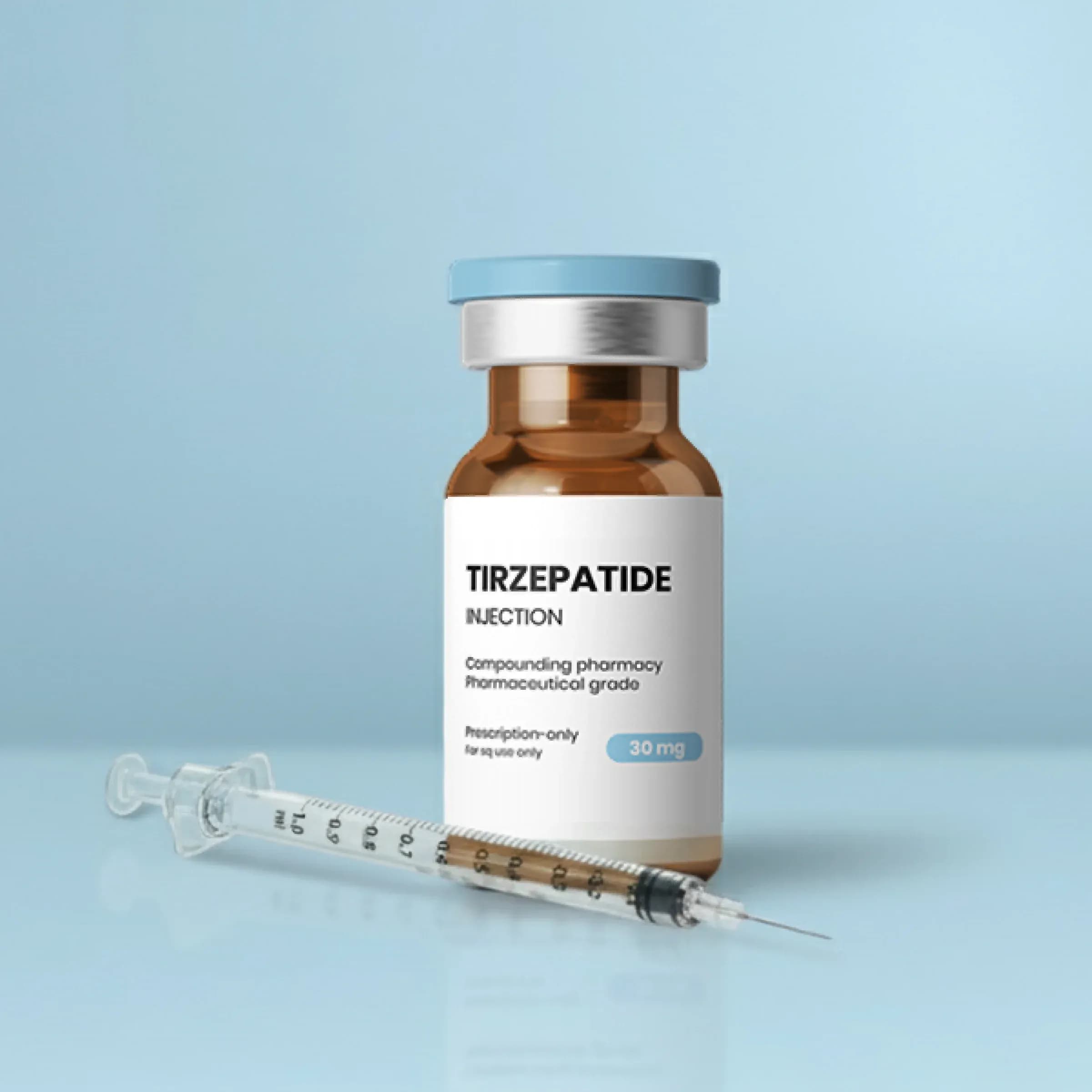
Yes, with conditions. As of November 2026, compounded tirzepatide is not banned. Federal law lets a state-licensed pharmacy prepare it for one patient's prescription, but not as regular copies of Zepbound® or Mounjaro® unless the prescriber documents a significant difference for that patient. Large outsourcing facilities may not make it from bulk ingredients. The FDA ended the tirzepatide shortage on December 19, 2024, and a federal appeals court upheld that decision on August 27, 2026. Compounded tirzepatide is not FDA-approved, which means the FDA hasn't reviewed it for safety, effectiveness or quality.

Last updated

Who wrote this page

MaxLife, a telehealth company, wrote this page and offers compounded tirzepatide. We are not a pharmacy or a law firm, and this is not legal advice. Every rule below links to the FDA page, court opinion, Federal Register notice or state board document it comes from, checked in November 2026.

Key takeaways

  • Not banned, but narrowly limited. The FDA ended the tirzepatide shortage on December 19, 2024. Shortage-based copies had to stop by March 5, 2025 at pharmacies and March 19, 2025 at outsourcing facilities.
  • The courts sided with the FDA. The Fifth Circuit Court of Appeals affirmed the FDA's shortage decision on August 27, 2026.
  • Not FDA-approved and not a generic. There is no FDA-approved generic of Zepbound, and the FDA says sellers may not call compounded drugs generic or the same as approved drugs.
  • Real safety signals. The FDA had more than 730 adverse event reports tied to compounded tirzepatide as of May 31, 2026, and several compounded tirzepatide products were recalled in fall 2026 over sterility.
  • Check before you buy. Use a licensed prescriber and a pharmacy licensed in your state, and avoid "research use only" vials and sellers that skip the prescription.

Three different questions

Legal, FDA-approved and safe are not the same thing

  • Legal?Yes, with conditions

    A state-licensed pharmacy may compound it for one patient's prescription. It may not regularly make copies of Zepbound or Mounjaro, and outsourcing facilities may not use bulk tirzepatide.

    What it means for you: Your prescriber and your pharmacy must follow these rules, not you.

    FDA, April 1, 2026
  • FDA-approved?No

    Only Lilly's Zepbound and Mounjaro are FDA-approved tirzepatide. A compounded version is not approved, and it is not a generic.

    What it means for you: Trial results belong to Zepbound and Mounjaro, not to compounded versions.

    Drugs@FDA; FDA, February 6, 2026
  • Safe?Not reviewed by the FDA

    The FDA has not reviewed compounded tirzepatide for safety, effectiveness or quality. Quality depends on the pharmacy, and dosing errors with vials are the FDA's top concern.

    What it means for you: Check the pharmacy's license and confirm your dose with your pharmacist.

    FDA, October 1, 2026

Status in November 2026. Sources are linked in the sections below.

Timeline

FDA actions on compounded tirzepatide, 2022 to 2026

Every step that matters for patients, oldest first, with what it means for you.

  1. FDA adds tirzepatide injection to its shortage list

    Pharmacies could make copies while supply was short.

    Source: FDA declaratory order
  2. FDA approves Zepbound for weight management

    The FDA-approved tirzepatide for weight loss arrives.

    Source: FDA press release
  3. FDA says the tirzepatide shortage is resolved

    The end of shortage compounding begins.

    Source: FDA statement on compounding GLP-1s
  4. FDA confirms the decision in a formal order

    Grace periods run to February 18 and March 19, 2025.

    Source: FDA declaratory order
  5. Court refuses to block the FDA; the pharmacy grace period ends

    Pharmacies can no longer rely on the shortage.

    Source: FDA statement on compounding GLP-1s
  6. Outsourcing facility grace period ends

    No bulk tirzepatide at 503B outsourcing facilities.

    Source: FDA statement on compounding GLP-1s
  7. FDA starts a "green list" for GLP-1 ingredients at the border

    Ingredients from unverified foreign sources can be stopped.

    Source: FDA press release
  8. FDA plans to restrict GLP-1 ingredients for mass-marketed compounded drugs

    Sellers may not call compounded drugs generic or the same as approved ones.

    Source: FDA statement
  9. FDA announces 30 warning letters to telehealth companies

    Advertising of compounded GLP-1s is being policed.

    Source: FDA press release
  10. FDA restates the 503A and 503B conditions

    This is the current rule for compounding tirzepatide.

    Source: FDA statement on compounding GLP-1s
  11. FDA proposes keeping tirzepatide off the 503B bulks list

    Comments closed July 30, 2026; no final decision yet.

    Source: Federal Register
  12. FDA reports 25 more warning letters to telehealth companies

    Enforcement on marketing claims continued.

    Source: FDA on X
  13. FDA writes to state medical boards about vial strengths

    Compounded vials can differ from the brand, so dose volumes are not interchangeable.

    Source: FDA letter to the Federation of State Medical Boards
  14. Appeals court affirms for the FDA

    The shortage decision stands.

    Source: Fifth Circuit opinion
  15. FDA warns a large pharmacy that "personalized" tirzepatide blends look like copies

    Add-ins alone may not make a product legal.

    Source: FDA warning letters
  16. Recalls of compounded tirzepatide products over sterility

    Check recall notices for your pharmacy.

    Source: FDA Enforcement Report
  17. FDA requires a vision-loss (NAION) warning on all GLP-1 labels

    A new label warning that covers tirzepatide.

    Source: FDA Drug Safety Communication
  18. Status check: no final 503B decision and no ingredient rule yet

    We update this page when the FDA acts.

    Source: FDA statement on compounding GLP-1s

Checked in November 2026. Each row links its source.

Prescribed by a licensed provider, $120/mo flat

MaxLife connects you with independent licensed providers and licensed partner pharmacies. All-inclusive, the same price at every dose.

Check if you qualify

Can pharmacies still compound tirzepatide? 503A vs 503B

Yes, state-licensed 503A pharmacies can, within limits; 503B outsourcing facilities cannot use bulk tirzepatide. A 503A pharmacy may use bulk tirzepatide because it is an ingredient of FDA-approved drugs, as long as it comes from an FDA-registered maker with a certificate of analysis. Outsourcing facilities follow federal manufacturing standards and are inspected by the FDA, but in 2026 they may not compound tirzepatide from bulk, and the FDA has proposed to keep it that way. Neither kind of pharmacy makes a compounded product FDA-approved.

503A vs 503B

Who may compound tirzepatide in 2026

503A pharmacy503B outsourcing facility
Licensed byYour state's board of pharmacyRegistered with the FDA (and licensed by states)
Needs a patient prescriptionYesNo
May compound tirzepatide nowYes, for an identified patient, not as regular copies of Zepbound or MounjaroNot from bulk ingredients
Copies of the brandOnly with a documented significant difference for that patient (the FDA does not intend to act at four or fewer such prescriptions a month)Not allowed while tirzepatide is not in shortage
FDA-approved product?NoNo

Source: FDA, April 1, 2026; Federal Register, May 1, 2026.

Is compounded tirzepatide being banned or going away?

No ban has been issued, but three things could tighten the rules further. First, on April 30, 2026 the FDA proposed to keep tirzepatide, semaglutide and liraglutide off the list of ingredients outsourcing facilities may use; comments closed July 30, 2026, and no final decision had been published as of November 2026. Second, on February 6, 2026 the FDA said it intends to restrict the GLP-1 ingredients used in mass-marketed compounded drugs; we found no rule putting that into effect yet. Third, the FDA keeps warning pharmacies whose "personalized" products look like copies of Zepbound.

The court case is over at the appeals level: the Fifth Circuit affirmed the FDA on August 27, 2026, and we found no request for Supreme Court review as of November 2026.

Is compounded tirzepatide FDA-approved or a generic?

No. Compounded tirzepatide is prepared by a licensed pharmacy for one patient's prescription and is not FDA-approved, which means the FDA hasn't reviewed it for safety, effectiveness or quality. It is also not a generic: the FDA says a generic is approved before it is sold, "while a compounded drug is not approved by FDA."

There is no FDA-approved generic of Zepbound. The FDA's drug database lists only Eli Lilly's two tirzepatide products, Mounjaro (type 2 diabetes, approved in 2022) and Zepbound (weight management and sleep apnea, approved in 2023). The FDA has told sellers they cannot describe compounded GLP-1s as generic, "the same as" an FDA-approved drug or "clinically proven," or claim they share the brand's active ingredient. If a website says any of these things, the FDA treats it as a red flag (FDA guidance for telehealth companies).

What is illegal: "research" peptides, no-prescription sellers and counterfeits

Some tirzepatide sold online is illegal no matter what anyone calls it:

  • "For research use only" or "not for human consumption" vials sold to people for injection. The FDA has sent warning letters to sellers of these products, including in August 2026, and urges consumers not to buy them.
  • Sellers that skip the prescription. Tirzepatide in any form needs a prescription; the FDA lists "does not require a screening and prescription by a licensed doctor" as a red flag.
  • Counterfeit pens and fake labels. The FDA has found compounded tirzepatide labels naming pharmacies that do not exist, or a real pharmacy that did not make the product.
  • Unapproved look-alikes. The FDA says retatrutide and cagrilintide "cannot be used in compounding under federal law."

These products have unknown ingredients, strength and sterility. Legal compounded tirzepatide comes only with a prescription, from a licensed pharmacy that puts its real name and address on the label.

Is compounded tirzepatide safe?

Nobody can promise that, because the FDA has not reviewed compounded tirzepatide for safety, effectiveness or quality. The FDA says compounded drugs "should only be used in patients whose medical needs cannot be met by an FDA-approved drug." As of May 31, 2026, the FDA had received more than 730 adverse event reports tied to compounded tirzepatide and 990 tied to compounded semaglutide. A report does not prove the drug caused the problem, and many problems are never reported.

The FDA's main concerns are dosing errors with multi-dose vials, sterility, ingredient sources and fake products. In an August 12, 2026 letter to state medical boards, the FDA noted that Zepbound comes in fixed single doses, while a compounded vial may hold several doses at a different strength per milliliter, so the volumes "are not interchangeable." The FDA advises discarding a multi-dose vial 28 days after first use and not using a vial that arrives warm. In fall 2026, FDA enforcement reports listed recalls of several compounded tirzepatide products, some with added vitamin B12 or niacinamide, over sterility. Ask your pharmacist how many milliliters equal your prescribed dose, and talk to your provider about any side effect.

What warnings apply to tirzepatide in any form?

The drug in compounded tirzepatide carries the same risks listed on the Zepbound label, and compounded products have no FDA label of their own. Zepbound has a boxed warning: tirzepatide caused thyroid C-cell tumors in rats, and it is unknown whether it does in people. It should not be used by anyone with a personal or family history of medullary thyroid carcinoma or Multiple Endocrine Neoplasia syndrome type 2.

The label also warns about severe stomach and bowel side effects, kidney injury from dehydration, gallbladder problems, pancreatitis, serious allergic reactions, low blood sugar when used with insulin or sulfonylureas, and breathing in stomach contents during anesthesia. On November 9, 2026, the FDA required all GLP-1 labels to add a warning about NAION, a rare cause of sudden vision loss in one eye. For the full list, see our guide to tirzepatide side effects. Talk to your provider before starting, and report any new symptoms.

How do you check that a compounding pharmacy is legitimate?

Eight checks, in the order you can do them:
Pharmacy check

8 ways to check a compounding pharmacy

  1. Ask for two names

    Before you pay: the licensed prescriber, and the pharmacy that will make and ship your medicine.

  2. Look up the pharmacy

    Use your state board of pharmacy (the FDA's BeSafeRx page links every state). An out-of-state pharmacy needs a license in your state.

  3. If it says "503B"

    Find it on the FDA's list. 503B facilities may not make tirzepatide from bulk ingredients today.

  4. Search FDA records

    Look for the pharmacy's name on the FDA's warning letter and recall pages.

  5. Check the website

    Look for NABP's safe.pharmacy listings or a LegitScript seal that links to a live listing.

  6. Check the prescriber

    Use your state medical board's license lookup.

  7. Check the vial

    Pharmacy name and address, your name, the drug, its strength per milliliter, a discard date, cold packaging and instructions.

  8. Report problems

    Tell the FDA through MedWatch (1-800-FDA-1088).

Takes about 10 minutes. Ask your provider if anything doesn't match.

What are the red flags of an unsafe tirzepatide seller?

The FDA lists these warning signs. Walk away if a company:

  • claims the compounded drug "is the same as an FDA-approved drug," or calls it generic or "clinically proven";
  • offers prices "that seem too good to be true";
  • does not require a screening and a prescription from a licensed clinician;
  • has no licensed clinician to answer questions after your medicine arrives;
  • sends a vial with spelling errors, a wrong pharmacy address, or a pharmacy name you think is fake;
  • ships medicine that is damaged, warm, or missing instructions;
  • sells vials labeled "research use only" or "not for human consumption," or offers retatrutide.

A low price is not proof of a problem, and a high price is not proof of quality. What matters is a real prescriber, a licensed pharmacy you can look up, and a clear label.

A licensed provider decides, then a licensed pharmacy fills it

See in about 2 minutes whether compounded tirzepatide may suit you: $120 a month, flat, the same price at every dose.

Check if you qualify

Do state laws change the answer?

They can add rules on top of federal law. We found no state law that bans compounded tirzepatide outright, but several state boards spell out the federal limits, and some go further on ingredients. Two state rules apply everywhere: the pharmacy must be licensed or registered to ship into your state, and the prescriber must be licensed in the state where you are during the visit.

State rules

What some state boards say about compounded GLP-1s

StateWhat its board saysSource
KentuckyOutsourcing facilities generally may not compound semaglutide or tirzepatide. Compounding based on a prescriber's documented clinical difference for one patient must be done by a 503A pharmacy. Adding B12 or B6 alone does not make it a different product.KY Board, Nov 2025
OhioThe prescriber must document a significant difference; ingredients only from Ohio-licensed distributors; no salt forms.Ohio Board
North CarolinaSince the court case ended, "compounding copies of approved tirzepatide products is no longer allowed."NC Board FAQ
CaliforniaNo copies of an approved drug unless it is in shortage or a pharmacist documents a clinically significant difference; binds out-of-state pharmacies too.CA Board rules
MississippiCompounded GLP-1s for weight loss only with a documented clinical need; salt forms are not equivalent.MS Board, 2024
WashingtonNo "research use only" components, including research peptides; ingredients from a licensed source.WA Commission, 2026
VirginiaMedicine labeled "for research purposes only" is "unlawful to possess" by IV hydration clinics and med spas.VA guidance 76-1

Checked in November 2026. Rules change: ask your pharmacy how it meets your state's rules.

Is compounded semaglutide still legal and safe?

The same rules apply, a few weeks later. The FDA declared the semaglutide shortage resolved on February 21, 2025; the grace period ended April 24, 2025 for pharmacies and May 22, 2025 for outsourcing facilities. The same appeals court affirmed the FDA on August 27, 2026, and the April 30, 2026 proposal covers semaglutide too.

One extra issue applies to semaglutide: the FDA says salt forms such as semaglutide sodium and semaglutide acetate "are different active ingredients" and it is "not aware of any lawful basis for their use in compounding." Compounded semaglutide is not FDA-approved and is not Ozempic® or Wegovy®. MaxLife's compounded semaglutide is $89/mo flat.

Where does MaxLife fit?

MaxLife is a telehealth patient management platform, not a pharmacy, manufacturer or compounder. An independent licensed provider reviews your health history, and a prescription is written only if the provider decides it is right for you. The medicine is prepared and dispensed by licensed partner pharmacies, including Dirx Pharmacy, Southend Pharmacy, Hallandale Pharmacy, Red Rock Pharmacy, Advanced Pharmacy, Perfect Rx Pharmacy, Health Wealth Pharmacy, Quaker Community Pharmacy, VLS Pharmacy and NewLife Rx Pharmacy. MaxLife is LegitScript certified.

Compounded tirzepatide through MaxLife is $120 a month, flat: all-inclusive, the same price at every dose, with no membership fee. It is not FDA-approved. If your insurance covers Zepbound, the brand may cost you less, so check your coverage first; our guide to online tirzepatide providers compares the options.

MaxLife pricing

What MaxLife tirzepatide costs

One flat price: all-inclusive, the same at every dose, with no membership fee.

Flat price

Every month, every dose

$120/mo flat

All-inclusive and the same price at every dose, with no membership fee and no hidden fees.

  • Free online consultation
  • Medicine, if prescribed
  • Supplies and free expedited shipping
  • Free ongoing medical support
Check if you qualify →
Cancel anytime

Same price every month

$120/mo flat

Flat $120 a month. Cancel anytime with notice before your next billing period.

  • No insurance needed
  • HSA and FSA may be eligible
  • Same price at every dose
  • Spanish-speaking team
See the tirzepatide program

MaxLife's fine print, in plain words

  • $120/mo flat, the same price at every dose.
  • Cancel anytime with notice before your next billing period.
  • Medicine costs are not refundable.
  • You may be able to use HSA or FSA funds. Check with your plan.
  • Already a MaxLife member? We offer a price match for existing customers.

Frequently asked questions

Questions about compounded tirzepatide's legal status

No. The FDA has not banned it, but since March 2025 pharmacies may compound it only for individual patients and not as regular copies of Zepbound or Mounjaro. Outsourcing facilities may not make it from bulk ingredients.
Yes, with conditions. A state-licensed pharmacy may prepare it for one patient's prescription, and it may not regularly copy Zepbound or Mounjaro unless the prescriber documents a significant difference for that patient. It is not FDA-approved.
Not under current rules, but the FDA is tightening them. A proposal to keep tirzepatide off the 503B bulks list is pending, and the FDA said in February 2026 that it plans to restrict GLP-1 ingredients used in mass-marketed compounded drugs. This page tracks both.
Yes, with a prescription from a licensed provider, filled by a state-licensed pharmacy that meets the federal conditions. Avoid any seller that does not require a prescription or sells "research use only" vials.
Because the law still allows a pharmacy to compound for an individual patient when the prescriber documents a significant difference, such as a needed change to the formulation. The FDA has warned pharmacies whose "personalized" products looked like copies made at volume. A lower price alone does not count.
No. Compounded tirzepatide is prepared by a licensed pharmacy for one patient's prescription and is not FDA-approved, which means the FDA hasn't reviewed it for safety, effectiveness or quality.
No. Zepbound is Eli Lilly's FDA-approved product in fixed single doses. Compounded tirzepatide is prepared by a pharmacy, often in multi-dose vials at other strengths, and is not FDA-approved.
No. The FDA's drug database lists only Lilly's Mounjaro and Zepbound as tirzepatide products. None from another company has been approved.
Not from bulk ingredients, because tirzepatide is not on the 503B bulks list and is not in shortage. The FDA proposed on April 30, 2026 to keep it off that list; the decision is pending.
Adding an ingredient does not by itself make a product legal. The FDA says a combination can still be essentially a copy, and in September 2026 it warned a pharmacy that its tirzepatide blends with niacinamide appeared to be copies.
No. Products labeled "for research purposes" or "not for human consumption" but sold for people to inject are unapproved drugs. The FDA has warned sellers and urges consumers not to buy them.
More than 730 reports as of May 31, 2026, according to the FDA's safety page updated October 1, 2026. A report does not prove the drug caused the problem, and many events go unreported.
Because compounded vials can have a different strength per milliliter. The FDA warns that dose volumes are not interchangeable with the brand, so confirm your dose in milligrams and milliliters with your pharmacist and provider.
No. Courts upheld the FDA's decision that the tirzepatide shortage is over; the Fifth Circuit affirmed on August 27, 2026. That decision ended shortage-based copying; it did not ban all compounding.
Talk to your provider before changing anything. Check that your pharmacy is licensed in your state and named on your label, and confirm your dose with your pharmacist.

Start with a licensed provider

See in about 2 minutes whether compounded tirzepatide may suit you. $120 a month, flat, the same price at every dose.

Check if you qualify
Sources

General information only, not medical or legal advice. The FDA does not approve compounded medications or review them for safety, effectiveness or quality. MaxLife is a patient management platform, not a pharmacy, drug maker or compounder, and a prescription is written only when a licensed provider decides treatment suits you. Facts were taken from public pages in November 2026 and may change, so confirm them before you act. Legal status is described from federal and state sources for general information; it is not a legal opinion. Zepbound®, Mounjaro® and KwikPen® are registered trademarks and Foundayo™ is a trademark of Eli Lilly and Company; Wegovy®, Ozempic® and Saxenda® are registered trademarks of Novo Nordisk. MaxLife is not affiliated with the other companies named.

Our editorial disclosure

How we handle the conflict of interest

MaxLife publishes this page and offers compounded tirzepatide. We cite the FDA, the courts, the Federal Register and state boards directly, and we state the limits and risks of compounded tirzepatide.

  • Rules and dates come from FDA, court, Federal Register and state board documents, checked in November 2026.
  • Compounded tirzepatide is described as not FDA-approved everywhere on the page.
  • No company is named in the FDA's general enforcement actions we describe.
  • We add new FDA actions to the timeline when they happen.
Last updated: November 12, 2026

Did a rule change?

The FDA has proposals pending. Tell us what changed and we'll check it and update the page.

hi@maxlife.com

Medical and regulatory note: This page is for information only and is not medical or legal advice. Compounded medications are not FDA-approved. Prescription treatment is available only if a licensed provider decides it is right for you.