What Color Should Tirzepatide Be? Clear, Pink or Red Explained
Pricing is accurate as of November 2026 and subject to change.
Key Takeaways
- Tirzepatide should be clear and colorless to slightly yellow, according to the Zepbound and Mounjaro labels revised August 2026.
- The labels say not to use it if it is frozen, cloudy, discolored or has particles.
- A pink or red compounded vial has something besides tirzepatide in it: look for vitamin B12 (cyanocobalamin), a dark red compound, on your pharmacy label.
- The FDA says the safety and effectiveness of combining semaglutide with added ingredients such as B12 has not been established, and no FDA-approved tirzepatide contains B12.
- Brand semaglutide (Wegovy, Ozempic) should be clear and colorless.
- If the color doesn't match your label or changes, don't inject it: keep the vial and call the dispensing pharmacy or your prescriber.
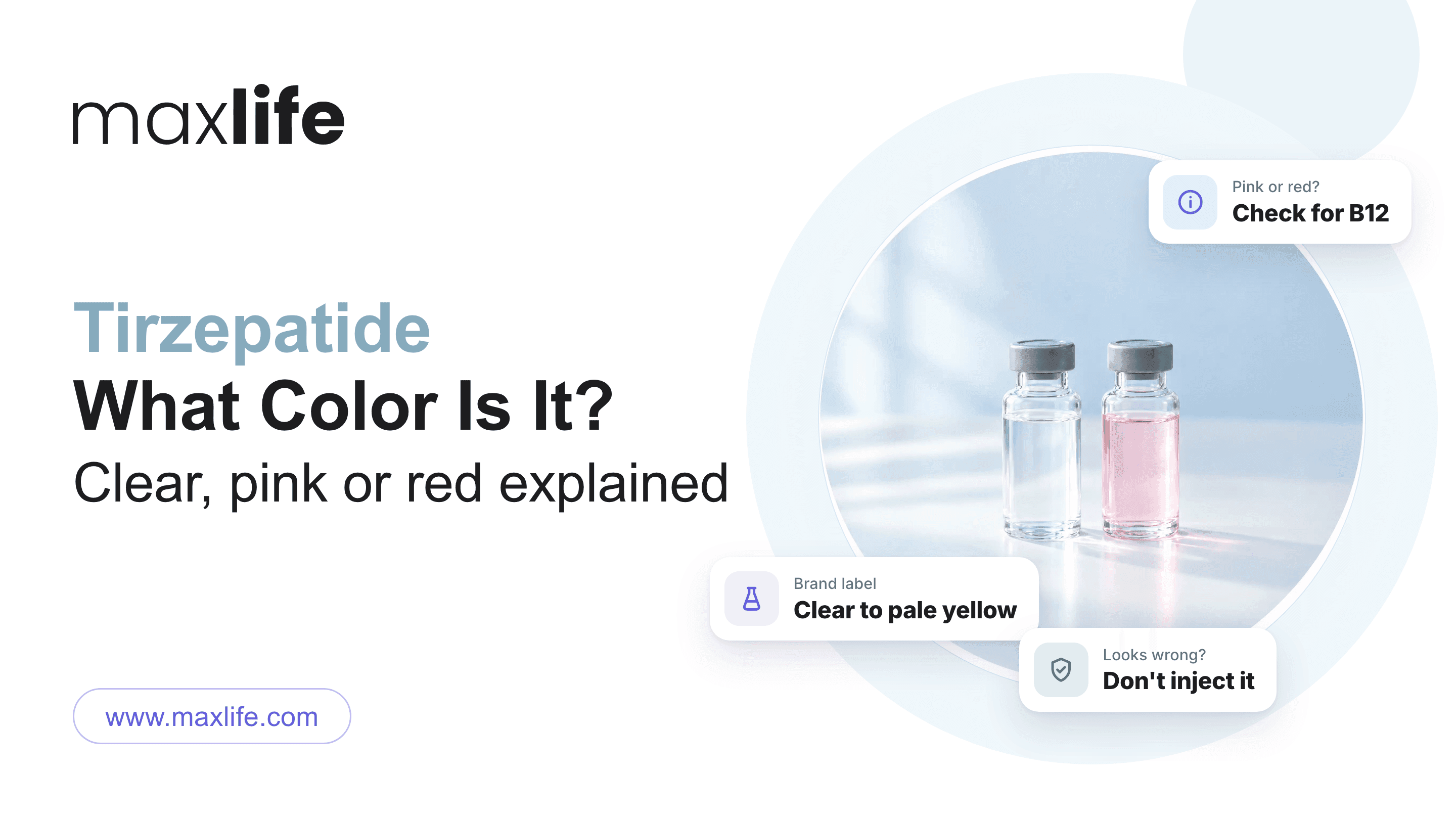
What color is tirzepatide? Tirzepatide should be clear and colorless to slightly yellow. That is how the current Zepbound prescribing information and Mounjaro prescribing information (both revised August 2026) describe it, and both say not to use it if you see particles or discoloration. Compounded tirzepatide can look different. If your vial is pink or red, check the label for vitamin B12 (cyanocobalamin), a dark red compound that some compounders add. If the color doesn't match your label, or it changed, don't inject it. Call the pharmacy that filled it.
This guide covers what brand and compounded tirzepatide should look like, why some vials are pink or red, what a color change can mean, how storage affects it, what semaglutide should look like, and how to tell a pharmacy product from a "research use only" one.
Compounded tirzepatide is prepared by a licensed pharmacy for one patient's prescription and is not FDA-approved, which means the FDA hasn't reviewed it for safety, effectiveness or quality. Learn more about compounded tirzepatide and how it is prescribed.
What Color Is Tirzepatide?
Tirzepatide is a clear, colorless to slightly yellow liquid. The Zepbound label tells you to "Inspect ZEPBOUND visually before use. It should appear clear and colorless to slightly yellow. Do not use ZEPBOUND if particulate matter or discoloration is seen." The Mounjaro label uses the same words; both are tirzepatide made by Eli Lilly.
The instructions for each Zepbound pen and vial turn that into a short checklist. Before you inject, make sure the medicine:
- is not frozen
- is not cloudy
- is colorless to slightly yellow
- does not have particles
Brand tirzepatide contains no vitamin or dye. According to the label, a single-dose pen or vial holds tirzepatide, sodium chloride, sodium phosphate and water for injection, and the 4-dose vials and KwikPens add benzyl alcohol, glycerin and phenol as preservatives. None of these adds color.
| Product | What it should look like | Source |
|---|---|---|
| Zepbound or Mounjaro (brand tirzepatide) | Clear, colorless to slightly yellow, no particles | FDA labels, revised August 2026 |
| Compounded tirzepatide | Depends on the formula; your pharmacy label lists the ingredients | Dispensing pharmacy |
| Compounded tirzepatide with added vitamin B12 | Pink to red, from the B12 | Cyanocobalamin label (dark red compound) |
| Wegovy or Ozempic (brand semaglutide) | Clear and colorless, no particles | FDA labels, June 2026 |
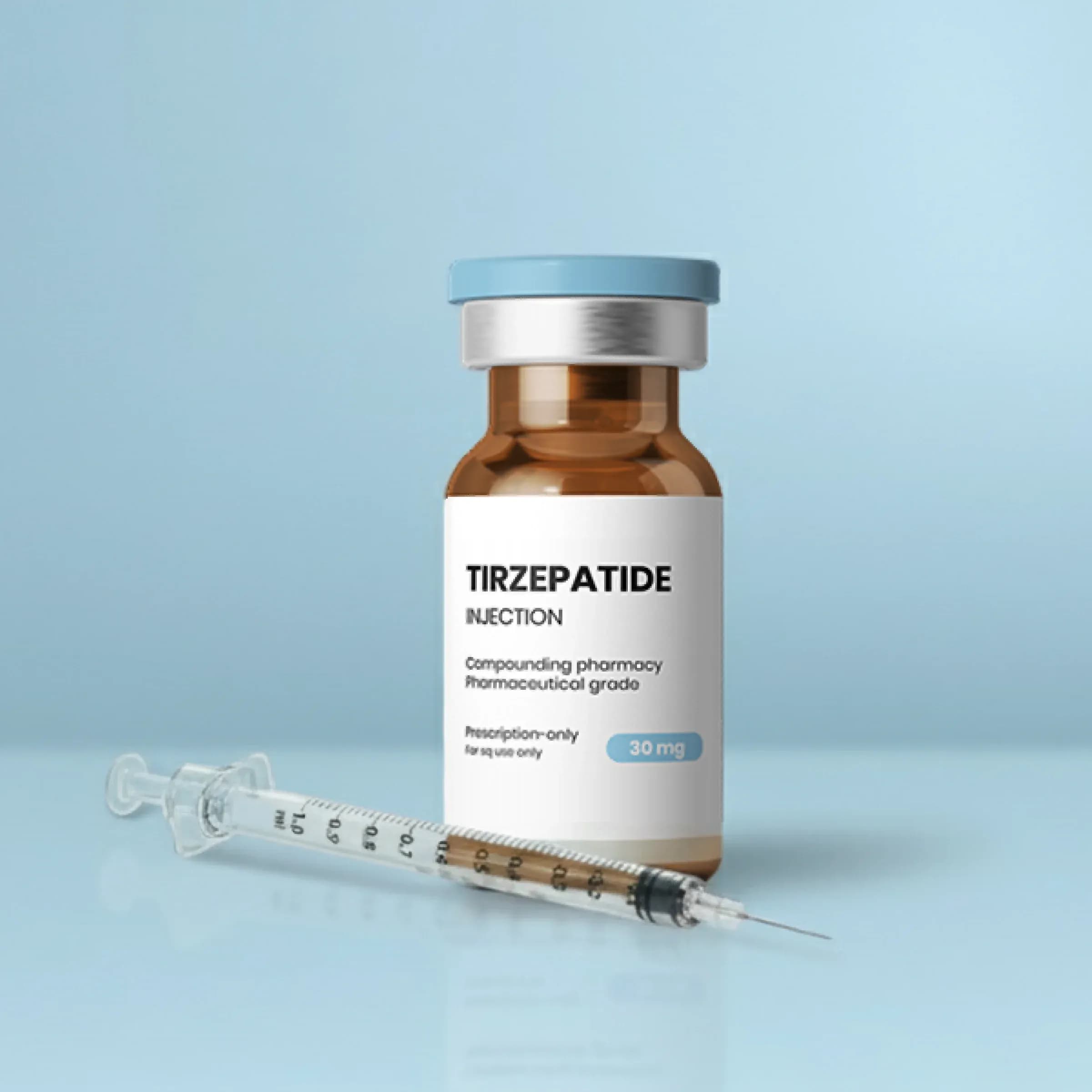
Compounded tirzepatide doesn't have one standard look. The pharmacy that prepares it decides the formula, and its label and patient instructions are the reference for what yours should look like. If you get compounded tirzepatide through MaxLife, our patient medication instructions include guides from partner pharmacies that publish them.
Why Is My Tirzepatide Pink or Red?
Tirzepatide itself is colorless to slightly yellow, so a pink or red color comes from something else in the vial. The first thing to check is the ingredient list on your pharmacy label, and the ingredient to look for is vitamin B12. The FDA has noted that some compounders add ingredients such as cyanocobalamin (vitamin B12), pyridoxine (vitamin B6), levocarnitine (L-carnitine) and NAD to their GLP-1 products, in a 2024 alert about compounded semaglutide.
Vitamin B12 is red. The label for cyanocobalamin injection, a prescription B12 product, says "Cyanocobalamin appears as dark red crystals or as an amorphous or crystalline red powder." Dissolved in a clear liquid, it tints the solution pink to red.
Three points are worth knowing before you draw a conclusion from the color:
- No FDA-approved tirzepatide contains B12. Zepbound and Mounjaro list no vitamins, so a pink or red product is either compounded or something is wrong with it.
- The combination itself hasn't been tested the way approved drugs are. In the same 2024 alert, the FDA wrote that "the safety and effectiveness of combining semaglutide with other ingredients has not been established." This post makes no claims about what added vitamins do. If you have questions about an added ingredient, ask your prescriber.
- Added ingredients can make dosing harder. In an August 12, 2026 letter to state medical boards, the FDA said that some compounded GLP-1s "may contain other active ingredients, such as vitamins and supplements, which may further complicate dose measurement and increase the risk of dosing errors."
What color is tirzepatide with B12?
Compounded tirzepatide with added vitamin B12 is pink to red, because B12 itself is a red compound. How deep the color looks depends on the formula. What matters is that your label lists B12 (often written as cyanocobalamin) and that the liquid is clear, with no cloudiness or particles.
Is red tirzepatide safe to use?
A red color alone doesn't tell you whether a product is safe. It is expected only when your pharmacy label lists B12 or another colored ingredient and the pharmacy told you to expect it. If your label shows only tirzepatide and the liquid is red or pink, don't inject it. Call the dispensing pharmacy or your prescriber first.
Why Is My Tirzepatide Clear Instead of Pink?
Clear is tirzepatide's own color. A clear vial simply means there is no colored ingredient in the formula, which is the case for every Zepbound and Mounjaro product.
The question to ask is whether your medicine changed. If your last vial was pink and this one is clear, or the other way around, the formula, the strength or the pharmacy may have changed. Compare the new label with the old one: the ingredients, the concentration in mg per mL and the pharmacy name. A different concentration changes how much liquid you draw for the same dose, so the number of units from your old vial may no longer apply. Our tirzepatide dosage chart explains why units depend on the concentration. Don't inject until the pharmacy or your prescriber has confirmed the new instructions.
The FDA lists this as a warning sign: on its page about unapproved GLP-1 drugs (current as of October 2026), one red flag is a company that "sends medicine that looks different than what you've previously received at your local pharmacy or was pictured on their website."
Is Slightly Yellow Tirzepatide Normal?
Yes. A faint yellow tint is within the label's range: "clear and colorless to slightly yellow." Brand tirzepatide can look anywhere from colorless to pale yellow.
Darker colors are different. Yellow that looks deep, amber or brown counts as discolored, and the label says not to use the medicine if you see discoloration. The same goes for any color your label doesn't describe.
When Does the Color Mean Something Is Wrong?
Tirzepatide's appearance is a warning sign when it doesn't match the label or when it changes. Don't use tirzepatide that:
- looks cloudy, hazy or milky
- has particles, flakes, threads or crystals floating in it
- is discolored, such as dark yellow, amber or brown, or a color your label doesn't describe
- has changed color since you opened the vial or since your last refill, without a new label explaining why
- has been frozen, even if it looks normal after thawing
These rules come from the Zepbound and Mounjaro labels and instructions, which say not to use the medicine if it is frozen, cloudy, discolored or has particles. A clear, normal-looking solution isn't proof that a dose is fine, though. Our guide on whether tirzepatide goes bad explains how heat and time can weaken it with no visible change.
What to do if your tirzepatide looks wrong
- Don't inject it. A missed or late dose is easier to fix than a dose of a product you can't trust.
- Keep the vial or pen in the refrigerator, in its carton, so the pharmacy can see it.
- Take a clear photo of the liquid against a white background and of the label.
- Call the dispensing pharmacy or your prescriber. The FDA tells patients to contact the compounder or the telehealth platform with questions about instructions or the label. If you get your medicine through MaxLife, check the pharmacy medication instructions tool to see whether your pharmacy publishes a guide, or contact your provider through MaxLife.
- Ask about your next dose. Your prescriber will tell you how to restart once you have a replacement.
- Report problems to the FDA's MedWatch program, which takes reports of quality problems from patients as well as health care professionals.
Can Heat, Light or Freezing Change Tirzepatide?
Yes, heat, light and freezing can all damage tirzepatide, and the damage doesn't always show. That's why the labels set storage rules instead of relying on how the liquid looks.
The Zepbound label says: "Protect ZEPBOUND from heat and light. Store ZEPBOUND in the original carton to protect from light," and "Do not use ZEPBOUND if frozen." Keep it in the refrigerator at 36°F to 46°F (2°C to 8°C) and follow the room-temperature limits for your product. Compounded vials follow the storage directions on the pharmacy label.
Three more points matter for color:
- B12 is sensitive to light. The cyanocobalamin injection label says "The vitamin B12 coenzymes are very unstable in light" and "PROTECT THE PRODUCT FROM LIGHT." Keep any vial in its box or a closed container when you aren't using it.
- Warm deliveries. The FDA recommends that patients "not use any injectable GLP-1 drug that arrives warm or with insufficient refrigeration." Contact the pharmacy for a replacement, whatever the liquid looks like.
- Old vials. The FDA advises throwing away a compounded multi-dose vial within 28 days after first use, even if medicine is left. Don't keep drawing from an old vial because it still looks clear.
What Color Is Semaglutide?
Semaglutide should be clear and colorless. The Wegovy label (June 2026) says to "Only use if the solution is clear, colorless, and contains no particles," and the Ozempic label says it "should appear clear and colorless." Unlike tirzepatide, brand semaglutide isn't described as slightly yellow.
Compounded semaglutide can be pink or red for the same reason as tirzepatide: the FDA's 2024 alert about added ingredients was written about semaglutide products and names cyanocobalamin first. The rules are the same too. Check your label for B12, make sure the liquid is clear with no particles, and call the pharmacy if the color doesn't match the label or changes. If you take compounded semaglutide, it is also prepared for one patient's prescription and is not FDA-approved.
How Do I Know If My Tirzepatide Is Compounded or Legitimate?
You can tell compounded tirzepatide from the brand by the packaging, not the color. Zepbound and Mounjaro come in Lilly cartons with a product name, strength and expiration date. Compounded tirzepatide comes in a vial with a pharmacy prescription label that should show your name, the pharmacy's name, the medicine and any added ingredients, the concentration and a beyond-use date.
Color can't prove that a product is genuine, the right strength or sterile. The FDA says it is aware of fraudulent compounded tirzepatide and semaglutide whose labels name pharmacies that "do not exist," or name a licensed pharmacy that "did not compound these products." A label that names a real, state-licensed pharmacy you can call, and a prescription from a licensed provider who reviewed your health history, tell you far more than the color does.
The biggest difference is between a prescription filled by a licensed pharmacy and a "research use only" product:
| Prescription from a licensed pharmacy | "Research use only" product |
|---|---|
| Requires a prescription from a licensed provider | Sold without a prescription |
| Prepared by a state-licensed pharmacy for one patient | Unknown maker and unknown quality |
| Patient-specific label with ingredients, strength and a beyond-use date | Labeled "for research purposes" or "not for human consumption" |
| A pharmacist and a prescriber you can call | No prescriber or pharmacist responsible for your care |
| Not FDA-approved, but the pharmacy is licensed by a state board of pharmacy | The FDA has warned sellers and urges consumers not to buy |
The FDA says it has warned companies selling tirzepatide and semaglutide "falsely labeled 'for research purposes' or 'not for human consumption,'" products sold "directly to consumers for human use with dosing instructions." It urges consumers not to buy them because they are "of unknown quality and may be harmful to their health." Checking the color of a research product tells you nothing about what is actually in it.
The FDA's BeSafeRx guidance lists the signs of a safe online pharmacy: it always requires a prescription, has a U.S. address and phone number, has a licensed pharmacist to answer questions and is licensed with a state board of pharmacy. Our guide to the best tirzepatide providers compares 24 online options and shows what to check before you sign up.
Getting Compounded Tirzepatide From a Licensed Pharmacy
If you want tirzepatide you can trust, start with a licensed provider and a licensed pharmacy. That is how MaxLife works. MaxLife is a telehealth patient management platform, not a pharmacy. You complete a short online intake that takes about 2 minutes, and an independent licensed provider reviews it, usually within 24 hours, and decides whether a prescription is right for you. If it is, a licensed partner pharmacy prepares and dispenses your compounded tirzepatide with a patient-specific label and free expedited shipping. If something about your vial ever looks off, you have a provider and a pharmacy to ask. MaxLife is LegitScript certified and available in all 50 states.
Compounded tirzepatide through MaxLife costs $120 a month, flat, the same price at every dose, with no membership fee. The price includes the provider's review and follow-up, the medicine if prescribed, and supplies. See what tirzepatide costs with and without insurance for a full comparison.
Compounded tirzepatide isn't the right choice for everyone. If your insurance covers Zepbound or Mounjaro, the FDA-approved brand is usually the better route, and the FDA says compounded drugs should only be used when an approved drug doesn't meet a patient's medical needs. Compounded medicines are not FDA-approved, and the results of the Zepbound and Mounjaro trials have not been shown for compounded tirzepatide.
Frequently Asked Questions
Compounded Tirzepatide: $120/mo Flat, All-Inclusive
MaxLife compounded tirzepatide: $120 a month, flat. All-inclusive, no membership fee, the same price at every dose. A licensed provider decides.
Check Your EligibilityThis article is for informational purposes only and is not a substitute for professional medical advice, diagnosis, or treatment. Individual results vary. Pricing, insurance coverage, and compounding regulations described here are subject to change; verify current details with your insurance provider, the manufacturer, or your prescriber before making treatment decisions. Compounded medications are not FDA-approved.
Why trust our experts

April Foster, DO MPH
Reviewer
Board Certified Family Medicine Physician licensed nationwide providing collaborative oversight to NPs, PAs, and RN. Also specializing in telemedicine services nationwide.
Sources
- Zepbound (tirzepatide) prescribing information, Medication Guide and Instructions for Use (DailyMed, revised 08/2026)
- Mounjaro (tirzepatide) prescribing information (DailyMed, revised 08/2026)
- Wegovy (semaglutide) prescribing information (DailyMed, June 2026)
- Ozempic (semaglutide) prescribing information (DailyMed, June 2026)
- Cyanocobalamin Injection, USP label (DailyMed, October 2026)
- FDA: FDA's Concerns with Unapproved GLP-1 Drugs Used for Weight Loss (current as of October 1, 2026)
- FDA letter to the Federation of State Medical Boards on compounded GLP-1 multi-dose vials (August 12, 2026)
- FDA: Dosing errors associated with compounded injectable semaglutide products (July 26, 2024)
- FDA BeSafeRx: Considering an Online Pharmacy?
Does Tirzepatide Go Bad? How Long It Lasts In and Out of the Fridge
October 16, 202614 min
Tirzepatide Dosage Chart for Weight Loss: Doses, Schedule and Units
October 21, 202612 min
Tirzepatide Cost: Price Per Month With and Without Insurance
August 20, 202614 min
Is Semaglutide the Same as Ozempic? Brand vs Compounded
September 15, 20268 min