What Is Microdosing Tirzepatide? What the Evidence Says
Pricing is accurate as of November 2026 and subject to change.
Key Takeaways
- Microdosing tirzepatide means taking less than the label's 2.5 mg weekly starting dose, or spacing doses more than a week apart. It is off-label and has no official definition.
- As of November 2026, no randomized trial has tested microdosing tirzepatide as a regimen. The evidence is commentaries, letters and one observational study.
- The Zepbound label starts at 2.5 mg once weekly for 4 weeks and says 2.5 mg is for starting treatment, not maintenance. Maintenance doses are 5 mg, 10 mg or 15 mg.
- In SURMOUNT-1, adults on Zepbound lost 15.0% (5 mg) to 20.9% (15 mg) of body weight over 72 weeks. Lower doses produced less weight loss on average.
- On August 12, 2026, the FDA warned state medical boards that compounded GLP-1 vials often differ in concentration from brand products, so dose volumes are not interchangeable.
- Dose changes are your prescriber's decision. At MaxLife, compounded tirzepatide is $120 a month, flat, the same price at every dose, and is not FDA-approved.
Important: Microdosing tirzepatide is off-label. It is not an FDA-approved way to use tirzepatide, no randomized trial has tested it, and this article is not dosing advice. Any change to your dose is a decision for your prescriber.
Microdosing tirzepatide means taking less tirzepatide than the label's 2.5 mg starting dose, or spacing doses further apart than once a week, usually to limit side effects or cost. As of November 2026, there are no randomized trials of microdosing as a regimen: a PubMed search on November 12, 2026 found commentaries, letters and one observational study, and a 2026 commentary in Expert Opinion on Pharmacotherapy says high-quality evidence "is essentially absent." The Zepbound® label starts at 2.5 mg once a week for 4 weeks and says the 2.5 mg dose "is for treatment initiation and is not approved as a maintenance dosage."
If cost is part of the reason you're asking, one fact helps: at MaxLife, compounded tirzepatide costs $120 a month, flat, the same price at every dose, so the dose your provider prescribes doesn't change what you pay. Compounded tirzepatide is not FDA-approved, and a licensed provider decides whether it's right for you and at what dose.
What Is Microdosing Tirzepatide?
Microdosing tirzepatide is an informal term for using tirzepatide below, or less often than, the doses on the FDA label. There is no official definition. The 2026 Expert Opinion commentary says microdosing of GLP-1 medicines is "typically defined as the use of 25-50% of manufacturer-recommended starting doses or extended dosing intervals," and lists techniques such as "click counting" with multi-dose pens.
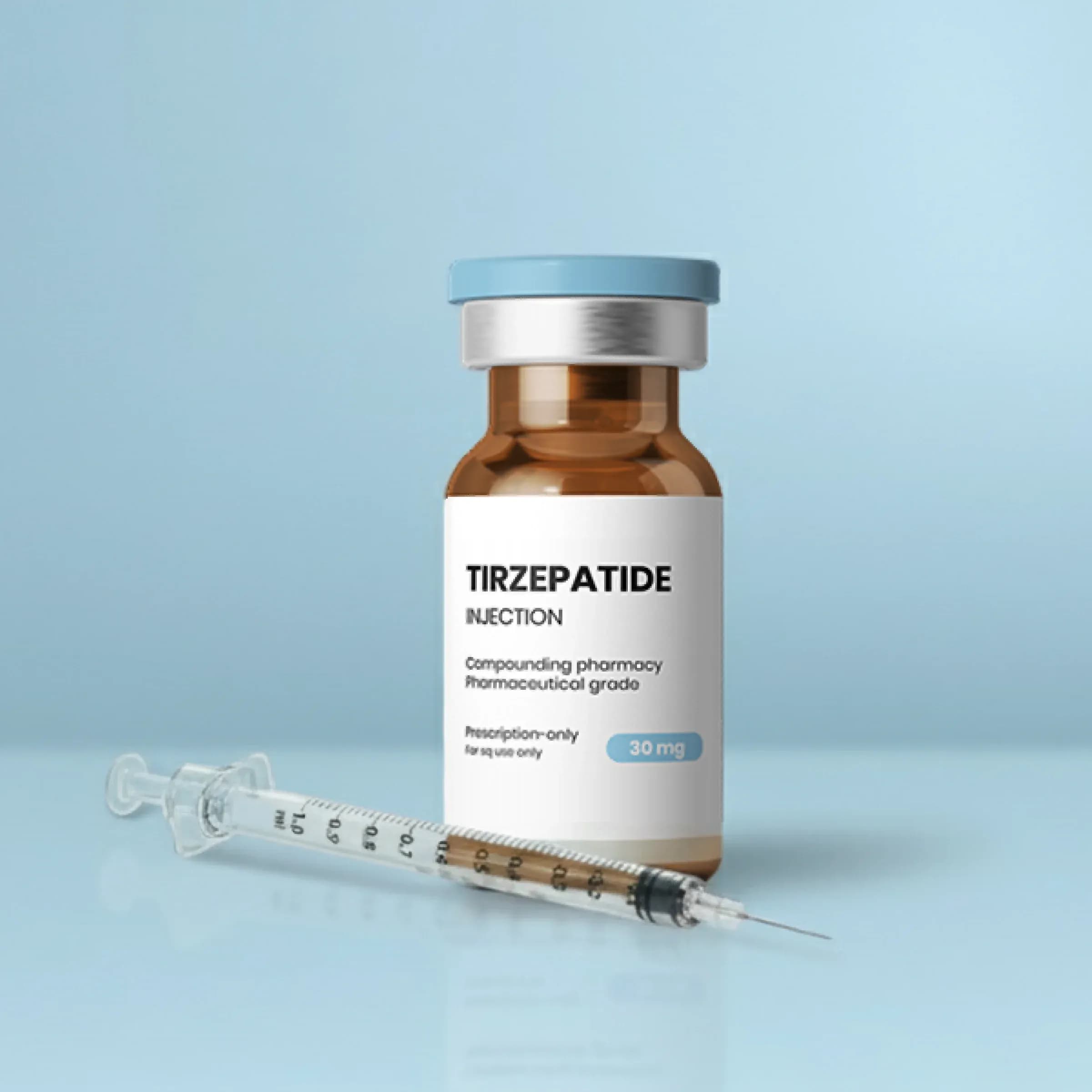
Tirzepatide is the medicine in Zepbound and Mounjaro®, and in compounded tirzepatide. People talk about microdosing all three, but the brand products are built for full labeled doses: Zepbound's single-dose vial instructions say to throw away opened vials "even if there is medicine left in the vial," and its multi-dose KwikPen holds 4 fixed doses. That's why microdosing talk often centers on compounded vials, where the volume you draw sets the dose.
Microdosing is not the same as a lower dose your prescriber chooses within the label. The Zepbound label lets a prescriber stay on a dose longer than 4 weeks before stepping up, and says that "if patients do not tolerate a maintenance dosage, consider a lower maintenance dosage." Those are label options, not microdosing.
What Is Considered a Microdose of Tirzepatide?
In everyday use, a "microdose" of tirzepatide is any weekly dose below 2.5 mg, the label's starting dose, or a dose given less often than once a week. The FDA label doesn't define it, and no microdose amount has been tested in a randomized trial, so there is no "correct" microdose. The label's lowest maintenance dose is 5 mg a week.
Has Microdosing Tirzepatide Been Studied?
No, not in randomized trials. The evidence is limited to commentaries, letters, a narrative review and one observational study, all published in 2025 and 2026. Here is what has and hasn't been tested:
| Dose pattern | Tested in randomized trials? | What is known |
|---|---|---|
| 2.5 mg for 4 weeks, then 5 mg or more | Yes (Zepbound trials) | 15.0% to 20.9% average weight loss at 72 weeks in SURMOUNT-1 |
| Lower maintenance dose if side effects | Label option | "Consider a lower maintenance dosage" (Zepbound label) |
| Staying on 2.5 mg long term | No | Start-only dose on the label; one records study (below) |
| Weekly doses below 2.5 mg | No | No trial data |
| Gaps longer than one week | No | The label says once weekly |
The one study that comes close is an observational analysis of health records, published in 2026. Among 1,016 people who kept filling 2.5 mg tirzepatide prescriptions for at least 6 months, average weight change at 12 months was -5.5%. The authors say this pattern "may overlap with, but does not establish, intentional microdosing," and call for prospective studies. Records studies can't show cause and effect, and people in them weren't assigned a dose at random.
Why Do People Microdose Tirzepatide?
People give four main reasons. Here is each one, with what the label and trials say:
- To avoid side effects. Nausea, diarrhea, vomiting and constipation are common: in the Zepbound trials, nausea affected 25% to 29% of people versus 8% on placebo. The label's slow step-up exists "to reduce the risk of gastrointestinal adverse reactions," and a prescriber can stay longer on a dose or choose a lower maintenance dose.
- To spend less. Brand tirzepatide is priced by dose, so some people try to stretch a pen or vial. That carries the dosing risks covered below.
- To quiet "food noise" with less appetite loss. Some want a gentler effect. No randomized trial has tested doses below 2.5 mg for this.
- To maintain weight after losing it. In the Zepbound label's withdrawal study (SURMOUNT-4), the weight of people switched to placebo after 36 weeks rose 14.0% by week 88, while those who stayed on 10 mg or 15 mg lost another 5.5%. Lower maintenance doses weren't tested there.
You may also read claims that microdosing lowers inflammation or supports longevity. Those claims are not backed by trials of microdosing.
Does Microdosing Tirzepatide Work?
Nobody knows how well it works, because it hasn't been tested. What the trials do show is a dose response: in SURMOUNT-1, adults taking Zepbound lost an average of 15.0% of their body weight at 5 mg, 19.5% at 10 mg and 20.9% at 15 mg over 72 weeks, versus 3.1% on placebo. Lower doses produced less weight loss on average, and doses below 5 mg were not studied as maintenance.
Is 2.5 mg of tirzepatide enough to lose weight? The records study above found an average of 5.5% at 12 months among people who stayed on 2.5 mg, far less than the 15.0% to 20.9% seen at maintenance doses in SURMOUNT-1, though the two studies can't be compared directly. The label calls 2.5 mg a starting dose only, and it was never tested as a long-term dose. If you're losing less than you expected, the reasons can include dose, diet, sleep and other medicines; our guide on why you might not be losing weight on tirzepatide walks through them with your provider in mind.
Is There a Microdosing Tirzepatide Chart or Schedule?
There is no microdosing chart or schedule that has been tested in a trial, and none is recommended here. The charts you find online come from programs, clinics and blogs, not from studies or the FDA label. In general terms, they describe:
- starting below 2.5 mg a week and moving up in smaller steps than the label's 2.5 mg
- staying on 2.5 mg for longer than 4 weeks
- splitting one weekly dose into two smaller injections
- leaving more than 7 days between doses
- counting clicks on a multi-dose pen to get a partial dose
Here is how those patterns compare with the Zepbound label:
| Zepbound label | Microdosing posts describe | |
|---|---|---|
| Starting dose | 2.5 mg once weekly for 4 weeks | Less than 2.5 mg, or 2.5 mg for longer |
| Step-ups | 2.5 mg steps, after at least 4 weeks on a dose | Smaller steps |
| Maintenance dose | 5 mg, 10 mg or 15 mg weekly | Below 5 mg |
| How often | Once weekly | Split doses or gaps over 7 days |
| Multi-dose pen | 4 fixed doses; "Do not count clicks" | Clicks counted for partial doses |
| Evidence | Phase 3 trials (SURMOUNT) | No randomized trials |
Note that "at least 4 weeks" already lets a prescriber step up more slowly than every 4 weeks. Two other label rules matter for any schedule: take a missed dose within 4 days (96 hours) or skip it, and keep at least 3 days (72 hours) between doses if you change your injection day. Our tirzepatide dosage chart lays out the full label schedule.
Is Microdosing Tirzepatide Safe?
Its safety hasn't been studied, and the biggest known risk is measuring the dose. In an August 12, 2026 letter to the Federation of State Medical Boards, the FDA warned that compounded GLP-1 medicines "often have different concentrations than FDA approved products." Zepbound comes as 2.5 mg to 15 mg per 0.5 mL. The FDA's example compounded vial holds 17 mg/mL, so 2.5 mg is just 0.15 mL, and "the volumes are not interchangeable between the two."
That is why home dose math is risky:
- Concentrations differ. A microdose chart in syringe "units" made for one vial strength gives a different dose with another. Your pharmacy label, not an online chart, sets the volume for your vial.
- Small volumes are hard to measure. The FDA letter says syringe markings can be "difficult to find and read," and added ingredients in some compounded products "may further complicate dose measurement." Every dose below 2.5 mg is smaller than 0.15 mL in that example vial.
- Dosing errors are already being reported. The FDA has received adverse event reports, "some requiring hospitalization," that may be related to dosing errors with compounded semaglutide, from patients measuring wrong doses and from health care professionals miscalculating them (FDA).
- Vials have a 28-day limit. The FDA says to throw away a multi-dose vial 28 days after first use, even if medicine is left, and to use a new sterile needle and syringe each time. Stretching a vial over more weeks breaks that rule.
- Brand pens and vials aren't made for partial doses. The Zepbound KwikPen holds 4 fixed doses, and its instructions say "Do not count clicks as you select the dose" and "Do not transfer ZEPBOUND from your Pen into a syringe." Single-dose vials are thrown away after one use.
A smaller dose doesn't remove tirzepatide's label warnings, including the boxed warning about thyroid C-cell tumors in rats and warnings about pancreatitis, gallbladder problems and low blood sugar with insulin or a sulfonylurea. If you have type 2 diabetes, a dose below the studied range may leave your blood sugar less controlled. Talk to your provider before changing anything.
Why Should Your Provider Decide Dose Changes?
Your provider decides because the right dose depends on how you respond, what side effects you have, your other conditions and medicines, and the product you're using. The Zepbound label says to "consider treatment response and tolerability when selecting the maintenance dosage," and the FDA says health care providers "should be vigilant" when "determining appropriate doses and titration and dosing schedules" for compounded tirzepatide.
A provider can do several things the label allows if side effects are a problem, such as waiting longer before the next step up or choosing a lower maintenance dose. Each dose change also has knock-on effects: the label says people using birth control pills should switch to a non-oral method, or add a barrier method, for 4 weeks after starting and for 4 weeks after each dose increase.
If you take compounded tirzepatide, ask your provider for your dose in milligrams, and ask your pharmacist what volume that is for your vial's concentration. The FDA also encourages patients to talk with their provider or compounder about how to measure the intended dose.
Is Microdosing Tirzepatide Cheaper?
It depends on how your tirzepatide is priced. Brand tirzepatide is priced by dose: as of November 2026, LillyDirect sells Zepbound vials and KwikPens for $299 (2.5 mg), $399 (5 mg) and $449 (7.5 mg to 15 mg) a month if you refill within 45 days. Stretching a pen or vial to save money runs into the dosing and 28-day problems above. Our tirzepatide cost guide compares every route.
At MaxLife, the price is $120 a month, flat, the same price at every dose. If your provider keeps you on a lower dose or steps you up more slowly, you don't need a different plan, and there's no price reason to stretch a vial. Compounded tirzepatide is prepared by a licensed pharmacy for one patient's prescription and is not FDA-approved, which means the FDA hasn't reviewed it for safety, effectiveness or quality. The SURMOUNT results above belong to Zepbound; these results have not been shown for compounded tirzepatide. Our guide to tirzepatide vs Zepbound explains the differences.
Here is how MaxLife works. MaxLife is a telehealth patient management platform, not a pharmacy or drug maker. You complete an online intake in about 2 minutes, and an independent licensed provider reviews it, usually within 24 hours; you can ask for a video visit. The provider decides whether a prescription is right for you and sets your dose. Licensed partner pharmacies prepare and dispense it. The flat price includes the provider's review and follow-up, the medicine if prescribed, supplies and free expedited shipping, with no membership fee. No insurance is needed, HSA and FSA funds may be eligible, and MaxLife serves all 50 states, has a Spanish-speaking team and is LegitScript certified. See whether you qualify on the compounded tirzepatide page.
What About Microdosing Semaglutide and Other GLP-1s?
The same evidence gap applies. "Microdosing GLP-1" is the wider term, and it usually means semaglutide (Wegovy®, Ozempic®) or tirzepatide below their label starting doses. Wegovy's label starts at 0.25 mg once weekly for 4 weeks, and no randomized trial has tested doses below that as a regimen either. Letters in Diabetes Care in 2025 discussed microdosing semaglutide with multi-dose pens. Our semaglutide dosage chart covers the Wegovy and Ozempic label schedules.
Newer medicines aren't an option at any dose yet. Retatrutide, Lilly's investigational triple agonist, is not FDA-approved and can't legally be prescribed outside trials; see retatrutide vs tirzepatide for what its trials show.
The Bottom Line
Microdosing tirzepatide means using less than the label's 2.5 mg starting dose, or dosing less often than weekly. It is off-label, and as of November 2026 no randomized trial has tested it. The label's studied path is 2.5 mg for 4 weeks, then 5 mg, 10 mg or 15 mg, with room for a prescriber to step up more slowly or choose a lower maintenance dose. The FDA's August 12, 2026 letter shows why measuring small doses at home is risky. Let your provider set your dose; at MaxLife, compounded tirzepatide is $120 a month, flat, the same price at every dose (not FDA-approved).
Frequently Asked Questions
Compounded Tirzepatide: $120/mo Flat, All-Inclusive
MaxLife compounded tirzepatide: $120 a month, flat. All-inclusive, no membership fee, the same price at every dose. A licensed provider decides.
Check Your EligibilityThis article is for informational purposes only and is not a substitute for professional medical advice, diagnosis, or treatment. Individual results vary. Pricing, insurance coverage, and compounding regulations described here are subject to change; verify current details with your insurance provider, the manufacturer, or your prescriber before making treatment decisions. Compounded medications are not FDA-approved.
Why trust our experts

April Foster, DO MPH
Reviewer
Board Certified Family Medicine Physician licensed nationwide providing collaborative oversight to NPs, PAs, and RN. Also specializing in telemedicine services nationwide.
Sources
- Zepbound (tirzepatide) prescribing information and instructions for use, revised August 2026 (DailyMed)
- FDA letter to the Federation of State Medical Boards on compounded GLP-1 multi-dose vials, August 12, 2026
- FDA: Concerns with unapproved GLP-1 drugs used for weight loss (content current as of October 1, 2026)
- Expert Opinion on Pharmacotherapy: Considerations and challenges in microdosing of GLP-1-based receptor agonists (2026)
- Biology Methods and Protocols: Cardiometabolic benefits and tolerability in patients on sustained low doses of semaglutide or tirzepatide (2026)
- Obesity: Micro Doses, Macro Potential? Considerations for Microdosing Tirzepatide in Multi-Dose Pens (2026)
- Journal of the American Association of Nurse Practitioners: The microdosing dilemma (2026)
- Diabetes Care: One Size Does Not Fit All, Understanding Microdosing Semaglutide for Diabetes in Multidose Pens (2025)
- New England Journal of Medicine: Tirzepatide Once Weekly for the Treatment of Obesity (SURMOUNT-1)
- Wegovy (semaglutide) prescribing information (DailyMed)
- LillyDirect: Zepbound self-pay pricing
Tirzepatide Dosage Chart for Weight Loss: Doses, Schedule and Units
October 21, 202612 min
Why Am I Not Losing Weight on Tirzepatide?
November 9, 202613 min
Tirzepatide Cost: Price Per Month With and Without Insurance
August 20, 202614 min
Tirzepatide vs Zepbound: Brand and Compounded Explained
November 5, 202610 min