Why Am I Not Losing Weight on Tirzepatide?
Pricing is accurate as of November 2026 and subject to change.
Key Takeaways
- In SURMOUNT-1, adults taking Zepbound lost an average of 15.0% to 20.9% of their weight over 72 weeks, but 9% to 15% lost less than 5% (Zepbound label, August 2026).
- The 2.5 mg starting dose is not a maintenance dose; 5 mg, 10 mg and 15 mg are, and 5 mg led to an average 15.0% loss over 72 weeks.
- A slow start is common: 18% of people had lost less than 5% by week 12, yet 90% of them reached 5% by week 72.
- Weight plateaus are expected; in SURMOUNT-1 the median time to a plateau was about 24 to 36 weeks, depending on starting BMI.
- Common causes of a stall include calorie intake, missed doses, other medicines, conditions such as hypothyroidism, and storage problems.
- With compounded vials, the FDA warned in August 2026 that concentrations often differ, so dose volumes are not interchangeable; any dose change is your provider's decision.
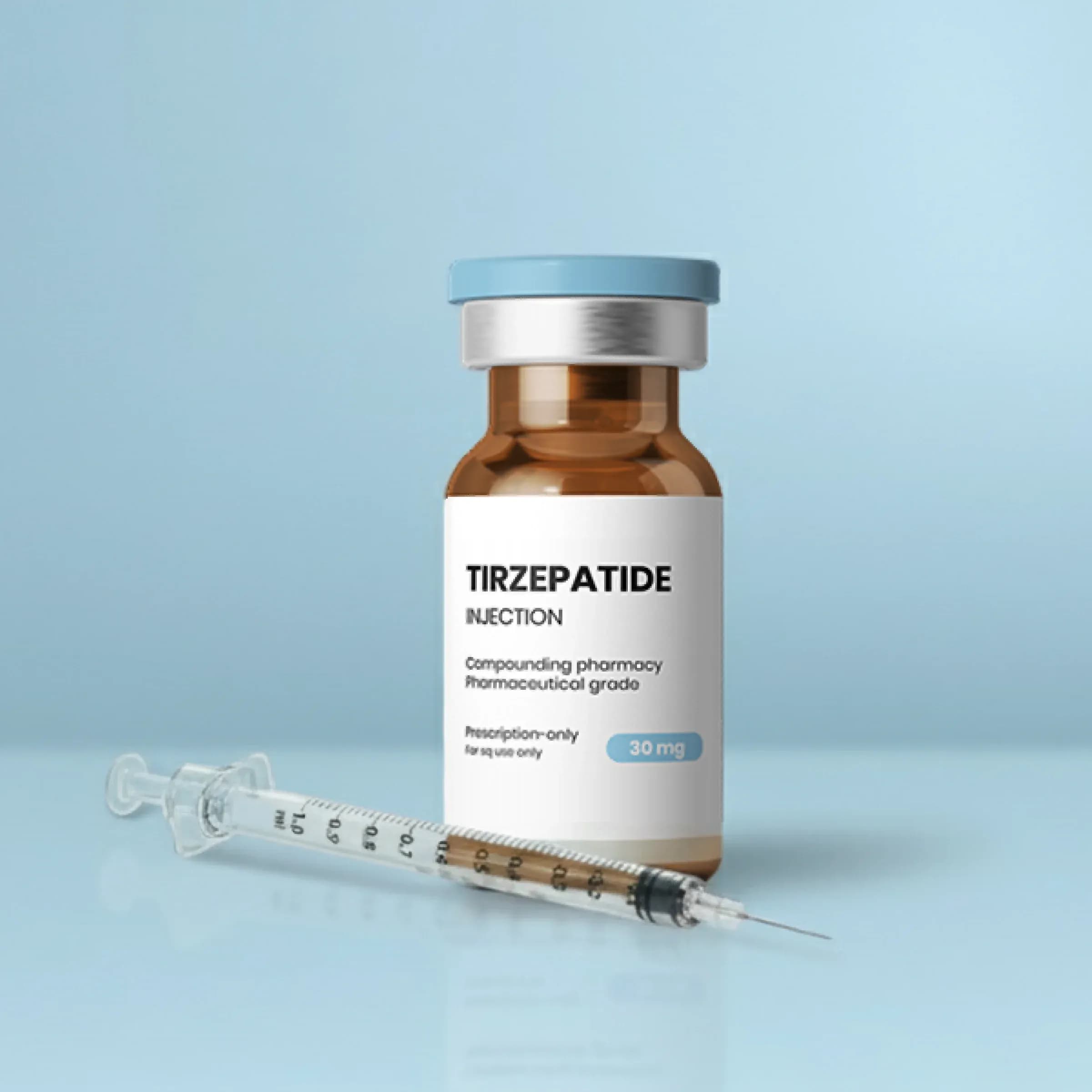
Most people do lose weight on tirzepatide, but the loss comes slowly and unevenly, and not everyone responds the same way. In the SURMOUNT-1 trial, adults taking Zepbound (brand tirzepatide) lost an average of 15.0% to 20.9% of their body weight over 72 weeks, depending on the dose, yet 9% to 15% of them lost less than 5%. If the scale isn't moving, the usual reasons are being early in the dose schedule, eating more than your appetite suggests, missed doses, other medicines or health conditions and, with compounded vials, drawing the wrong amount. These results come from Zepbound and have not been shown for compounded tirzepatide. Any change to your dose is a decision for your provider.
This guide uses the Zepbound prescribing information (revised August 2026) and published analyses of the Zepbound trials to show what normal progress looks like, what you can check yourself and what to bring to your provider. For the week-by-week picture of results, see our tirzepatide before and after guide.
How Long Does It Take for Tirzepatide to Work?
Most people taking tirzepatide see clear weight loss within the first 2 to 3 months, and the largest losses build over a year or more. The first month is a low starting dose, and the dose then rises slowly, so early results are small by design.
| Time on treatment | What the Zepbound trials found |
|---|---|
| Weeks 1 to 4 | 2.5 mg starting dose, which the label says "is for treatment initiation and is not approved as a maintenance dosage" |
| Week 8 | 62% had lost at least 5% of their weight in SURMOUNT-1, and 41% in SURMOUNT-2 (adults with type 2 diabetes) |
| Week 12 | 82% of people who took most of their doses had lost at least 5% |
| Week 24 | 70% of the slower starters had caught up to at least 5% |
| Weeks 24 to 36 | Typical time to reach a weight plateau, depending on starting BMI |
| Week 72 | Average loss of 15.0% at 5 mg, 19.5% at 10 mg and 20.9% at 15 mg (placebo 3.1%) |
Sources: the Zepbound label, a week-8 analysis of SURMOUNT-1 and SURMOUNT-2, a week-12 analysis of SURMOUNT-1 and a time-to-plateau analysis.
Everyone in these trials also got counseling to eat about 500 fewer calories a day and to be active for at least 150 minutes a week. People with type 2 diabetes tend to lose less: in SURMOUNT-2, they lost an average of 12.8% at 10 mg and 14.7% at 15 mg over 72 weeks, compared with 3.2% on placebo.
Can Tirzepatide Not Work for Some People?
Yes. Tirzepatide doesn't work equally well for everyone: in SURMOUNT-1, between 9% and 15% of people taking Zepbound had lost less than 5% of their weight after 72 weeks, depending on the dose. The Zepbound label reports the full range of responses:
| Weight lost by week 72 | Zepbound 5 mg | Zepbound 15 mg |
|---|---|---|
| At least 5% | 85.1% of people | 90.9% of people |
| At least 10% | 68.5% | 83.5% |
| At least 15% | 48.0% | 70.6% |
| At least 20% | 30.0% | 56.7% |
On placebo, the shares were 34.5%, 18.8%, 8.8% and 3.1%; the 10 mg results fell in between.
A 2026 review in Diabetes, Obesity and Metabolism put non-response, meaning less than 5% weight loss, at about 10% of people in controlled trials of GLP-1 and GIP/GLP-1 medicines for obesity, and higher in routine practice. It found that no single trait reliably predicts who will respond. The most useful early clue is how you respond on treatment.
A slow start is not the same as no response. In the week-12 analysis of SURMOUNT-1, 18% of people who took most of their doses had lost less than 5% by week 12. Of those slower starters, 70% reached 5% by week 24 and 90% by week 72, taking an average of about 25 weeks to get there. They lost less on average (11.0% at 72 weeks, compared with 22.5% for early responders), and they were more often men and heavier at the start. Your provider can help you tell a slow start from a true non-response.
Why Am I Not Losing Weight on Tirzepatide 2.5 mg or 5 mg?
On 2.5 mg, little weight loss is expected, because 2.5 mg is a starting dose, not a maintenance dose. Its job is to let your body adjust. In the trials, everyone moved up to 5 mg after 4 weeks, so there is no trial result for staying on 2.5 mg.
On 5 mg, you are on a real maintenance dose, but it may still be early. The Zepbound label lists 5 mg, 10 mg and 15 mg as maintenance doses for weight loss. In SURMOUNT-1, people assigned to 5 mg lost an average of 15.0% over 72 weeks, and 85.1% lost at least 5%. Those results came after at least a year at that dose, not a few weeks.
On 7.5 mg to 15 mg, a stall after months of steady loss is usually a plateau (see below). The label's maximum is 15 mg once a week, so at the top dose the other causes in this guide matter most.
Whether to move up a step is your provider's call. The label allows increases of 2.5 mg after at least 4 weeks on the current dose, based on how you respond and what you tolerate, and staying on a lower dose that works is a normal outcome. Our tirzepatide dosage chart shows every step. If you get tirzepatide through MaxLife, this is what your provider follow-up is for: you share your progress and side effects, and a licensed provider reviews them and decides whether a dose change is right for you.
Is It Normal to Not Lose Weight Every Week on Tirzepatide?
Yes. Weight loss on tirzepatide is rarely a straight line, so some weeks the scale won't move or will even go up. Your weight shifts from day to day with fluid, salt, the food in your stomach and your bowel habits, and none of that is fat.
To read your progress fairly:
- Weigh yourself at the same time of day, on the same scale, in similar clothes.
- Judge the trend over at least 4 weeks, not a single weigh-in.
- Measure your waist once a month, since it can change when the scale doesn't.
- Keep a simple log of your doses, missed doses and side effects for your provider.
Every weight-loss treatment eventually reaches a plateau. In the time-to-plateau analysis of SURMOUNT-1, the median time to a plateau among people who lost at least 5% was about 24 to 26 weeks for those who started with overweight or class I obesity, and about 36 weeks for those with class II or III obesity. By week 72, about 88% to 90% had reached one. People on higher doses, younger people and women tended to plateau later.
A plateau after months of loss is an expected stage of treatment, not proof that the medicine stopped working. In SURMOUNT-4, people who kept taking Zepbound after 36 weeks lost another 5.5% over the next year, while those switched to placebo regained 14.0%. Talk to your provider before you stop.
Common Reasons You're Not Losing Weight on Tirzepatide or Zepbound
Most stalls have a cause you can check with your provider. These are the common ones, roughly in the order worth ruling out.
1. You're Still Early in the Dose Schedule
If you started in the last 8 to 12 weeks, or just moved up a dose, it may simply be too soon. The trial averages above were measured after at least a year at a maintenance dose.
2. You're Eating More Than Your Appetite Suggests
The Zepbound label says tirzepatide "decreases calorie intake," likely by affecting appetite, and it is approved for use together with a reduced-calorie diet and more physical activity. A smaller appetite doesn't stop you from choosing high-calorie foods and drinks, and small extras add up. Sweet coffee drinks, juice, snacks while distracted and alcohol are common culprits. Writing down what you eat and drink for 1 to 2 weeks often shows the gap. Our GLP-1 diet guide covers what to eat, and our guide to tirzepatide and alcohol covers drinking.
3. Not Enough Protein or Strength Training
When you lose weight, you lose some muscle along with fat. The Zepbound label says tirzepatide lowers body weight "with greater fat mass loss than lean mass loss," and a body-composition substudy of SURMOUNT-1 found that about 75% of the weight lost was fat and 25% lean mass, a split similar to placebo. Eating protein at each meal and strength training a few times a week are the usual ways to protect muscle. See our guides to protein balance on a GLP-1 and exercise on a GLP-1.
4. Short Sleep and Long-Term Stress
The National Institute of Diabetes and Digestive and Kidney Diseases (NIDDK) links too little sleep to weight gain: it can make you hungrier and lead you to eat more calories. NIDDK recommends 7 to 9 hours a night for adults 18 to 64, and it lists long-term stress as another factor in weight gain.
5. Another Medicine Is Working Against You
Some common medicines can make weight loss harder. NIDDK lists some medicines for depression, epilepsy and psychotic disorders, corticosteroids (steroids), insulin and sulfonylureas, some blood pressure medicines (such as beta-blockers) and some antihistamines. Don't stop any of them on your own. Ask your provider whether one of your medicines could be playing a part and whether there is an alternative. If you take insulin or a sulfonylurea, tirzepatide also raises the risk of low blood sugar, and the label says their dose may need to be lowered.
6. A Medical Condition, Such as Hypothyroidism
Some health problems can lead to weight gain. NIDDK names hypothyroidism (an underactive thyroid), polycystic ovary syndrome (PCOS) and Cushing's syndrome. Weight gain and tiredness are common symptoms of hypothyroidism, but they are common for other reasons too, so a blood test is how a doctor checks. Type 2 diabetes also slows the response: by week 8, 41% of adults with type 2 diabetes in SURMOUNT-2 had lost at least 5%, compared with 62% of adults without diabetes in SURMOUNT-1. If you have symptoms or a diagnosis, tell your provider.
7. Water Weight and Constipation
The scale weighs everything, including water and what is in your gut. Constipation is a common side effect: in the Zepbound weight-loss trials, it affected 17% of people at 5 mg, 14% at 10 mg and 11% at 15 mg, compared with 5% on placebo. Fluid shifts from salty meals, hard workouts or your menstrual cycle can also hide fat loss for a few days. Tell your provider if constipation lasts or is severe.
8. Missed or Late Doses
Tirzepatide works as a steady weekly dose. The label says to take a missed dose within 4 days (96 hours); if more than 4 days have passed, skip it and take the next dose on your usual day, and never take two doses within 3 days (72 hours). A pattern of late or skipped weeks means fewer full weeks of medicine. If you have missed two or more doses in a row, ask your prescriber how to restart rather than going straight back to your old dose.
9. Your Medicine Was Stored or Handled Wrong
Heat and freezing can damage injectable medicines. The Zepbound label says to keep it in the refrigerator at 36°F to 46°F, never freeze it, and limit time out of the fridge (a single-dose pen or vial can stay at up to 86°F for a total of 21 days). Compounded vials follow the storage directions on the pharmacy label. For signs that a dose has gone bad, see our guide to tirzepatide storage and shelf life.
Why Am I Not Losing Weight on Compounded Tirzepatide?
Compounded tirzepatide can stall for all the reasons above, plus a few that come from multi-dose vials and from where the medicine was made. Compounded tirzepatide is prepared by a licensed pharmacy for one patient's prescription and is not FDA-approved, which means the FDA hasn't reviewed it for safety, effectiveness or quality. The SURMOUNT results in this guide have not been shown for compounded tirzepatide.
- The amount you draw depends on the vial's concentration. On August 12, 2026, the FDA wrote to the Federation of State Medical Boards that compounded drugs "often have different concentrations than FDA approved products" and that dose volumes "are not interchangeable between the two." In its example of a 17 mg/mL vial, a 2.5 mg dose was just 0.15 mL. If a new vial has a different strength from your last one, the same number of syringe units gives a different dose. Read the concentration on every new vial, use the dose on your prescription label, and call the pharmacy if anything doesn't match.
- The vial is too old or arrived warm. The FDA advises discarding a multi-dose vial 28 days after first use, even if medicine is left and even if the instructions say it lasts longer, and not using any injectable GLP-1 that arrives warm or without enough cold packs.
- The product didn't come from a licensed pharmacy. The FDA has found fraudulent compounded tirzepatide with false pharmacy names on the label, and it warns that drugs sold illegally online can contain too little, too much or no active ingredient. Products labeled "for research purposes" or "not for human consumption" are of unknown quality. The FDA's advice is to get a prescription and fill it at a state-licensed pharmacy.
The FDA also lists a red flag worth knowing: be wary of any company that claims its compounded drug is the same as an FDA-approved drug.
Should I Increase My Tirzepatide Dose?
Only your provider can decide whether to increase your dose, so ask them rather than changing the dose or the amount you draw on your own. The label allows increases of 2.5 mg at a time, after at least 4 weeks on the current dose, based on your response and how well you tolerate it, up to 15 mg. A dose that works for you and that you tolerate is the right dose, even if it isn't the highest one.
There is also a point to review the plan as a whole. NIDDK advises that if you are not losing weight after 12 weeks on the full dose of a weight-management medicine, you should ask your health care professional whether to keep taking it. The FDA has also received adverse event reports that may be related to compounded tirzepatide prescribed at doses beyond the approved label, including faster increases, so a bigger dose sooner is not a shortcut.
Bring your weight trend, waist measurement, dose log, side effects and a list of your other medicines to the visit. With MaxLife, follow-up with a licensed provider is included in the flat price: you report how you're doing, and the provider reviews your progress and decides whether your dose should change. Higher doses are available when a provider prescribes them, at the same price, and the pharmacy label on your vial tells you exactly how much to draw.
How to Break a Plateau on Tirzepatide
To break a plateau on tirzepatide, first confirm it is a real plateau by looking at your trend over at least a month, then work through the basics with your provider instead of changing your dose yourself.
- Check your doses: on time each week, from an in-date vial, at the volume on your current label.
- Check storage: kept cold, and cold on arrival.
- Log food and drinks for 1 to 2 weeks, including alcohol.
- Protect muscle with protein at each meal and strength training.
- Sleep 7 to 9 hours and lower long-term stress where you can.
- Review medicines and health conditions with your provider.
- Ask your provider about your dose and the plan from here.
Some symptoms need prompt care rather than a routine visit. The Zepbound label warns about severe stomach pain that doesn't go away (sometimes spreading to your back), which can be a sign of pancreatitis, and about dehydration from vomiting or diarrhea. Get medical help right away for those, or for signs of low blood sugar if you also take insulin or a sulfonylurea.
Get Help From a Licensed Provider
Not losing weight on tirzepatide is common, often temporary and usually has a cause a provider can help you find. If you have insurance that covers Zepbound, or you need it for sleep apnea, the brand product may be the better route for you, so ask your provider. If you're paying cash, MaxLife offers compounded tirzepatide through independent licensed providers. You complete a short online intake, about 2 minutes, and a provider reviews it, usually within 24 hours, and decides whether a prescription is right for you; you can ask for a video visit. If you are prescribed treatment, a licensed partner pharmacy prepares it and sends it with free expedited shipping, and follow-up with your provider is included. It costs $120 a month, flat, the same price at every dose, with no membership fee.
MaxLife is a telehealth patient management platform, not a pharmacy or drug maker. Compounded medications are not FDA-approved, and results vary and are not guaranteed.
Frequently Asked Questions
Compounded Tirzepatide: $120/mo Flat, All-Inclusive
MaxLife compounded tirzepatide: $120 a month, flat. All-inclusive, no membership fee, the same price at every dose. A licensed provider decides.
Check Your EligibilityThis article is for informational purposes only and is not a substitute for professional medical advice, diagnosis, or treatment. Individual results vary. Pricing, insurance coverage, and compounding regulations described here are subject to change; verify current details with your insurance provider, the manufacturer, or your prescriber before making treatment decisions. Compounded medications are not FDA-approved.
Why trust our experts

April Foster, DO MPH
Reviewer
Board Certified Family Medicine Physician licensed nationwide providing collaborative oversight to NPs, PAs, and RN. Also specializing in telemedicine services nationwide.
Sources
- Zepbound (tirzepatide) prescribing information and Medication Guide (DailyMed, revised 08/2026)
- New England Journal of Medicine: Tirzepatide Once Weekly for the Treatment of Obesity (SURMOUNT-1, 2022)
- Diabetes, Obesity and Metabolism: Weight reduction over time by early weight loss response, SURMOUNT-1 post hoc analysis (Ard et al., 2025)
- Diabetes, Obesity and Metabolism: Early weight loss response at week 8 in SURMOUNT-1 and SURMOUNT-2 (Kokkinos et al., 2026)
- Clinical Obesity: Time to weight plateau with tirzepatide in SURMOUNT-1 and SURMOUNT-4 (Horn et al., 2025)
- Diabetes, Obesity and Metabolism: Responders vs non-responders to GLP-1 or GLP-1/GIP receptor agonist therapy (review, 2026)
- JAMA: Continued treatment with tirzepatide for maintenance of weight reduction (SURMOUNT-4, 2024)
- Diabetes, Obesity and Metabolism: Body composition changes with tirzepatide in SURMOUNT-1 (Look et al., 2025)
- NIDDK: Factors Affecting Weight & Health
- NIDDK: Hypothyroidism (Underactive Thyroid)
- NIDDK: Prescription Medications to Treat Overweight & Obesity
- FDA letter to the Federation of State Medical Boards on compounded GLP-1 multi-dose vials (August 12, 2026)
- FDA: FDA's Concerns with Unapproved GLP-1 Drugs Used for Weight Loss (current as of October 1, 2026)

Tirzepatide Before and After: Weight Loss Results and What to Expect
September 18, 202610 min
Tirzepatide Dosage Chart for Weight Loss: Doses, Schedule and Units
October 21, 202612 min
Does Tirzepatide Go Bad? Storage, Shelf Life, and Signs
October 16, 202610 min
Tirzepatide and Alcohol: Can You Drink, and What Are the Risks?
October 21, 202613 min