Semaglutide Alternatives: What Works and What Doesn't
Medically reviewed by Dr. Kavya Patel, MD. Pricing is accurate as of September 2026 and subject to change.
Key Takeaways
- Semaglutide alternatives usually mean one of two things: a stronger drug, or a cheaper route to the same one.
- Tirzepatide is the only molecule that has beaten semaglutide head-to-head, 20.2% vs 13.7% in SURMOUNT-5. Compounded tirzepatide starts at $120 a month at MaxLife on a 3-month starter package, then $195 a month.
- Compounded semaglutide is the same active ingredient at a lower price, starting at $89 a month at MaxLife on a 3-month starter package, then $155 a month.
- Compounded medications are not FDA-approved, not generics, and not covered by insurance.
- Oral options (the Wegovy pill, Foundayo) exist for people who want to avoid needles, with somewhat less weight loss than the injections.
- Berberine improves blood sugar and cholesterol but produces under 1 kg of weight loss on average, so it is not a substitute for a GLP-1.
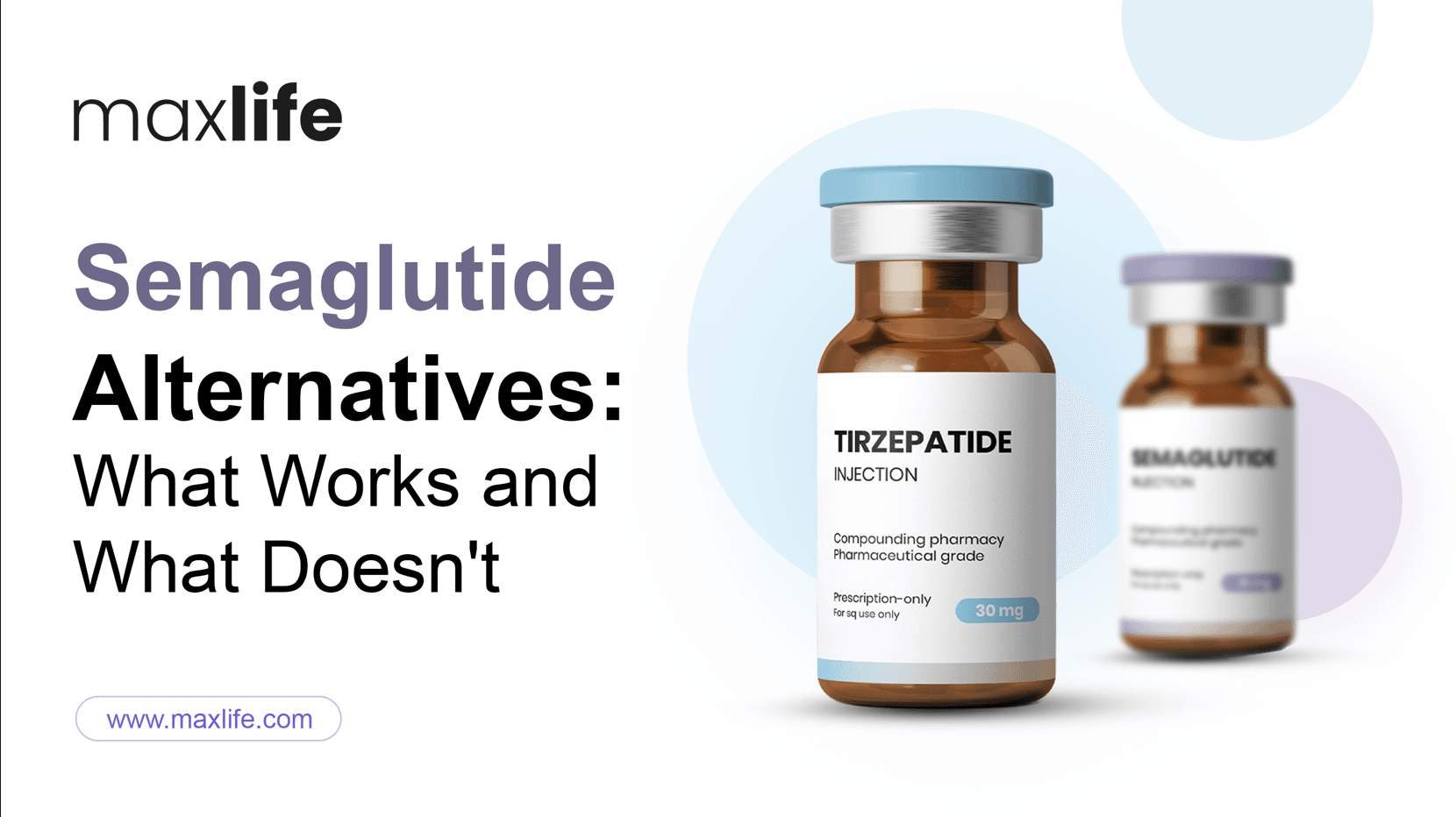
People searching for semaglutide alternatives usually have one of two questions. Either they want a different drug because semaglutide stalled or was hard to tolerate. Or they want the same drug at a price they can actually pay. Both have an answer. For more weight loss, compounded tirzepatide contains the molecule that beat semaglutide in a direct head-to-head trial. For cost, compounded semaglutide is the same molecule, starting at $89 a month on a 3-month starter package, then $155 a month. Figure out your problem, then match it to the option.
Quick Answer: What Is the Best Alternative to Semaglutide?
Searches for semaglutide alternatives for weight loss have two right answers, and which one applies depends on what went wrong.
If you want more weight loss, compounded tirzepatide is the stronger option. It acts on two hormone receptors instead of one. In a direct 72-week head-to-head trial, tirzepatide produced an average body weight loss of 20.2% compared with 13.7% for semaglutide. It starts at $120 a month at MaxLife on a 3-month starter package, then $195 a month.
If cost is the real blocker, you may not need a different drug at all. Compounded semaglutide contains the same active ingredient as brand-name semaglutide and starts at $89 a month on a 3-month starter package, then $155 a month, with no insurance needed.
Two honest caveats: compounded medications aren't FDA-approved and aren't covered by insurance. And supplements marketed as natural alternatives to semaglutide do not produce anything close to comparable weight loss.
First, Which Problem Are You Actually Solving?
Four reasons bring people to this search. Each has a different answer.
- Cost. You were quoted a four-figure monthly price or your insurer said no. The answer here is almost never a different molecule. It is the same molecule, compounded, at a price that does not require coverage. (See our full breakdown of semaglutide cost and our guide to weight loss drugs covered by insurance.)
- A plateau or disappointing results. You are at the maximum dose and the scale has stopped moving. This is the one case where a genuinely different drug is the answer, and that drug is tirzepatide.
- Side effects. Nausea, fatigue, or vomiting have made the drug feel wrong for you. Usually the problem is how fast you titrated or how high your dose is, not the molecule. Fix the dose first.
- Needle aversion. Injectable GLP-1s still produce the strongest results, but oral options now exist: the Wegovy pill, an FDA-approved once-daily tablet form of semaglutide, and Foundayo (orforglipron), an oral GLP-1 approved in 2026. MaxLife offers injections only, so an oral option is a conversation with your own prescriber.
Notice what that adds up to. Three of those four problems do not call for a different molecule at all. Most pages on this topic never say so, because listing ten drugs is easier than telling you that you probably need one of two.
Semaglutide Alternatives at a Glance
| Option | What it is | Average weight loss | Form and frequency | FDA-approved | Insurance needed | Typical monthly cost |
|---|---|---|---|---|---|---|
| Compounded semaglutide | Same active ingredient as brand-name semaglutide, prepared by a licensed compounding pharmacy against a prescription | ~15% in trials of the approved product (STEP 1) | Subcutaneous injection, once weekly | No | No | From $89 at MaxLife (3-month starter package), then $155 |
| Compounded tirzepatide | Dual GLP-1 and GIP receptor agonist, prepared by a licensed compounding pharmacy against a prescription | 20.2% vs 13.7% for semaglutide in a direct 72-week trial (SURMOUNT-5) | Subcutaneous injection, once weekly | No | No | From $120 at MaxLife (3-month starter package), then $195 |
| Zepbound | Brand-name tirzepatide from Eli Lilly | Same molecule that won SURMOUNT-5 | Vial or prefilled pen, once weekly | Yes, for weight management | Not required | About $1,086 list; $299 to $449 self-pay via LillyDirect |
| Oral GLP-1s | The Wegovy pill (oral semaglutide) and Foundayo (orforglipron) | Low to mid teens in trials | Tablet, once daily | Yes | Not required | Wegovy pill from $149 self-pay via NovoCare |
| Other prescription options | Earlier-generation GLP-1s, daily-injection GLP-1s, and non-GLP-1 weight-management drugs | Typically single-digit to low-teens percentages | Varies: daily injection, or oral | Varies | Varies | Varies widely |
| Supplements | Over-the-counter products such as berberine, sold without a prescription | Under 1 kg on average in pooled trial data | Oral, usually daily | Not applicable | No | $20 to $60 |
Two things stand out. Only one molecule in that table beats semaglutide on weight loss, and it is tirzepatide, whether compounded or as the brand Zepbound. Only one option gives you the same molecule for less: compounded semaglutide. The oral options trade some effectiveness for skipping the needle, and everything else in the table is either weaker or not in the same category of effect at all.
1. Compounded Tirzepatide: The Only Molecule That Beats Semaglutide
If your priority is results over price, this is the section that matters.
The difference is mechanical. Semaglutide mimics one gut hormone, GLP-1. Tirzepatide mimics two, GLP-1 and GIP. That dual action is the leading explanation for the gap in outcomes, and researchers measured it directly rather than inferred it.
In SURMOUNT-5, a 72-week trial that randomized 751 adults with obesity and no diabetes to one drug or the other at maximum tolerated doses, tirzepatide produced 20.2% average body weight loss against 13.7% for semaglutide. Waist circumference fell 18.4 cm versus 13.0 cm. That trial studied the approved products, so results for a compounded preparation are inferred from the active ingredient rather than separately demonstrated.
Why does a direct trial matter more than the comparisons you see elsewhere? Because most "X versus Y" numbers online come from separate studies with different participants, different durations and different diet advice. Lining up two unrelated percentages is guesswork. SURMOUNT-5 put both drugs in the same trial, in the same population, over the same 72 weeks. That is the difference between a comparison and a coincidence.
Compounded tirzepatide is also a once-weekly injection, so your routine does not change. It has six dose steps, from 2.5 mg up to 15 mg, which gives real headroom if you plateaued at the top of the semaglutide range.
The trade-offs are straightforward. Gastrointestinal side effects tend to be stronger at higher doses, so titration still has to be slow and deliberate. It costs more than compounded semaglutide, starting at $120 a month on a 3-month starter package, then $195 a month. And like compounded semaglutide, it is prepared by a compounding pharmacy rather than being an FDA-approved product.
If FDA approval matters more to you than price, Zepbound is the brand-name version of tirzepatide approved for weight management, sold self-pay through LillyDirect for roughly $299 to $449 a month depending on dose. (For the full breakdown, see our tirzepatide cost guide.)
2. Compounded Semaglutide: The Alternative to the Price, Not the Drug
This section is for the largest group reading this page, and the argument is simple. If you liked how semaglutide worked and the only problem was the bill, you do not need an alternative drug. You need an alternative price.
Compounded semaglutide contains the same active ingredient as brand-name semaglutide. A licensed compounding pharmacy prepares it from your prescription; you inject it under the skin once weekly, and it works the same way: slowing gastric emptying, blunting appetite, and quieting the food noise that makes a calorie deficit feel like a fight.
Be clear about what does change. It arrives as a vial that you draw up with a syringe, not a prefilled pen. It is not a generic, because no generic semaglutide exists. It is not FDA-approved, which means the agency has not reviewed that specific preparation for safety, effectiveness, or quality. It is also not covered by insurance. (For how the brands and compounded versions relate, see semaglutide vs Ozempic.)
On efficacy, here is the honest statement. Semaglutide at the weight-management dose of 2.4 mg produced about 15% average body weight loss over 68 weeks in STEP 1, the pivotal trial of the approved product. Compounded results are inferred from the active ingredient rather than separately demonstrated in their own trials. That inference is reasonable, and it is still an inference.
What changes is the number on the invoice: starting at $89 a month at MaxLife on a 3-month starter package, then $155 a month, against four figures a month at brand list price without coverage. (If you are currently on a specific brand, see our guides to Ozempic alternatives and Wegovy alternatives.)
3. Other Prescription Options
Other prescription alternatives to semaglutide exist, and they are worth knowing about even though they are not what MaxLife offers.
On the GLP-1 side, there are earlier-generation drugs and daily-injection options that work through the same receptor but were developed before semaglutide, as well as the newer oral GLP-1s covered above. Non-GLP-1 weight-management medications also exist, including oral combination drugs that affect appetite and satiety through different pathways. (For one example compared side by side, see Contrave vs semaglutide.)
Two general points are more useful than a drug-by-drug catalog. The older and non-GLP-1 options typically produce single-digit to low-teens percentage weight loss, against the roughly 15% to 20% range seen with injectable semaglutide and tirzepatide. And several carry contraindications or interactions that rule out a meaningful share of people.
This matters most if a GLP-1 is medically off the table for you. Both semaglutide and tirzepatide are contraindicated in anyone with a personal or family history of medullary thyroid carcinoma or MEN 2 syndrome, and both carry a boxed warning about thyroid C-cell tumors seen in rodents. If that applies to you, raise these other classes with a physician who knows your history.
4. Supplements and Natural Alternatives: An Honest Assessment
A lot of people arrive at supplements because the prescription route looked financially closed. That is a reasonable place to end up, and it deserves a straight answer rather than a lecture.
Berberine is the compound worth taking seriously. It works through a different mechanism entirely, activating AMP-activated protein kinase, an enzyme involved in how cells handle energy, rather than mimicking a gut hormone. In a meta-analysis of 49 randomized trials, it lowered fasting blood glucose by about 7.7 mg/dL, HbA1c by 0.45 percentage points, LDL cholesterol by 9.6 mg/dL and triglycerides by 23.7 mg/dL. That is a real metabolic benefit.
The weight-loss picture is different. Pooled across the same trials, berberine produced under 1 kg of weight loss on average, with mixed results across individual studies. Semaglutide produced about 15 kg of weight loss in STEP 1. The "nature's Ozempic" label is not a small exaggeration of a real comparison. It sets an expectation the research does not support, and it is fair to be annoyed at having been sold it.
What does earn its place: enough protein, resistance training two or three times a week to protect muscle while you lose fat, and sleeping properly. These make any approach work better, including a GLP-1. They do not replace one. Supplements can also interact with prescription medications, so tell your provider what you are taking.
If Side Effects Are Your Reason for Switching
If nausea or fatigue is what sent you looking, start with the most useful distinction on this page. Severe side effects usually mean the titration moved too fast or your dose is too high right now. They rarely mean semaglutide is the wrong drug.
The first move is a conversation about holding your current dose longer, or stepping back one level. GI symptoms tend to be worst in the weeks after each increase and to settle at a stable dose. Many people who thought they had to quit simply needed a slower ladder.
If that genuinely fails, be realistic about the direction of travel. Tirzepatide isn't a gentler option to switch to. Both drugs cause the same family of gastrointestinal effects, and tirzepatide's dose range goes higher, so a switch is unlikely to solve a tolerance problem and may make it worse. In SURMOUNT-5, GI-related discontinuation was low in both arms, which tells you the lever is the dose, not the molecule.
Some symptoms are not a titration problem. Severe or persistent abdominal pain, vomiting you cannot stop, or signs of dehydration mean call a provider now, not switch drugs.
How to Choose Your Semaglutide Alternative for Weight Loss
Match the problem to the answer and the choice gets short.
- Priced out of brand semaglutide. Compounded semaglutide. Same molecule, starting at $89 a month on a 3-month starter package, then $155 a month, no insurance needed.
- Plateaued, or want more weight loss. Compounded tirzepatide. The head-to-head winner at 20.2% versus 13.7%, starting at $120 a month on a 3-month starter package, then $195 a month. Zepbound is the FDA-approved brand of the same molecule, at a higher price.
- Struggling with side effects. Fix the dose before you change the drug. Hold or step back, then reassess.
- Want to avoid needles. Ask your prescriber about the oral options, the Wegovy pill or Foundayo, and expect somewhat less weight loss than the injections.
- Cannot take a GLP-1 for medical reasons. A prescriber conversation about a different drug class, not a switch between GLP-1s.
- Hoping a supplement will replace the medication. It will not. It may still support the plan.
- Under 18, or managing type 2 diabetes. Not this route. MaxLife serves adults for weight management only, and diabetes care belongs with your prescribing physician.
That is the whole decision tree for semaglutide alternatives for weight loss. It can't tell you whether you are eligible, what dose to start on, or how your medical history changes the picture. Those belong to a licensed provider, and they make the final call.
What to Check Before You Switch
Not all providers selling alternatives to semaglutide operate the same way. Before you pay anyone, confirm the following.
- A licensed provider in your state reviews your eligibility and writes the prescription. No prescription, no legitimate compounding.
- The compounding pharmacy is named and licensed, and you can verify it.
- You are getting base semaglutide, not a salt form. The FDA has flagged salt variants such as semaglutide sodium and semaglutide acetate as different substances whose properties have not been established.
- You receive written dosing instructions specific to your vial. A vial is measured in syringe units, not pen clicks, and the FDA has documented hospitalizations caused by patients and providers miscalculating vial doses.
- The quoted price includes medication and supplies.
- No separate membership, consultation, or lab fees are stacked on top.
- The price does not jump after month one.
- You know how many months you must pay upfront to get the advertised rate.
A low headline price often is not the real number. Work out the twelve-month total before you commit.
Find the Right Option With Medical Guidance
The right alternative depends entirely on the problem you are solving, and that's what a licensed provider is for.
MaxLife offers both: compounded semaglutide starting at $89 a month and compounded tirzepatide starting at $120 a month on a 3-month starter package, then $155 and $195 a month after that. Each plan includes the medication, injection supplies, licensed provider review, ongoing support for dosing and side effects, and free overnight shipping. No insurance is required, and program expenses may be eligible for FSA or HSA reimbursement, depending on your plan.
The eligibility check takes a few minutes. Start with the GLP-1 program that fits your situation, and let a provider confirm the rest.
Conclusion
Semaglutide alternatives means two different things, and the answer depends on which one you mean.
If the drug worked and the price did not, compounded semaglutide is the same active ingredient, starting at $89 a month on a 3-month starter package, then $155 a month, instead of four figures. If you wanted more weight loss, tirzepatide is the only molecule with direct head-to-head evidence behind it, at 20.2% versus 13.7%, and compounded tirzepatide starts at $120 a month on a 3-month starter package, then $195 a month.
Both are once-weekly injections. Both are compounded rather than FDA-approved, and neither is covered by insurance. Side effects usually call for a dose conversation, not a new drug. Supplements can support a plan; they do not replace one.
Eligibility, dosing and the final choice belong to a licensed provider who knows your history.
Semaglutide Alternatives FAQs
What is the best alternative to semaglutide?
It depends on the problem. For more weight loss, tirzepatide is the strongest option, with 20.2% average body weight loss against semaglutide's 13.7% in a direct 72-week trial; compounded tirzepatide starts at $120 a month at MaxLife on a 3-month starter package, then $195 a month. If cost is the blocker, compounded semaglutide gives you the same active ingredient, starting at $89 a month on a 3-month starter package, then $155 a month, rather than a different drug.
Is anything more effective than semaglutide for weight loss?
Yes. Tirzepatide has outperformed semaglutide in a head-to-head trial, producing 20.2% versus 13.7% average body weight loss over 72 weeks. It targets two receptors, GLP-1 and GIP, rather than one. Most other prescription weight-management drugs produce less weight loss than semaglutide, not more.
Is there a cheaper alternative to semaglutide?
Compounded semaglutide is a cheaper route to the same active ingredient, starting at $89 a month at MaxLife on a 3-month starter package, then $155 a month, with no insurance needed. A licensed compounding pharmacy prepares it from a prescription. It is not a generic and not FDA-approved, so a licensed provider should confirm it is appropriate for you.
Does berberine work like semaglutide?
No. Berberine activates an enzyme involved in cellular energy handling rather than mimicking a gut hormone, and pooled trial data show under 1 kg of average weight loss. It has better evidence for blood sugar and cholesterol. Semaglutide produced about 15 kg of weight loss in STEP 1, so the two are not comparable for weight loss.
Can I switch from semaglutide to tirzepatide, and what dose do I start on?
You can, but not at an equivalent dose. Tirzepatide has its own titration schedule, starting at 2.5 mg weekly, and your current semaglutide dose doesn't convert to a tirzepatide dose. A licensed provider decides the starting point and the ladder based on your history and how you tolerated semaglutide.
Is compounded semaglutide the same as brand-name semaglutide?
It contains the same active ingredient and works the same way, but it is not the same product. It is prepared by a compounding pharmacy rather than manufactured under FDA approval, comes as a vial and syringe instead of a prefilled pen, is not a generic, and is not covered by insurance.
Find the Right Semaglutide Alternative for You
Compounded medications are not FDA-approved and are not covered by insurance. Pricing and availability are subject to change.
Check Your EligibilityThis article is for informational purposes only and is not a substitute for professional medical advice, diagnosis, or treatment. Individual results vary. Pricing, insurance coverage, and compounding regulations described here are subject to change; verify current details with your insurance provider, the manufacturer, or your prescriber before making treatment decisions. Compounded medications are not FDA-approved.
Sources
- New England Journal of Medicine: Tirzepatide as Compared with Semaglutide for the Treatment of Obesity
- New England Journal of Medicine: Once-Weekly Semaglutide in Adults with Overweight or Obesity
- Frontiers in Nutrition: The effects of berberine supplementation on cardiovascular risk factors in adults
- Zepbound (tirzepatide) prescribing information
- Wegovy (semaglutide) injection and tablets prescribing information
- Eli Lilly: LillyDirect Self Pay Journey Program
- FDA: Medications containing semaglutide marketed for type 2 diabetes or weight loss
- IRS Publication 502