Switching From Semaglutide to Tirzepatide, or Zepbound to Compounded
Pricing is accurate as of November 2026 and subject to change.
Key Takeaways
- There is no FDA conversion chart between semaglutide and tirzepatide. The Zepbound and Mounjaro labels start everyone at 2.5 mg once a week for 4 weeks, with no separate schedule for people coming from another GLP-1.
- No label sets the gap between the last semaglutide dose and the first tirzepatide dose. A common clinical approach is to start about a week later, on the usual injection day, and later if side effects haven't settled. Your prescriber decides.
- Semaglutide stays in the body for about 5 to 7 weeks after the last Wegovy dose. Never take semaglutide and tirzepatide together; both labels advise against using them with another GLP-1 medicine.
- Moving from Zepbound to compounded tirzepatide means a product that is not FDA-approved. It is prescribed in milligrams, and the volume you draw depends on the vial's concentration (FDA letter, August 2026).
- As of November 2026, Zepbound costs $299 to $449 a month self-pay at LillyDirect. At MaxLife, compounded tirzepatide is $120/mo flat, the same price at every dose.
Yes, you can switch from semaglutide (Ozempic®, Wegovy®) to tirzepatide (Mounjaro®, Zepbound®), and many people do, but your prescriber decides when and at what dose. There is no official conversion chart. The Zepbound label gives one starting dose for everyone, 2.5 mg once a week for 4 weeks, with no separate schedule for people coming from another GLP-1. Semaglutide stays in the body for about 5 to 7 weeks after the last dose, so the two should never overlap. A common clinical approach is to start tirzepatide about a week after the last semaglutide shot, but that is clinical practice, not a label rule.
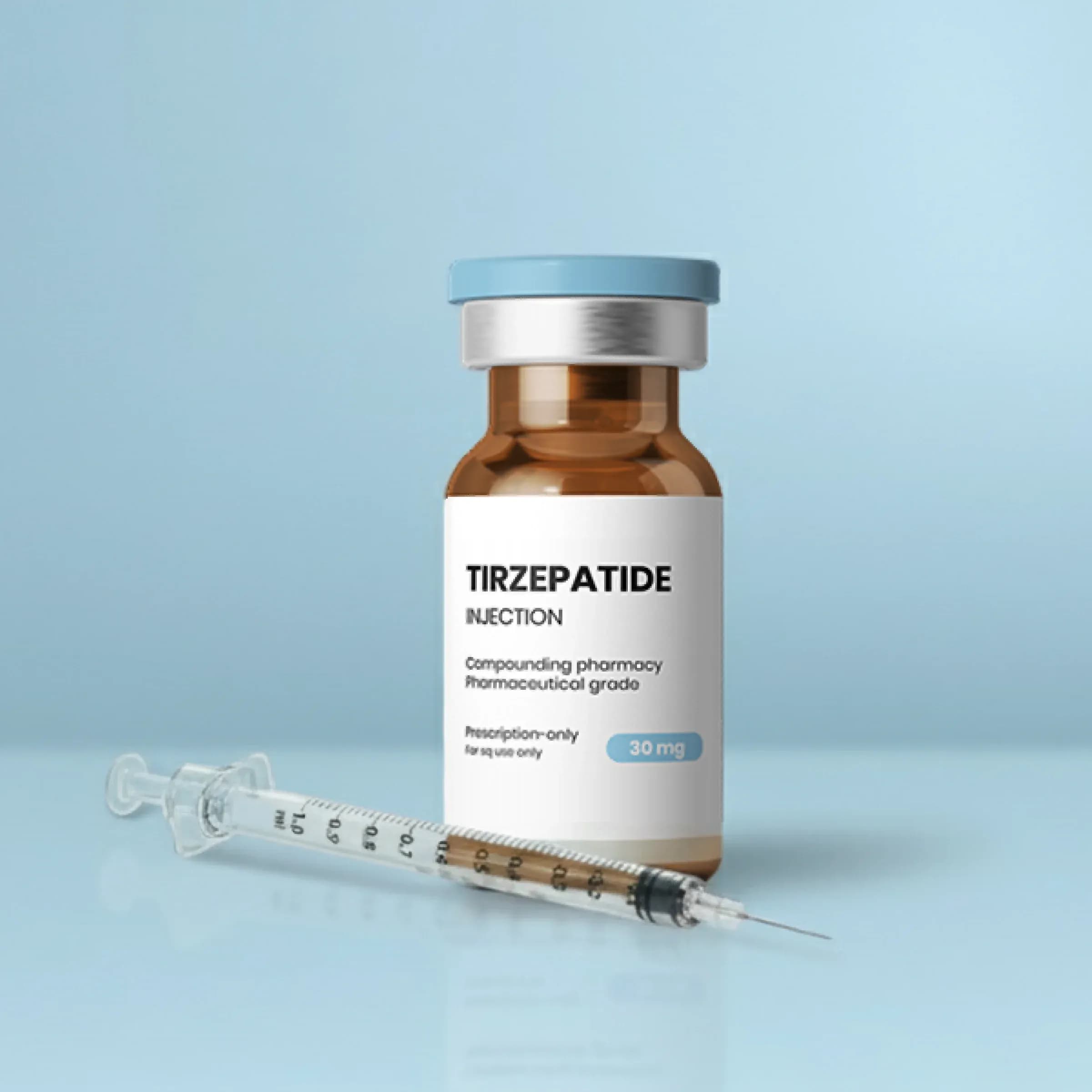
Switching from Zepbound to compounded tirzepatide is a different kind of switch: a change of product, not of medicine. Compounded tirzepatide is prepared by a licensed pharmacy for one patient's prescription and is not FDA-approved, which means the FDA hasn't reviewed it for safety, effectiveness or quality. Your provider prescribes it in milligrams, and the volume you draw depends on your vial's concentration.
At MaxLife, compounded tirzepatide is $120/mo flat, the same price at every dose, so starting low and stepping up doesn't change what you pay. Below: what the FDA labels say, what providers weigh, each brand pair, and what each route costs as of November 2026.
Can You Switch From Semaglutide to Tirzepatide?
Yes. Moving from semaglutide to tirzepatide is a common step when a prescriber agrees it fits you. The usual reasons are:
- A plateau. Weight loss has stalled at the highest semaglutide dose you tolerate.
- Side effects that don't settle. A switch may help, but it is no guarantee: in the head-to-head SURMOUNT-5 trial, nausea was about as common on tirzepatide as on semaglutide.
- Cost or coverage. A plan covers one brand and not the other, or a self-pay price changes. In a Cleveland Clinic study of adults who stopped semaglutide or tirzepatide within their first year, 47.6% stopped because of cost or insurance, 14.6% because of side effects and 11.8% because of shortages, and 2.4% switched to a compounded medicine (Obesity, 2025).
On average, tirzepatide produces more weight loss. In SURMOUNT-5, adults taking Zepbound lost 20.2% of their body weight over 72 weeks, compared with 13.7% on Wegovy (NEJM, 2025). These results belong to the brand products studied and have not been shown for compounded tirzepatide or semaglutide. Averages also hide wide differences between people, and some people do better on semaglutide. For the full comparison, see semaglutide vs tirzepatide.
One rule has no exceptions: never take both. The Zepbound label says using it with any other GLP-1 medicine is not recommended, and the Wegovy label gives the matching warning for Wegovy.
What Do the FDA Labels Say About Switching?
Nothing about switching between the two molecules. Each label covers its own medicine. Side by side, these are the facts a prescriber works from:
| Label fact | Semaglutide (Wegovy, Ozempic) | Tirzepatide (Zepbound, Mounjaro) |
|---|---|---|
| Starting dose | 0.25 mg weekly for 4 weeks | 2.5 mg weekly for 4 weeks |
| How the dose rises | Steps at least 4 weeks apart | 2.5 mg steps, at least 4 weeks apart |
| Highest dose | Wegovy HD 7.2 mg; Ozempic 2 mg | 15 mg |
| Half-life | About 1 week | About 5 days |
| Time in the body after the last dose | About 5 to 7 weeks (Wegovy); about 5 weeks (Ozempic) | Not stated; half-life about 5 days |
| Use with another GLP-1 medicine | Not recommended | Not recommended |
| Missed dose | Wegovy: take it if the next dose is more than 2 days away. Ozempic: within 5 days | Within 4 days |
Sources: prescribing information on DailyMed for Wegovy, Ozempic, Zepbound and Mounjaro, current as of November 2026.
The only switching instructions on these labels are between forms of one molecule. The Wegovy label says to start the 25 mg tablet "one week after discontinuing WEGOVY 2.4 mg injection". The label for Rybelsus® and Ozempic tablets explains how to move from Ozempic injections to tablets and warns that the tablet brands "are not substitutable on a mg-to-mg basis". No FDA label tells a prescriber how to move from semaglutide to tirzepatide, so the rest of a switch is clinical judgment.
Is There a Semaglutide to Tirzepatide Dose Conversion Chart?
No official one. No FDA label and no switching trial says that a given dose of semaglutide equals a given dose of tirzepatide. The milligrams aren't comparable either: these are different molecules, so 2.4 mg of semaglutide and 2.5 mg of tirzepatide are not "about the same" because the numbers look close.
The charts you'll find online come from three kinds of sources:
- Expert opinion. In November 2026, a group of clinicians proposed approximate "efficacy-matched" dose bands built from indirect comparisons of separate trials. They wrote that "there are no available guidelines for switching from semaglutide to tirzepatide" and that exact conversions still need to be confirmed in switching trials (Expert Opinion on Pharmacotherapy, 2026).
- Modeling. A 2026 model of trial results in type 2 diabetes, co-written by Novo Nordisk employees, estimated which doses of each drug produce similar average weight loss (Diabetes Therapy, 2026). Averages across trials say little about how your body will handle a new medicine.
- Clinic and pharmacy charts, often with no source at all.
Studies have also tested skipping the lowest step. In a 12-week study funded by Eli Lilly, adults with type 2 diabetes who had been on a stable dose of a GLP-1 medicine for at least 3 months switched straight to tirzepatide 5 mg. Stomach side effects occurred in 13.2%, and 2% stopped because of side effects (Endocrine Practice, 2024). That was one small study in diabetes, without a comparison group, and it is not the label.
So your prescriber decides, based on your current dose, how long you've been on it, how you handled the start, and whether you've missed doses. Our tirzepatide dosage chart shows the label steps.
How Long Should You Wait After Your Last Semaglutide Shot?
There is no label rule. A common approach is to start tirzepatide about a week after the last semaglutide dose, on your usual injection day. A clinical guide in the American Diabetes Association's journal Clinical Diabetes calls this "a practical approach" for moving between weekly GLP-1 medicines: stop the current one and start the new one 1 week later, on the same day of the week (Almandoz et al., 2020). The authors say their advice comes from clinical experience, and it was written before tirzepatide was approved.
What can change the timing:
- Ongoing side effects. If you are switching because of nausea or vomiting, the same guide suggests waiting until the symptoms have settled before starting the new medicine at its lowest dose.
- Missed doses. If you've already missed 2 or more weekly doses, the Wegovy label's advice for restarting Wegovy is to go back to a lower dose to reduce the risk of stomach side effects. Tell your provider how long you've been off; it affects the starting dose.
- Clearance. Semaglutide's half-life is about a week, and it stays in your blood for about 5 to 7 weeks after the last Wegovy dose and about 5 weeks after the last Ozempic dose. So if you start tirzepatide a week later, some semaglutide is still in your system for a few more weeks, which your prescriber takes into account.
What Starting Dose of Tirzepatide Will You Get?
On the label, everyone starts at 2.5 mg once a week for 4 weeks, then moves to 5 mg. After that, the dose can rise in 2.5 mg steps, at least 4 weeks apart, to a maintenance dose of 5, 10 or 15 mg for Zepbound, or up to 15 mg for Mounjaro. The Zepbound label says the 2.5 mg dose "is for treatment initiation and is not approved as a maintenance dosage". Your prescriber may follow this schedule exactly or adjust it for you.
What to expect in the first weeks:
- Some side effects may come back. Most stomach side effects on Zepbound happened while the dose was being raised, according to the label. Our guide to tirzepatide side effects covers what helps.
- A possible dip in effect. Some clinicians worry that restarting at the lowest dose can leave a "therapeutic gap" with some weight regain, which is one reason a prescriber may tailor the start (Expert Opinion on Pharmacotherapy, 2026).
- Birth control pills. Tirzepatide may make them less effective. The label advises switching to a non-oral method, or adding a barrier method, for 4 weeks after starting and for 4 weeks after each dose increase.
Switching From Ozempic to Mounjaro
Ozempic and Mounjaro are both approved for type 2 diabetes, so this is usually a blood-sugar decision made with the prescriber who manages your diabetes. Mounjaro starts at 2.5 mg once a week and rises in 2.5 mg steps, at least 4 weeks apart, if more glucose control is needed, up to 15 mg. In the head-to-head SURPASS-2 trial, A1C fell 2.01 to 2.30 points on tirzepatide 5 to 15 mg, compared with 1.86 points on semaglutide 1 mg, over 40 weeks (NEJM, 2021).
Points specific to diabetes:
- Low blood sugar. If you also take insulin or a sulfonylurea, the risk of low blood sugar rises, and the Mounjaro label says lowering those doses may help. Check your glucose more often during the switch.
- What you might give up. Ozempic is also approved to lower the risk of kidney decline, kidney failure and heart-related death in adults with type 2 diabetes and chronic kidney disease. Mounjaro does not have that approval.
- Weight loss alone. If you don't have type 2 diabetes, Mounjaro and Ozempic would be off-label for weight loss, and plans often decline to cover them for that use. Zepbound is the tirzepatide brand approved for weight management. This also applies to "switching from Wegovy to Mounjaro" or "Ozempic to Zepbound": the medicine changes, and so does the approved use.
For a deeper comparison, see tirzepatide vs Ozempic.
Switching From Wegovy to Zepbound
This is the weight-management version of the switch: both are approved for chronic weight management in adults. In SURMOUNT-5, Zepbound produced more weight loss than Wegovy 2.4 mg (20.2% vs 13.7% over 72 weeks), with similar rates of nausea. The trial did not test Wegovy HD (7.2 mg), so moving up to Wegovy HD is another option some adults discuss with their provider.
Before you switch, check what Wegovy gives you that Zepbound doesn't:
- A heart approval. Wegovy is approved to lower the risk of heart attack, stroke and heart-related death in adults with heart disease and overweight or obesity. Zepbound has no heart approval; it is approved for weight management and for obstructive sleep apnea with obesity.
- Approval for teens. Wegovy 2.4 mg injections are approved from age 12; Zepbound is for adults.
- A pill. Wegovy also comes as a daily tablet. There is no tirzepatide pill.
If you take Wegovy for its heart benefit, talk to the clinician who manages your heart care first. For the full matchup, see Zepbound vs Wegovy.
Switching Between Mounjaro and Zepbound, or Between Zepbound Forms
Mounjaro and Zepbound are both tirzepatide from Eli Lilly, sold in matching strengths (2.5 mg to 15 mg) for different approved uses. Neither label covers moving between them, so your prescriber sets the dose, and insurance often decides which one you get. Zepbound comes in single-dose pens, single-dose vials, multi-dose vials and a KwikPen. LillyDirect says the dose schedule is the same whichever device you use, and the label asks providers to make sure you get training if your device changes.
Switching From Zepbound to Compounded Tirzepatide
You can, with a prescription, but it is a switch to a different product, not a cheaper refill of the same one. Compounded tirzepatide is not a generic of Zepbound, it hasn't been tested in Zepbound's trials, and insurance doesn't cover it. For a side-by-side comparison, see compounded tirzepatide vs Zepbound.
Why people consider it: cost. As of November 2026, Zepbound costs $299 to $449 a month self-pay from LillyDirect, or $499 to $699 at higher doses if you refill late, and coverage for weight loss varies by plan.
The rules: since the tirzepatide shortage ended on December 19, 2024, a state-licensed pharmacy may compound tirzepatide for an individual patient's prescription. It may not regularly make copies of Zepbound or Mounjaro unless the prescriber documents a change that "produces a significant difference" for that patient, according to the FDA's statement updated April 1, 2026. The FDA also says compounded drugs "should only be used in patients whose medical needs cannot be met by an FDA-approved drug." Your prescriber decides whether a compounded product fits you. Our page on whether compounded tirzepatide is still legal explains the details.
The practical change: milligrams vs milliliters. Your provider prescribes in milligrams. Each Zepbound single-dose pen or single-dose vial holds one dose in 0.5 mL, according to the label. A compounded vial holds several doses at a concentration the pharmacy sets, so the volume you draw depends on that concentration. The FDA used this example in an August 12, 2026 letter to state medical boards:
| Dose | Zepbound single-dose pen or vial | Compounded vial at 17 mg/mL (FDA example) |
|---|---|---|
| 2.5 mg | 0.5 mL | 0.15 mL |
| 5 mg | 0.5 mL | 0.29 mL |
| 10 mg | 0.5 mL | 0.59 mL |
| 15 mg | 0.5 mL | 0.88 mL |
The FDA warned that "the volumes are not interchangeable between the two", that added vitamins in some compounded products make measuring harder, and that syringe markings can be hard to read. On a U-100 insulin syringe, each unit mark is 0.01 mL, so 0.15 mL is 15 units, but your vial may have a different concentration. Use only the directions on your pharmacy label, ask the pharmacist to confirm the volume, and check the math with your provider using our dosage calculator.
Two more points. Don't overlap the products: the Zepbound label says not to use it with other tirzepatide-containing products. And your provider decides the timing and the dose, including whether to step back after missed doses.
Can You Switch From Tirzepatide Back to Semaglutide?
Yes. The same rules apply in reverse: no conversion chart, a label starting dose (0.25 mg a week for Wegovy and Ozempic), and a gap your prescriber sets. People switch back because of side effects, coverage, cost or a weak response. Responses really do differ: a 2026 case report described a man who lost less than 5% of his weight over 6 months at the top tirzepatide dose, then 20% over 6 months after switching to semaglutide (JCEM Case Reports, 2026). One case proves nothing on average, but it shows that not responding to one medicine doesn't rule out the other.
How Much Does Each Route Cost in 2026?
Without insurance, the self-pay prices below apply. These are the makers' own prices as of November 2026:
| Option | Self-pay price, November 2026 | Source |
|---|---|---|
| Zepbound vial or KwikPen | $299 (2.5 mg), $399 (5 mg), $449 (7.5 to 15 mg) a month if refilled within 45 days; $499 to $699 if later | LillyDirect |
| Mounjaro | $499 a month, every strength | LillyDirect |
| Wegovy injection | $199 for each of the first 2 fills for new patients (offer through December 31, 2026), then $349; Wegovy HD $399 | NovoCare |
| Ozempic injection | $199 for the first 2 fills (new patients, through December 31, 2026), then $349 (up to 1 mg) or $499 (2 mg) | NovoCare |
| Compounded tirzepatide, MaxLife | $120/mo flat, all-inclusive | MaxLife |
| Compounded semaglutide, MaxLife | $89/mo flat, all-inclusive | MaxLife |
With insurance, coverage follows the approved use. Plans often cover Ozempic and Mounjaro for type 2 diabetes, and coverage of Wegovy and Zepbound for weight management varies. If your plan covers the medicine you're on but not the one you want, a switch can raise your cost a lot, so check your formulary and whether prior authorization is needed before you stop a covered medicine. With commercial coverage, NovoCare's savings offer can bring Wegovy down to as little as $25 a month, within its limits. And through the Medicare GLP-1 Bridge, eligible Part D members can get certain GLP-1 medicines for a $50 copay from July 1, 2026 through December 31, 2027.
What to Tell Your Provider Before You Switch
Bring these details to the visit:
- The medicine, form and dose you take now, and how long you've been on it
- The date of your last dose, and any missed doses
- Side effects now and when you started, such as nausea, vomiting, constipation or signs of dehydration
- Other diabetes medicines, especially insulin or a sulfonylurea
- Birth control pills, pregnancy plans or breastfeeding
- A personal or family history of medullary thyroid carcinoma or MEN 2, and any history of pancreatitis or gallbladder disease
- Any planned surgery or procedure with anesthesia or deep sedation (the labels warn about a rare risk of inhaling stomach contents)
- Your insurance coverage and your budget
- For a compounded product: the pharmacy's name, the vial's concentration and the type of syringe
How MaxLife Handles a Switch
MaxLife is a telehealth patient management platform, not a pharmacy or drug maker. If you're taking semaglutide or Zepbound now and want to move to compounded tirzepatide, start with the online intake, which takes about 2 minutes, and list your current medicine, dose and the date of your last dose. A licensed provider reviews your online intake, health history and clinical records, usually within 24 hours, can follow up with questions, and you can ask for a video visit. The provider decides whether a switch is right for you, when to start and at what dose. MaxLife doesn't set doses.
If the provider prescribes compounded tirzepatide, a licensed partner pharmacy prepares it and ships it with free expedited shipping, in all 50 states, with directions for your vial. Compounded tirzepatide is $120/mo flat and compounded semaglutide is $89/mo flat: all-inclusive (the provider's review and follow-up, the medicine if prescribed, and supplies), the same price at every dose, with no membership fee. So starting low and stepping up doesn't change what you pay. No insurance is needed, and HSA and FSA funds may be eligible. Cancel anytime with notice before your next billing period.
Be honest with yourself about the brand route, too. If your insurance covers Zepbound, Wegovy, Mounjaro or Ozempic, if you rely on Wegovy's heart approval, or if you need Mounjaro or Ozempic for type 2 diabetes, staying on a covered brand may be the better choice.
The Bottom Line
Switching from semaglutide to tirzepatide is common and reasonable, but there is no FDA conversion chart: the Zepbound and Mounjaro labels start everyone at 2.5 mg a week for 4 weeks, and the 2026 dose-band papers are expert opinion, not rules. A common approach is to start tirzepatide about a week after the last semaglutide dose, later if side effects haven't settled, and never alongside it. Moving from Zepbound to compounded tirzepatide means a product that is not FDA-approved, prescribed in milligrams, with a volume that depends on your vial. Whichever way you switch, give your provider your full medication history and let them set the timing and the dose.
Frequently Asked Questions
Considering a Switch? Compounded Tirzepatide, $120/mo Flat
MaxLife compounded tirzepatide: $120 a month, flat. All-inclusive, no membership fee, the same price at every dose. A licensed provider decides.
Check Your EligibilityThis article is for informational purposes only and is not a substitute for professional medical advice, diagnosis, or treatment. Individual results vary. Pricing, insurance coverage, and compounding regulations described here are subject to change; verify current details with your insurance provider, the manufacturer, or your prescriber before making treatment decisions. Compounded medications are not FDA-approved.
Why trust our experts

April Foster, DO MPH
Reviewer
Board Certified Family Medicine Physician licensed nationwide providing collaborative oversight to NPs, PAs, and RN. Also specializing in telemedicine services nationwide.
Sources
- Zepbound (tirzepatide) prescribing information, revised August 2026 (DailyMed)
- Mounjaro (tirzepatide) prescribing information, revised August 2026 (DailyMed)
- Wegovy (semaglutide) injection and tablets prescribing information (DailyMed)
- Ozempic (semaglutide) injection prescribing information (DailyMed)
- Rybelsus and Ozempic (semaglutide) tablets prescribing information (DailyMed)
- Clinical Diabetes: Switching Between GLP-1 Receptor Agonists, Rationale and Practical Guidance (Almandoz et al.), 2020
- Endocrine Practice: Switching to tirzepatide 5 mg from GLP-1 receptor agonists, first 12 weeks, 2024
- Expert Opinion on Pharmacotherapy: Switching between semaglutide and tirzepatide in obesity management, expert-consensus framework, 2026
- Diabetes Therapy: Dose-response and clinical equivalence of semaglutide and tirzepatide, model-based analysis, 2026
- JCEM Case Reports: Tirzepatide non-response with subsequent semaglutide response, 2026
- Obesity: Reasons for discontinuation of semaglutide or tirzepatide in clinical practice, 2025
- New England Journal of Medicine: Tirzepatide as Compared with Semaglutide for the Treatment of Obesity (SURMOUNT-5), 2025
- New England Journal of Medicine: Tirzepatide versus Semaglutide Once Weekly in Patients with Type 2 Diabetes (SURPASS-2), 2021
- FDA: clarifies policies for compounders as national GLP-1 supply begins to stabilize (updated April 1, 2026)
- FDA: concerns with unapproved GLP-1 drugs used for weight loss
- FDA letter to the Federation of State Medical Boards on compounded GLP-1 concentrations, August 12, 2026
- LillyDirect: Zepbound self-pay pricing
- LillyDirect: Mounjaro self-pay pricing
- NovoCare: Wegovy self-pay pricing
- NovoCare: Ozempic self-pay pricing
- CMS: Medicare GLP-1 Bridge
Semaglutide vs Tirzepatide: Weight Loss, Side Effects and Cost
November 13, 202613 min
Tirzepatide vs Zepbound: Brand and Compounded Explained
November 5, 202610 min
Tirzepatide Dosage Chart for Weight Loss: Doses, Schedule and Units
October 21, 202612 min
Zepbound (Tirzepatide) vs Wegovy: 7 Differences to Know
September 11, 202615 min