How Long Does Semaglutide Take to Work? Wegovy and Ozempic Week by Week
Reviewed by the MaxLife operations team. Pricing is accurate as of November 2026 and subject to change.
Key Takeaways
- In STEP UP, the 7.2 mg and 2.4 mg Wegovy groups lost weight at the same pace through week 20; the higher dose added its extra loss after that (19.5% vs 16.4% at week 72).
- On Ozempic, blood sugar falls within weeks, but your A1c shows the full effect after about 3 months; in SUSTAIN 1, 70% to 73% reached an A1c under 7% by week 30.
- After 2 or more missed Wegovy doses in a row, the label says to restart the step-up at a lower dose, which pushes the timeline back.
Semaglutide starts working within days, but weight loss builds over months. After a weekly injection, it reaches its highest level in your blood 1 to 3 days later, according to the Wegovy® label and the Ozempic® label. In the STEP 1 trial, adults taking Wegovy had lost about 2% of their body weight by week 4, about 6% by week 12 and about 9.5% by week 20, and the average kept dropping until about week 60. These are results for brand Wegovy and have not been shown for compounded semaglutide.
Here is the timeline at a glance, from the labels as of November 2026:
| When | What happens | Source |
|---|---|---|
| 1 to 3 days | Blood level peaks after each shot | Wegovy and Ozempic labels |
| Weeks 1 to 4 | 0.25 mg starting dose; levels settle after 4 to 5 weekly doses | Wegovy and Ozempic labels |
| Week 4 | Weight about 2% lower on average | STEP 1 (Wegovy label) |
| Week 12 | People ate 24% less at test meals (1 mg); weight about 6% lower | Appetite study; STEP 1 |
| Week 17 | Earliest first 2.4 mg dose | Wegovy label |
| Week 20 | People ate 35% less at a test lunch (2.4 mg); weight about 9.5% lower | Appetite study; STEP 1 |
| Week 30 | Ozempic: A1c 1.4 to 1.6 points lower | Ozempic label (SUSTAIN 1) |
| Weeks 52 to 60 | Average weight curve levels off, near 16% | STEP 1 (Wegovy label) |
| Week 68 | 14.9% average loss, counting everyone who started | Wegovy label |
How Long Does It Take for a GLP-1 Like Semaglutide to Start Working?
Semaglutide starts acting in the first days after your first shot. Both labels say it reaches its peak level in the blood 1 to 3 days after an injection and that about 89% of each dose reaches your bloodstream. Its half-life is about 1 week, which is why you take it once a week, and the Ozempic label says steady levels are reached after 4 to 5 weekly doses. Because the dose also rises every 4 weeks, the amount in your blood keeps climbing through the whole step-up. After the last dose, the Wegovy label says semaglutide stays in your circulation for about 5 to 7 weeks.
Semaglutide is a GLP-1 receptor agonist. The Wegovy label says it "decreases calorie intake," likely by affecting appetite, and notes that GLP-1 receptors sit in areas of the brain that regulate appetite; it lowers body weight "with greater fat mass loss than lean mass loss." It also slows how fast your stomach empties: the Ozempic label describes a "minor delay in gastric emptying" soon after a meal. Tirzepatide follows a similar pattern with its own numbers: see how long tirzepatide takes to work.
What Does the First Week on Semaglutide Feel Like?
Some people notice that smaller meals fill them up, and some feel queasy. The Wegovy trials first weighed people at week 4, and the appetite studies below looked at weeks 12 and 20, so there is no trial average for the first week, and a quiet first week is normal. Stomach side effects are common: in the Wegovy weight-loss trials, nausea affected 44% of people on Wegovy and 16% on placebo, vomiting 25% and 6%, and diarrhea 30% and 16%, and the label says these reactions "were most frequently reported during dosage escalation." Our guide to GLP-1 nausea and constipation relief has practical tips.
How Long Does It Take for Semaglutide to Suppress Appetite?
By week 12, people on semaglutide ate about a quarter less at test meals than on placebo, and by week 20 about a third less at a test lunch. Those numbers come from two Novo Nordisk-funded studies that served people all-you-can-eat meals:
- Week 12, 1 mg: in a study of 30 adults with obesity, people ate 24% less over a day of test meals on semaglutide than on placebo, about 725 fewer calories. They reported less hunger, fewer food cravings and a lower preference for high-fat foods, and had lost 5.0 kg (about 11 pounds).
- Week 20, 2.4 mg: in a study of 72 adults with obesity, people on semaglutide ate 35% less at a test lunch than people on placebo (about 415 calories compared with 640), felt less hungry and fuller, and reported fewer and weaker cravings. They had lost 9.9% of their weight, compared with 0.4% on placebo.
Neither study measured the first week on 0.25 mg, so any day count you read online is a guess. Appetite changes vary from person to person, and some people feel the biggest change only after a few dose steps.
How Long Does It Take for Wegovy to Work for Weight Loss?
Weight loss shows up within the first month and keeps building for about a year. The chart below shows the average weight change at each visit in STEP 1, a 68-week trial of 1,961 adults without diabetes who started at 232 pounds on average, read from the time-course chart in the Wegovy label.
STEP 1 · Wegovy label
Average weight lost at each visit
Adults taking Wegovy once a week, starting at 0.25 mg and stepping up every 4 weeks to 2.4 mg from week 17. Each bar is the average change from starting weight.
Read from Figure 7 of the Wegovy prescribing information, June 2026 version. STEP 1: 1,961 adults without diabetes who started at 232 lb on average, with diet and activity counseling. Averages for the people weighed at each visit, rounded; counting everyone who started, the week 68 result is 14.9% (placebo 2.4%). Pounds use the 232 lb average start. Novo Nordisk-funded trial of brand Wegovy; these results have not been shown for compounded semaglutide.
The pace was steady while the dose was rising: about 2 percentage points every 4 weeks through week 20, or roughly 1 pound a week for someone starting at 232 pounds. It slowed to about 1 point every 4 weeks between weeks 20 and 36, then to less, and the curve leveled off between weeks 52 and 60. These are averages for the people weighed at each visit; counting everyone who started, including people who stopped treatment, the label's 68-week result is 14.9%, compared with 2.4% on placebo. Everyone in STEP 1 also had counseling to eat about 500 fewer calories a day and stay active, which is why the placebo group lost a little too. For what each stage looks like over 2 years and beyond, see semaglutide before and after.
Can You Lose Weight on 0.25 mg of Semaglutide?
A little, on average. By week 4, at the end of the 0.25 mg month, people on Wegovy in STEP 1 had lost about 2.2% of their weight (about 5 pounds at 232 pounds), compared with about 1.1% on placebo. But 0.25 mg is a starting dose: the label uses it, and each step after it, "to reduce the risk of gastrointestinal adverse reactions," and the maintenance dose for weight loss is 1.7 mg or 2.4 mg. If you weigh much less or much more than 232 pounds, the same percentage means fewer or more pounds; our BMI calculator for weight loss gives a trial-based estimate for your starting weight, not a prediction.
Does a Higher Dose Make Semaglutide Work Faster?
Not in the first months, because everyone climbs the same steps. In the STEP UP trial, adults without diabetes took either 2.4 mg or the higher 7.2 mg dose (sold as Wegovy HD). Both groups followed the same schedule through week 20, and the 7.2 mg group moved up at week 21, according to the trial's registry entry. Here is the average weight change by week, read from the chart in the Wegovy label:
| Week | Average loss: 2.4 mg vs 7.2 mg |
|---|---|
| 4 | About 2.3% vs 2.3% (same dose) |
| 12 | About 6% vs 6% (same dose) |
| 20 | About 9.5% vs 10% (same dose) |
| 32 | About 13% vs 15% |
| 48 | About 15% vs 17.5% |
| 72 | 16.4% vs 19.5% |
So the higher dose added its extra weight loss over the following year, not in the first months. Counting everyone who started, the 72-week results were 15.6% on 2.4 mg and 18.7% on 7.2 mg, compared with 3.9% on placebo. The label allows 7.2 mg only after at least 4 weeks on 2.4 mg, for people who need more weight reduction. If you take the Wegovy pill instead, the label steps it up once a month and reaches the 25 mg maintenance dose on day 91; our guide to the Wegovy pill vs injection compares the two.
How Long Does It Take for Ozempic to Work?
For blood sugar, Ozempic starts working in the first weeks, and the full effect shows on your A1c after about 3 months. Ozempic is approved for adults with type 2 diabetes, not for weight loss; our page on Ozempic vs Wegovy explains the difference. The label starts at 0.25 mg for 4 weeks, then 0.5 mg, and allows 1 mg and then 2 mg, each after at least 4 weeks, if more blood sugar control is needed.
- By week 12: on 1 mg, fasting blood sugar was 22% lower and blood sugar 2 hours after a meal 36% lower than on placebo, according to the label.
- By week 30: in SUSTAIN 1, adults who started at an A1c of about 8.1% had lowered it by 1.4 points on 0.5 mg and 1.6 points on 1 mg, compared with 0.1 on placebo, and 73% and 70% reached an A1c under 7%.
Your A1c reflects your average blood sugar over about 3 months, according to the NIDDK, so an early test won't show the full effect. Weight comes off more slowly with type 2 diabetes: in SUSTAIN 1, average losses at week 30 were 3.8 kg and 4.7 kg (about 8 and 10 pounds), compared with 1.2 kg on placebo. Even at the Wegovy dose, adults with type 2 diabetes in STEP 2 had lost about 7% by week 20 and 9.6% by week 68. If you also take insulin or a sulfonylurea, semaglutide raises the risk of low blood sugar, and your provider may lower those doses.
When Should You Talk to Your Provider About Semaglutide?
Talk to your provider before you change your dose or schedule, and in these situations:
- A dose step is hard to tolerate. The Wegovy label lets your prescriber wait another 4 weeks before the next step. Don't go up faster than prescribed: the slow climb is there to limit stomach side effects.
- You missed doses. For one missed Wegovy shot, the label says to take it if your next dose is more than 2 days away and skip it otherwise; Ozempic allows up to 5 days. After 2 or more missed Wegovy doses in a row, the label says to restart the step-up at a lower dose, which adds weeks to your timeline.
- You've been on your maintenance dose for a while and the scale has stopped moving. The label tells prescribers to "consider treatment response and tolerability" when choosing the maintenance dose, so your progress is part of that decision. Our semaglutide dosage chart shows every step.
- Warning signs. The Wegovy label says to stop the medicine and call your provider right away for severe stomach pain that won't go away, with or without vomiting, sometimes spreading to your back (a sign of pancreatitis), and to tell your provider right away about nausea, vomiting or diarrhea that doesn't stop, which can dehydrate you and harm your kidneys. Also call about pain in your upper stomach, fever, yellowing of your skin or eyes, or clay-colored stools (signs of gallbladder problems), and about signs of low blood sugar if you have diabetes.
Does Compounded Semaglutide Take Longer to Work?
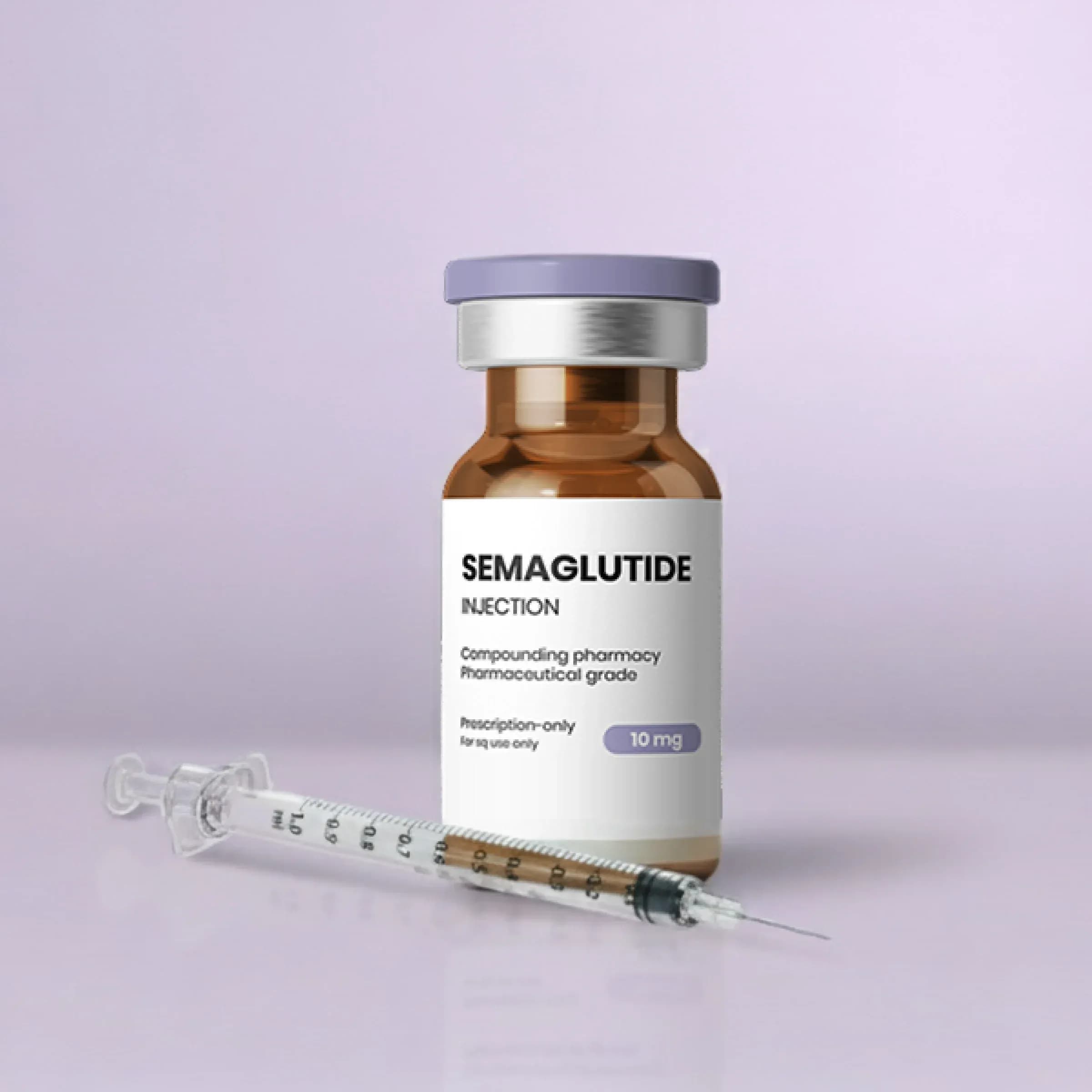
There is no evidence for it because compounded semaglutide has not been tested in trials like STEP or SUSTAIN. Compounded semaglutide is prepared by a licensed pharmacy for one patient's prescription and is not FDA-approved, which means the FDA hasn't reviewed it for safety, effectiveness or quality. Every timeline on this page comes from brand Wegovy or Ozempic.
Measuring each dose correctly matters more than speed. In an August 12, 2026 letter to state medical boards, the FDA said compounded drugs "often have different concentrations than FDA approved products," so the volume to draw is not interchangeable. The number of units depends on the concentration of the vial you have, so follow the label on that vial and your prescriber's instructions.
Three questions MaxLife members often ask once they start are how many units to draw, whether they can move up to the next dose, and why the scale has slowed. The timeline above is the honest answer to the last two: the dose rises in 4-week steps, and the curve flattens after the first months. Before each refill, a short check-in asks for your weight, current dose, appetite, side effects and the date of your last injection, and your provider uses it to decide whether you stay on your dose or move up. If it has been more than 2 weeks since your last shot, check with your care team before the next one, since the provider may want to adjust the dose after a gap.
MaxLife is a telehealth patient management platform, not a pharmacy or drug maker. A licensed provider reviews your online intake and decides whether a prescription is right for you, and licensed partner pharmacies prepare and ship it. Compounded semaglutide is $89 a month, flat: all-inclusive, the same price at every dose, so stepping up doesn't change what you pay, with no membership fee and no insurance needed. You can cancel anytime with notice before your next billing period. If your insurance covers Wegovy or Ozempic, the brand may cost you less, and it is the product these trial results belong to; our semaglutide cost guide compares every route.
In November 2026 we re-read the Wegovy and Ozempic labels on DailyMed (June 2026 versions) and the studies cited here. How we made this page: we researched it from the sources listed below. The MaxLife operations team reviews every page before it goes live, and a licensed clinician also reviews our medical articles.
Frequently Asked Questions
Compounded Semaglutide: $89/mo Flat, All-Inclusive
MaxLife compounded semaglutide: $89 a month, flat. All-inclusive, no membership fee, the same price at every dose. A licensed provider decides.
Check Your EligibilityThis article is for informational purposes only and is not a substitute for professional medical advice, diagnosis, or treatment. Individual results vary. Prices, coverage and compounding rules change; confirm current details with your prescriber, your plan or the seller before you decide.
Sources
- Wegovy (semaglutide) injection and tablets prescribing information, DailyMed (June 2026)
- Ozempic (semaglutide) injection prescribing information, DailyMed (June 2026)
- Wilding JPH et al. Once-Weekly Semaglutide in Adults with Overweight or Obesity (STEP 1). N Engl J Med. 2021
- Wharton S et al. Once-weekly semaglutide 7.2 mg in adults with obesity (STEP UP). Lancet Diabetes Endocrinol. 2025
- ClinicalTrials.gov: STEP UP, NCT05646706 (dose escalation schedule)
- Blundell J et al. Effects of once-weekly semaglutide on appetite, energy intake, control of eating, food preference and body weight in subjects with obesity. Diabetes Obes Metab. 2017
- Friedrichsen M et al. The effect of semaglutide 2.4 mg once weekly on energy intake, appetite, control of eating, and gastric emptying in adults with obesity. Diabetes Obes Metab. 2021
- NIDDK: The A1C test and diabetes
- FDA letter to the Federation of State Medical Boards on compounded GLP-1 multi-dose vials (August 12, 2026)
Semaglutide Before and After: Weight Loss Results and What to Expect
November 5, 202610 min
Semaglutide Dosage Chart for Weight Loss: Doses, Schedule and Units
November 5, 20269 min
How Long Does Tirzepatide Take to Work? A Week-by-Week Timeline
November 13, 202611 min
GLP-1 Constipation and Nausea: What Helps and How Long It Lasts
November 15, 20269 min