Retatrutide vs Tirzepatide: Trial Results and Availability
Pricing is accurate as of November 2026 and subject to change.
Key Takeaways
- Retatrutide is Eli Lilly's investigational triple agonist (GIP, GLP-1 and glucagon receptors). Tirzepatide, sold as Zepbound and Mounjaro, is a GIP and GLP-1 receptor agonist and is FDA-approved.
- In TRIUMPH-1 (NEJM, November 2026), adults without diabetes on retatrutide 12 mg lost 25.0% of body weight at 80 weeks vs 3.9% on placebo. In SURMOUNT-1, adults on Zepbound 15 mg lost 20.9% at 72 weeks vs 3.1%.
- No finished trial compares the two directly. The head-to-head TRIUMPH-5 trial lists primary completion as estimated for November 2026.
- In TRIUMPH-1, dysesthesia (changed skin sensation) affected 5.1% to 12.5% of people on retatrutide vs 0.9% on placebo; the Zepbound label reports 0.2% to 0.4%.
- As of November 2026, retatrutide is not FDA-approved anywhere, cannot be compounded, and Lilly plans to submit it to the FDA in the first quarter of 2027.
- Tirzepatide can be prescribed today. MaxLife does not offer retatrutide; its compounded tirzepatide is $120 a month, flat, the same price at every dose, and is not FDA-approved.
Retatrutide is an investigational weekly injection from Eli Lilly that acts on three hormone receptors: GIP, GLP-1 and glucagon. Tirzepatide, the medicine in Zepbound® and Mounjaro®, acts on two (GIP and GLP-1) and is FDA-approved. In the phase 3 TRIUMPH-1 trial, published in The New England Journal of Medicine in November 2026, adults without diabetes taking retatrutide 12 mg lost an average of 25.0% of their body weight over 80 weeks, compared with 3.9% on placebo. In SURMOUNT-1, adults taking Zepbound 15 mg lost 20.9% over 72 weeks, compared with 3.1% on placebo. No finished trial has compared the two directly. As of November 2026, retatrutide is not FDA-approved, and Lilly plans to submit it to the FDA in the first quarter of 2027.
So the real difference today is access. Tirzepatide can be prescribed now and has years of large trials behind it. Retatrutide can't legally be prescribed or bought outside Lilly's clinical trials and a small expanded access program, and MaxLife does not offer it. If you're paying cash for tirzepatide, compounded tirzepatide costs $120 a month, flat, at MaxLife, the same price at every dose. It is not FDA-approved, and a licensed provider decides whether it's right for you.
Retatrutide vs Tirzepatide at a Glance
| Retatrutide | Tirzepatide | |
|---|---|---|
| Maker | Eli Lilly | Eli Lilly |
| Brand names | None yet | Zepbound (weight, sleep apnea), Mounjaro (type 2 diabetes) |
| Receptors | GIP, GLP-1 and glucagon ("triple agonist") | GIP and GLP-1 ("dual agonist") |
| FDA status, November 2026 | Investigational, not approved | Approved: Mounjaro May 2022, Zepbound November 2023 |
| Top average weight loss, phase 3 | 25.0% at 80 weeks (TRIUMPH-1, 12 mg) | 20.9% at 72 weeks (SURMOUNT-1, Zepbound 15 mg) |
| Longest reported treatment | 104 weeks (TRIUMPH-1 extension) | 176 weeks (SURMOUNT-1, Zepbound) |
| Dysesthesia (changed skin sensation) | 5.1% to 12.5% vs 0.9% on placebo | 0.2% to 0.4% vs 0.1% on placebo |
| Can you get it now? | Only in trials or Lilly's expanded access | Yes, with a prescription |
| Self-pay price | No legal price | Zepbound $299 to $449 a month; compounded $120 a month, flat, at MaxLife |
Sources: the trial papers and labels linked below, and LillyDirect, checked November 2026. Results come from separate trials, so they are not a head-to-head comparison.
Is Retatrutide Better Than Tirzepatide?
It isn't proven. Retatrutide produced more average weight loss in its own trials than tirzepatide did in its trials, but no completed study has compared them directly, and "better" also means side effects, long-term safety and whether you can actually get it.
Three things make the comparison shaky:
- Different trials. TRIUMPH-1 ran 80 weeks and SURMOUNT-1 ran 72 weeks, in different people at different times.
- Different ways of counting. Lilly's press release quotes 28.3% for retatrutide 12 mg, an estimate for people who stayed on the medicine. The journal's 25.0% counts everyone assigned to the dose, as the Zepbound label's 20.9% does. Compare like with like.
- No head-to-head result yet. TRIUMPH-5 compares retatrutide with tirzepatide in about 800 adults with obesity, with weight change at 80 weeks as its main result. ClinicalTrials.gov lists its primary completion as estimated for November 2026, and Lilly called it ongoing on October 28, 2026.
Tirzepatide also has evidence retatrutide doesn't have yet. Zepbound has 3-year weight data, Mounjaro has a finished heart-outcomes trial, and Zepbound beat Wegovy® head to head (see our Zepbound vs Wegovy comparison). Retatrutide hasn't shown that it lowers heart attacks or strokes: in TRIUMPH-3, the difference in major heart events versus placebo was not statistically significant, and outcome trials are still running.
What Did the Retatrutide Trials Show?
Retatrutide met its main goals in every phase 3 trial Lilly has reported. All were funded by Lilly:
- TRIUMPH-1 (NEJM, November 5, 2026): 2,339 adults with obesity or overweight and no diabetes. Average weight change at 80 weeks was -17.6% (4 mg), -23.7% (9 mg) and -25.0% (12 mg), versus -3.9% on placebo. In an extension for people with a BMI of 35 or more, those on 12 mg reached 30.3% at 104 weeks, by Lilly's on-treatment estimate.
- TRIUMPH-2 (The Lancet, October 2026): 1,152 adults with obesity and type 2 diabetes lost 11.9%, 16.8% and 18.8%, versus 5.1% on placebo, at 80 weeks.
- TRIUMPH-3 (topline, July 23, 2026): 1,949 adults with severe obesity and heart or blood vessel disease lost 21.6% (9 mg) and 22.6% (12 mg), versus 3.2%, by Lilly's on-treatment estimate.
- TRIUMPH-4 (NEJM, November 8, 2026): 445 adults with painful knee osteoarthritis lost 20.0% and 23.7%, versus 4.6%, at 68 weeks, with larger drops in knee pain than placebo.
- Sleep apnea (NEJM, October 2026): in adults with sleep apnea and no diabetes, breathing events fell by about 32 to 34 an hour at 9 mg and 12 mg, versus about 10 on placebo.
- TRANSCEND-T2D-1 (The Lancet, June 2026): in adults with type 2 diabetes, A1C fell 1.69 to 1.94 points, versus 0.81 on placebo, at 40 weeks.
- TRANSCEND-T2D-2 (topline, October 28, 2026): against Ozempic® 2 mg in adults with type 2 diabetes, retatrutide lowered A1C 2.2 points versus 1.8, with 19.5% to 20.9% weight loss versus 9.4% at 80 weeks.
A 2023 phase 2 trial had reported 24.2% weight loss at 48 weeks with 12 mg. Lilly says it now has the data to seek approval for obesity, knee osteoarthritis pain and sleep apnea.
What Did the Tirzepatide Trials Show?
Tirzepatide's results come from trials of Zepbound and Mounjaro, and several have run for years:
- SURMOUNT-1 (Zepbound): 2,539 adults without diabetes lost an average of 15.0%, 19.5% and 20.9% of their body weight at 5 mg, 10 mg and 15 mg over 72 weeks, versus 3.1% on placebo (Zepbound label).
- SURMOUNT-1 at 3 years (Zepbound): in adults with obesity and prediabetes, weight loss averaged 12.3% to 19.7% at 176 weeks, versus 1.3% on placebo, and 1.3% developed type 2 diabetes versus 13.3% on placebo (NEJM).
- SURMOUNT-5 (Zepbound vs Wegovy): 20.2% versus 13.7% weight loss at 72 weeks (NEJM).
- SURPASS-CVOT (Mounjaro): in 13,299 adults with type 2 diabetes and heart disease, Mounjaro matched dulaglutide (Trulicity) on heart attack, stroke and heart death, with a hazard ratio of 0.92 (NEJM).
Zepbound is approved for weight management and for moderate to severe obstructive sleep apnea in adults with obesity; Mounjaro is approved for type 2 diabetes. Our Zepbound vs Mounjaro guide explains the two brands. These results belong to Zepbound and Mounjaro; these results have not been shown for compounded tirzepatide.
How Does Retatrutide Work, and Why Is It Called GLP-3?
Retatrutide is a single molecule that switches on three hormone receptors: GIP, GLP-1 and glucagon. Tirzepatide is, in the words of its label, "a GIP receptor and GLP-1 receptor agonist." Both are once-weekly injections, and both reduce appetite and help control blood sugar.
The difference is glucagon, a hormone that acts mainly on the liver. In animal studies, retatrutide caused weight loss partly by "increasing energy expenditure," and in a small phase 2 substudy, liver fat fell 82.4% at 24 weeks on 12 mg. The authors say that may reflect the greater weight loss, a direct glucagon effect on the liver, or both.
Is retatrutide a GLP-1? Partly: it activates the GLP-1 receptor, plus two others. That is why people call it a "GLP-3." Lilly's own retatrutide FAQ calls "GLP-3" "a scientifically inaccurate label used informally in the media" and says "triple agonist" is the more accurate term. There is no hormone called GLP-3. You may also see retatrutide called "reta."
Retatrutide Side Effects vs Tirzepatide Side Effects
Both cause mostly stomach and bowel side effects, and in the trials retatrutide's rates ran higher at its top doses. Retatrutide also showed effects that are rare with tirzepatide, mainly changes in skin sensation.
| Side effect | Retatrutide 4 to 12 mg (TRIUMPH-1) | Zepbound 5 to 15 mg (label) |
|---|---|---|
| Nausea | 28.6% to 42.4% vs 14.8% | 25% to 29% vs 8% |
| Diarrhea | 25.2% to 34.1% vs 13.5% | 19% to 23% vs 8% |
| Vomiting | 10.6% to 25.3% vs 4.8% | 8% to 13% vs 2% |
| Constipation | 23.8% to 26.1% vs 10.9% | 11% to 17% vs 5% |
| Dysesthesia | 5.1% to 12.5% vs 0.9% | 0.2% to 0.4% vs 0.1% |
| Stopped for side effects | 4.1% to 11.3% vs 4.9% | 4.8% to 6.7% vs 3.4% |
Each column compares the drug with placebo in its own trials, so the columns aren't directly comparable. Sources: Lilly's June 6, 2026 release and the Zepbound label.
What else showed up in the retatrutide trials:
- Dysesthesia is a distorted sense of touch, where ordinary contact can feel unpleasant or painful, as the National Cancer Institute defines it. Lilly says these events were mostly mild to moderate and most resolved during treatment.
- Urinary tract infections were a little more common: 7.5% to 8.8% versus 5.3% on placebo in TRIUMPH-1.
- Heart rate: in the phase 2 trial, retatrutide raised heart rate in a dose-dependent way, peaking at 24 weeks and declining after that. The Zepbound label reports a mean rise of 1 to 3 beats per minute.
- Low blood pressure was reported in 1% to 6% of people on retatrutide versus under 1% on placebo in TRIUMPH-2.
- Muscle: a phase 2 body-composition substudy found the share of lean mass lost was "similar to other obesity treatments" (Lancet Diabetes & Endocrinology).
Tirzepatide's risks are set out on its FDA label: a boxed warning about thyroid C-cell tumors in rats, no use with a personal or family history of medullary thyroid carcinoma or MEN 2, and warnings about pancreatitis, gallbladder problems, dehydration and low blood sugar with insulin or a sulfonylurea. Retatrutide has no label yet, so its full risk list isn't settled. If you're wondering whether lower doses ease side effects, see what the evidence says about microdosing tirzepatide. Talk to your provider about any side effect that worries you.
Is Retatrutide FDA Approved?
No. As of November 2026, retatrutide is not approved by the FDA or by any regulator in the world. Lilly says so in its October 2026 FAQ and its October 28, 2026 release, which adds that "anyone purporting to sell retatrutide to consumers is breaking the law."
Lilly has not announced a submission yet. On July 23, 2026, it said it was completing the manufacturing data package required for a Biologics License Application and plans to submit retatrutide for U.S. approval in the first quarter of 2027.
When Will Retatrutide Be Available?
There is no approval date. Lilly says launch depends on finishing the trials and on regulatory review. Once an application is accepted, the FDA's goal is to act within 10 months under standard review, or 6 months under priority review. If Lilly files in early 2027, a decision would most likely come in late 2027 or 2028. That is our estimate from the FDA's review goals, not a date from Lilly or the FDA.
Can You Get Retatrutide Now?
Not through a normal prescription. The only legal routes in the U.S. are:
- Clinical trials. ClinicalTrials.gov lists Lilly's retatrutide studies and shows which are still recruiting.
- Expanded access. Lilly's medical information page says a treating physician can request it for an adult with a BMI of 35 or more despite the highest available dose of weight-management treatment, two or more serious obesity-related conditions, and no way to join a trial. The FDA and an ethics board must approve each case. Lilly provides it at no cost and doesn't ship to patients.
Retatrutide also can't be compounded. The FDA says retatrutide "cannot be used in compounding under federal law" and has "not been found safe and effective for any condition" (FDA). Vials sold online as "research peptides" or "not for human consumption" are illegal, and the FDA warns they are "of unknown quality and may be harmful." Our guide to what "research peptide" labels really mean explains the risk.
How Much Does Retatrutide Cost?
Retatrutide has no legal price, because it isn't on the market. Lilly says it plans to price it "to reflect the overall value to the healthcare system" after approval. Anything sold today at a "retatrutide price" is an illegal product. For comparison, tirzepatide prices you can pay today are in the next sections and in our tirzepatide cost guide.
Can You Switch From Tirzepatide to Retatrutide or Take Both?
No, not today. No one can legally prescribe retatrutide outside a trial or expanded access, and no official dose conversion exists, whatever online "conversion charts" claim. You shouldn't take both: the Zepbound label says it "should not be used with other tirzepatide-containing products or any GLP-1 receptor agonist medicines," and retatrutide acts on the GLP-1 receptor.
Will retatrutide work if tirzepatide didn't? Nobody knows yet. TRIUMPH-5, the head-to-head trial, excluded people who had taken weight-loss drugs in the 90 days before screening, so it won't answer that question. If your weight loss on tirzepatide has stalled, there may be reasons worth checking, such as dose, diet and sleep; our guide on why you might not be losing weight on tirzepatide walks through them, and your provider can review your plan.
Why Tirzepatide Is the Option You Can Start Today
If you want treatment now rather than waiting for an approval that has no date, tirzepatide is the practical choice:
- Available now. Tirzepatide has been FDA-approved since 2022 (Mounjaro) and 2023 (Zepbound), and a licensed provider can prescribe it today.
- More research. Its trials include 3 years of Zepbound data, a head-to-head win over Wegovy and a heart-outcomes trial of Mounjaro in 13,299 adults.
- Known prices. As of November 2026, LillyDirect sells Zepbound vials and KwikPens for $299 (2.5 mg), $399 (5 mg) and $449 (7.5 mg to 15 mg) a month if you refill within 45 days, or $499 to $699 if you refill late. Insurance may cover it for some people.
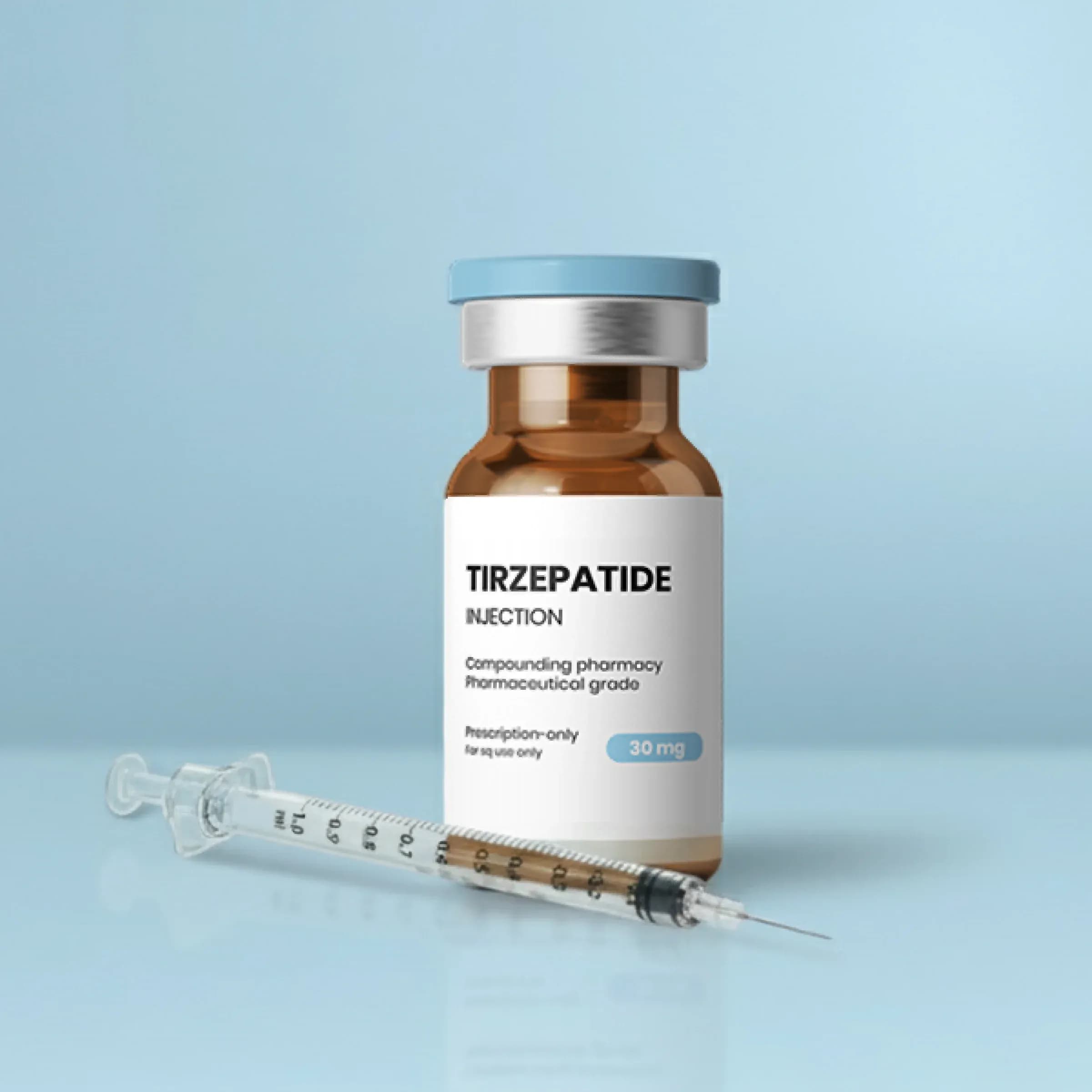
Compounded tirzepatide is the lower-cost cash route. Compounded tirzepatide is prepared by a licensed pharmacy for one patient's prescription and is not FDA-approved, which means the FDA hasn't reviewed it for safety, effectiveness or quality. It is not Zepbound or Mounjaro, and the trial results above have not been shown for compounded tirzepatide. The FDA says compounded drugs should be used only when an FDA-approved drug can't meet a patient's medical needs, and a licensed provider makes that call for each patient. Our guide to tirzepatide vs Zepbound explains the differences in detail.
Here is how MaxLife works. MaxLife is a telehealth patient management platform, not a pharmacy or drug maker, and it does not offer retatrutide. You complete an online intake in about 2 minutes, and an independent licensed provider reviews it, usually within 24 hours; you can ask for a video visit. If the provider decides compounded tirzepatide is right for you, licensed partner pharmacies prepare and dispense it. The price is $120 a month, flat, the same price at every dose, with no membership fee. It includes the provider's review and follow-up, the medicine if prescribed, supplies and free expedited shipping. No insurance is needed, HSA and FSA funds may be eligible, and MaxLife serves all 50 states, has a Spanish-speaking team and is LegitScript certified. See whether you qualify on the compounded tirzepatide page.
The Bottom Line
Retatrutide, Lilly's investigational triple agonist, produced up to 25.0% average weight loss at 80 weeks in phase 3, with more stomach side effects and skin-sensation changes than tirzepatide. It is not FDA-approved, Lilly plans to file in early 2027, and the head-to-head TRIUMPH-5 trial hasn't reported. Tirzepatide is approved, studied for up to 3 years and available today, including as compounded tirzepatide at $120 a month, flat, at MaxLife (not FDA-approved). Never buy retatrutide online; ask a licensed provider which option fits you now.
Frequently Asked Questions
Compounded Tirzepatide: $120/mo Flat, All-Inclusive
MaxLife compounded tirzepatide: $120 a month, flat. All-inclusive, no membership fee, the same price at every dose. A licensed provider decides.
Check Your EligibilityThis article is for informational purposes only and is not a substitute for professional medical advice, diagnosis, or treatment. Individual results vary. Pricing, insurance coverage, and compounding regulations described here are subject to change; verify current details with your insurance provider, the manufacturer, or your prescriber before making treatment decisions. Compounded medications are not FDA-approved.
Why trust our experts

April Foster, DO MPH
Reviewer
Board Certified Family Medicine Physician licensed nationwide providing collaborative oversight to NPs, PAs, and RN. Also specializing in telemedicine services nationwide.
Sources
- New England Journal of Medicine: Retatrutide, a Triple Hormone Receptor Agonist, for Treatment of Obesity (TRIUMPH-1), November 2026
- Eli Lilly: TRIUMPH-1 topline results, May 21, 2026
- Eli Lilly: TRIUMPH-2 and TRIUMPH-3 results and Q1 2027 submission plan, July 23, 2026
- Eli Lilly: TRANSCEND-T2D-2 results vs Ozempic 2 mg, October 28, 2026
- The Lancet: Retatrutide in adults with obesity and type 2 diabetes (TRIUMPH-2), October 2026
- New England Journal of Medicine: Retatrutide in Adults with Knee Osteoarthritis Pain and Obesity (TRIUMPH-4), November 2026
- New England Journal of Medicine: Retatrutide for Treatment of Obstructive Sleep Apnea, October 2026
- The Lancet: Retatrutide in type 2 diabetes with diet and exercise alone (TRANSCEND-T2D-1), June 2026
- New England Journal of Medicine: Triple-Hormone-Receptor Agonist Retatrutide for Obesity, A Phase 2 Trial (2023)
- Nature Medicine: Retatrutide for metabolic dysfunction-associated steatotic liver disease, phase 2a (2024)
- Lancet Diabetes & Endocrinology: Effects of retatrutide on body composition in type 2 diabetes (2025)
- ClinicalTrials.gov: TRIUMPH-5, retatrutide compared with tirzepatide (NCT06662383)
- Eli Lilly: What to know about retatrutide (FAQ, updated October 2026)
- Lilly Medical: Is there an expanded access program for retatrutide?
- FDA: Concerns with unapproved GLP-1 drugs used for weight loss (content current as of October 1, 2026)
- FDA: Priority Review
- Zepbound (tirzepatide) prescribing information, revised August 2026 (DailyMed)
- New England Journal of Medicine: Tirzepatide for Obesity Treatment and Diabetes Prevention (SURMOUNT-1, 3 years)
- New England Journal of Medicine: Tirzepatide as Compared with Semaglutide for the Treatment of Obesity (SURMOUNT-5)
- New England Journal of Medicine: Cardiovascular Outcomes with Tirzepatide versus Dulaglutide in Type 2 Diabetes (SURPASS-CVOT)
- LillyDirect: Zepbound self-pay pricing
- National Cancer Institute: Dysesthesia (definition)
Tirzepatide vs Zepbound: Brand and Compounded Explained
November 5, 202610 min
Zepbound vs Mounjaro: What's the Difference?
November 5, 202614 min
Tirzepatide Cost: Price Per Month With and Without Insurance
August 20, 202614 min
Is Tirzepatide a Peptide? Prescription vs. Research Peptides
November 7, 202611 min