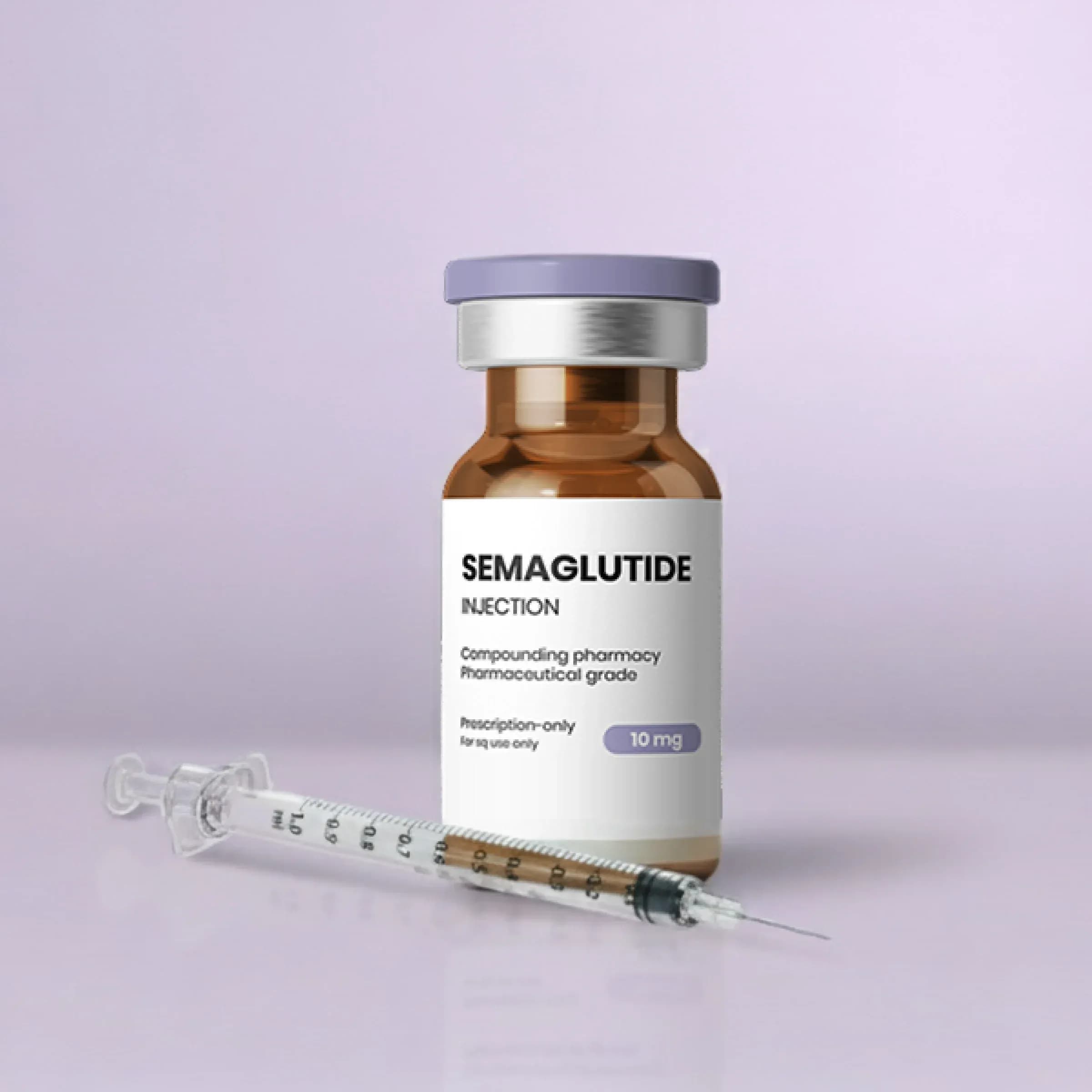
Compounded semaglutide · Safety and legal status, November 2026

Is Compounded Semaglutide Safe and Legal in 2026?

Legal with conditions, and not FDA-approved. As of November 2026, a state-licensed pharmacy may compound semaglutide for one patient's prescription, but not as regular copies of Ozempic® or Wegovy® unless the prescriber documents a significant difference for that patient. Outsourcing facilities may not make it from bulk ingredients. The FDA ended the semaglutide shortage on February 21, 2025. Nobody can promise compounded semaglutide is safe: the FDA hasn't reviewed it for safety, effectiveness or quality, and it has warned about dosing errors with vials and about salt forms. This page shows what to check.

Last updated

About this page

Who wrote it, and how we checked the facts

MaxLife wrote this page, and we offer compounded semaglutide, so we have an interest in the answer. We are not a pharmacy or a law firm, and this is not medical or legal advice.

  1. Primary sources

    The FDA's order, statements and alerts, the appeals court opinion, the Wegovy® label and state board documents, each linked where it is used.

  2. Our own count of FDA data

    We read every semaglutide recall in the FDA's enforcement reports from January 2025 to November 2026 and grouped them by reason.

  3. Checked in November 2026

    Every date and rule was read again on its source this month. When the FDA, a court or a state board acts, we update the page.

Reviewed by the MaxLife operations team.

How we made this page: we researched it from the sources listed below and drafted it with the help of AI tools. The MaxLife operations team reviews every page before it goes live, and a licensed clinician also reviews our medical articles.

First published November 2026. Seen a fact that changed? Email web@maxlife.com and we will check it and fix the page.

Feb 21, 2025The FDA declared the semaglutide shortage over, almost three years after it began.

990Adverse event reports tied to compounded semaglutide that the FDA had received by May 31, 2026.

5 to 20xHow much more than their intended dose some patients drew from vials, in reports the FDA described in 2024.

11 recallsOf compounded semaglutide products in FDA enforcement reports, January 2025 to November 2026.

When did the semaglutide shortage end?

On February 21, 2025, almost three years after it began. The FDA put Wegovy on its shortage list on March 31, 2022 and Ozempic on August 23, 2022. While they were listed, pharmacies and outsourcing facilities could make copies. In a formal order, the FDA found that Novo Nordisk's supply "is currently meeting or exceeding demand."

Pharmacies had until April 22, 2025 and outsourcing facilities until May 22, 2025 to wind down. A trade group of outsourcing facilities sued. Because the pharmacy deadline was tied to the court case, it ended on April 24, 2025, when the court refused to block the FDA's decision. On August 27, 2026, the Fifth Circuit Court of Appeals affirmed the judgment for the FDA.

Timeline

FDA actions on compounded semaglutide, 2021 to 2026

Every step that matters for patients, oldest first, with what it means for you.

  1. FDA approves Wegovy for weight management

    The FDA-approved semaglutide for weight loss arrives.

    Source: Drugs@FDA
  2. Wegovy goes on the FDA's shortage list

    Pharmacies could make copies while supply was short.

    Source: Fifth Circuit opinion
  3. Ozempic goes on the shortage list too

    Both semaglutide injections are now in shortage.

    Source: Fifth Circuit opinion
  4. FDA alert on dosing errors with compounded semaglutide

    Patients drew 5 to 20 times their dose from vials.

    Source: FDA alert on dosing errors with compounded semaglutide
  5. FDA declares the semaglutide shortage resolved

    The wind-down of shortage compounding begins.

    Source: FDA declaratory order on the semaglutide shortage
  6. Court refuses to block the FDA; the pharmacy grace period ends

    Pharmacies can no longer rely on the shortage.

    Source: FDA statement on compounding GLP-1s
  7. Outsourcing facility grace period ends

    No bulk semaglutide at 503B outsourcing facilities.

    Source: FDA statement on compounding GLP-1s
  8. FDA approves a Wegovy pill

    A second FDA-approved form of semaglutide for weight loss.

    Source: Drugs@FDA
  9. FDA plans to restrict GLP-1 ingredients for mass-marketed compounded drugs

    Sellers may not call compounded drugs generic or the same as approved ones.

    Source: FDA statement
  10. FDA restates the 503A and 503B conditions

    This is the current rule for compounding semaglutide.

    Source: FDA statement on compounding GLP-1s
  11. A generic semaglutide injection gets tentative approval

    It can't be sold yet, so there is still no generic on the market.

    Source: Drugs@FDA
  12. FDA proposes keeping semaglutide off the 503B bulks list

    Comments closed July 30, 2026; no final decision yet.

    Source: Federal Register
  13. Appeals court affirms for the FDA

    The shortage decision stands.

    Source: Fifth Circuit opinion
  14. FDA updates its safety page: 990 reports

    Adverse event reports for compounded semaglutide, as of May 31, 2026.

    Source: FDA
  15. FDA requires a vision-loss (NAION) warning on all GLP-1 labels

    A new label warning that covers semaglutide.

    Source: FDA Drug Safety Communication
  16. Status check: no final 503B decision and no ingredient rule yet

    We update this page when the FDA acts.

    Source: FDA statement on compounding GLP-1s

Checked in November 2026. Each row links its source.

Is the FDA going to ban compounded semaglutide?

No ban has been issued, but three things could tighten the rules. First, on April 30, 2026 the FDA proposed to keep semaglutide, tirzepatide and liraglutide off the list of ingredients outsourcing facilities may use (Federal Register); comments closed July 30, 2026, and no final decision had been published as of November 2026. Second, on February 6, 2026 the FDA said it intends to restrict the GLP-1 ingredients used in mass-marketed compounded drugs; we found no rule putting that into effect yet. Third, the FDA keeps policing marketing: sellers may not call a compounded drug generic, the same as an FDA-approved drug or clinically proven (FDA guidance for telehealth companies).

The court case is over at the appeals level, and we found no request for Supreme Court review as of November 2026.

Prescribed by a licensed provider, $89/mo flat

Independent licensed providers, licensed partner pharmacies and one all-inclusive price, the same at every dose.

Check if you qualify

Is compounded semaglutide safe?

No one can promise that, because the FDA has not reviewed compounded semaglutide for safety, effectiveness or quality. The FDA says compounded drugs "should only be used in patients whose medical needs cannot be met by an FDA-approved drug." As of May 31, 2026, the FDA had received 990 adverse event reports tied to compounded semaglutide. A report does not prove the drug caused the problem. Pharmacies that are not outsourcing facilities don't have to report, so the FDA says such events are likely underreported, and it notes that many reported events look like those seen with the FDA-approved versions.

Quality problems show up in recalls. In FDA enforcement reports from January 2025 to November 2026 we counted 11 recalls of compounded semaglutide, covering 42 products and bulk ingredient lots. All were Class II, which the FDA uses when a product "may cause temporary or medically reversible adverse health consequences."

FDA recall data

Why compounded semaglutide was recalled, 2025 to 2026

11 recalls covering 42 products, grouped by the reason the FDA lists. No firm is named.

  1. Sterility not assured17 products6 recalls
  2. Lack of processing controls9 products2 recalls
  3. Particles in the product11 products1 recall
  4. Less drug than the label says3 products1 recall
  5. Bulk ingredient: manufacturing problems2 lots sold to compounders1 recall

Our count of FDA Enforcement Report entries (openFDA) with report dates from January 2025 to November 11, 2026. All Class II, all started by the firm. Brand Wegovy's 2 recalls in the same period are not included.

Why do dosing errors happen with compounded semaglutide?

Because it usually comes in a vial, not a pen. Wegovy and Ozempic come in prefilled pens that deliver a set dose. Compounded semaglutide usually comes in a multi-dose vial at a strength the pharmacy chooses, and you draw your dose into a syringe marked in units. How many units you need depends on the vial's concentration.

In a July 26, 2024 alert, the FDA described patients who drew "five to 20 times more than the intended dose" after mixing up milliliters, milligrams and units. Reported problems included vomiting, fainting, dehydration, pancreatitis and gallstones, and some patients needed medical care or a hospital stay. The FDA's clearest example is below.

Units vs milliliters

5 units or 50 units? The same syringe

On a U-100 insulin syringe, 100 units fill 1 milliliter. Patients told to draw 5 units drew 50.

  1. Prescribed5 units0.05 mL
  2. Drawn by mistake50 units, 10 times the dose0.5 mL
  3. A full U-100 syringe100 units1 mL

Source: FDA alert of July 26, 2024. Bars show the volume in the syringe.

Prescribers can slip too: the FDA cites one who meant 2 units and prescribed 20. What helps is simple. Draw the dose exactly as your prescriber wrote it for the vial you have, read the concentration on the label whenever a new vial arrives, use the syringes your pharmacy sends, don't fill syringes ahead of time, and ask your pharmacist if the number of units looks different from last time. How many units to draw is the dosing question MaxLife members ask most often. For the math, see our semaglutide dosage chart.

What are semaglutide salt forms, and are they legal?

Salt forms such as semaglutide sodium and semaglutide acetate are different chemicals from the semaglutide in Ozempic and Wegovy. The FDA says they "are different active ingredients than are used in the approved drugs," that it doesn't know whether they act the same way, and that it is "not aware of any lawful basis for their use in compounding."

State boards agree. Washington's Pharmacy Commission notes that Ozempic and Wegovy contain semaglutide base, not a salt, so no salt form may be used in a compounded product, and the ingredient must be pharmaceutical grade with a certificate of analysis, never "research use only" (statement of 2024). Mississippi's medical board says salt forms are "not equivalent to base APIs" (guidance of 2024).

What you can do: your label should name the drug as semaglutide, and your pharmacy should be able to tell you its ingredient is semaglutide base from an FDA-registered maker. If a label says semaglutide sodium or acetate, ask the pharmacy and your prescriber before you use it.

What warnings come with semaglutide in any form?

The drug in compounded semaglutide carries the risks on the Wegovy label, and compounded products have no FDA label of their own. Wegovy has a boxed warning: semaglutide caused thyroid C-cell tumors in rodents, and it is unknown whether it does in people. It should not be used by anyone with a personal or family history of medullary thyroid carcinoma or Multiple Endocrine Neoplasia syndrome type 2.

The label also warns about pancreatitis, gallbladder problems, low blood sugar when taken with insulin or medicines that make the body release insulin, kidney injury from dehydration, severe stomach and bowel side effects, serious allergic reactions, diabetic eye disease getting worse in people with type 2 diabetes, a faster heart rate, and breathing in stomach contents during anesthesia. On November 9, 2026, the FDA required all GLP-1 labels to add a warning about NAION, a rare cause of sudden vision loss in one eye; see our guide to GLP-1s and vision loss. Talk to your provider before starting, and report any new symptoms.

How can you check compounded semaglutide before you use it?

Check three things: the prescription, the pharmacy and the label. A licensed prescriber should review your health history and write the prescription in your name. The pharmacy that prepares it must be licensed in your state: look it up with your state board of pharmacy (the FDA's BeSafeRx page links every state), and use the steps in our 503A vs 503B guide to check its record. Then read the label when your medicine arrives.

Label check

What your semaglutide label should show

On the labelWhat to look for
Drug nameSemaglutide. Not semaglutide sodium or semaglutide acetate, which are salt forms.
StrengthMilligrams per milliliter, and the total volume. The units you draw depend on this number.
Added ingredientsAnything added, such as vitamin B12 (cyanocobalamin) or glycine, listed by name.
PharmacyIts name, address and phone number, matching the pharmacy you were told about. The FDA has seen labels naming pharmacies that don't exist.
You and your prescriberYour name and your prescriber's name, as on any prescription.
Beyond-use dateThe last day to use it. Once a multi-dose vial is opened, the FDA says to discard it 28 days later, even if medicine is left.
StorageKeep it in the refrigerator as the label says. The FDA says not to use an injectable GLP-1 that arrives warm.

Ask your pharmacist about anything missing, or anything different from your last vial. Sources: FDA, October 1, 2026; FDA, July 26, 2024.

Walk away from a seller that offers semaglutide without a prescription, sells vials labeled "for research purposes" or "not for human consumption," calls compounded semaglutide generic or the same as Ozempic or Wegovy, or won't tell you which pharmacy fills your prescription. The FDA has warned sellers of "research" semaglutide and knows of counterfeit Ozempic sold in the US, which could contain the wrong ingredient or none at all. Report problems to FDA MedWatch (1-800-FDA-1088).

Do state rules change the answer?

They can add rules on top of federal law, and several state boards wrote about semaglutide in particular. Washington and Mississippi bar salt forms, as above. Kentucky's Board of Pharmacy says outsourcing facilities "generally may not lawfully compound" semaglutide or tirzepatide, and that adding vitamin B12 or B6 does not stop a product from being a copy unless a prescriber documents a clinical difference for the patient (compliance alert of November 2025).

Two rules apply everywhere: the pharmacy must be licensed to ship into your state, and the prescriber must be licensed in the state where you are during the visit. For what seven state boards say about compounded GLP-1s, see Is Compounded Tirzepatide Still Legal in 2026?.

What does Novo Nordisk say about compounded semaglutide?

Novo Nordisk, the only maker of FDA-approved semaglutide, opposes compounded copies. On its position page, it says compounded samples it tested "may contain lower-than-indicated strengths or no semaglutide at all" and more impurities than its own products, and that it takes legal action against what it calls illicit compounding, including by enforcing its patents and trademarks. That is the drugmaker's view and its own testing, not an FDA finding. Its lawsuits are private cases against particular companies.

Are compounded GLP-1s safe and legal?

The same rules cover the class, with each drug's own dates. Compounded tirzepatide follows the same 503A and 503B conditions; its shortage ended on December 19, 2024 (see Is Compounded Tirzepatide Still Legal in 2026?). No compounded GLP-1 has FDA approval, and the FDA says retatrutide and cagrilintide "cannot be used in compounding under federal law." For every compounded GLP-1, the checks are the same: a licensed prescriber, a licensed pharmacy you can look up, and a clear label.

Where does MaxLife fit?

MaxLife is a telehealth patient management platform, not a pharmacy, manufacturer or compounder. An independent licensed provider reviews your health history and writes a prescription only if they decide compounded semaglutide is right for you. Licensed partner pharmacies prepare and dispense it, including Dirx Pharmacy, Southend Pharmacy, Hallandale Pharmacy, Red Rock Pharmacy, Advanced Pharmacy, Perfect Rx Pharmacy, Health Wealth Pharmacy, Quaker Community Pharmacy, VLS Pharmacy and NewLife Rx Pharmacy. MaxLife is LegitScript certified.

If you already take semaglutide through another program, the provider asks for proof of your current prescription and the date of your last injection, so they can consider your current dose. Your box comes packed with cold packs and holds the medication, syringes, alcohol swabs and printed instructions, and the pharmacy's label on the vial shows a beyond-use date. Before each refill you answer a short check-in, and the provider approves the refill and your dose.

Compounded semaglutide through MaxLife is $89 a month, flat: all-inclusive, the same price at every dose, with no membership fee. If your insurance covers Wegovy, the brand may cost you less, so check your coverage first; our semaglutide price guide compares the options.

MaxLife pricing

What MaxLife semaglutide costs

One flat price: all-inclusive, the same at every dose, with no membership fee.

Flat price

Every month, every dose

$89/mo flat

All-inclusive, with no membership fee and no hidden fees.

  • Free online consultation
  • Medicine, if prescribed
  • Supplies and free expedited shipping
  • Free ongoing medical support
Check if you qualify →
Also in the price

Care that comes with the price

  • A licensed provider reviews your intake, can follow up with questions, and you can ask for a video visit.
  • Before each refill, a short check-in lets your provider review and approve your dose.
  • If side effects persist, message your provider to review them and adjust your plan.
  • No insurance needed; HSA and FSA may be eligible.
  • Personalized nutrition planning.
  • Cancel anytime with notice before your next billing period.

See the semaglutide program outline

MaxLife's fine print, in plain words

  • $89/mo flat, the same price at every dose.
  • Cancel anytime with notice before your next billing period.
  • Medicine costs are not refundable.
  • You may be able to use HSA or FSA funds. Check with your plan.
  • Already a MaxLife member? We offer a price match for existing customers.

Frequently asked questions

Questions MaxLife members ask about compounded semaglutide

No. Ozempic and Wegovy are Novo Nordisk's FDA-approved products in prefilled pens. Compounded semaglutide is prepared by a pharmacy for one patient, usually in a multi-dose vial at another strength, and is not FDA-approved. Results from Wegovy's trials have not been shown for compounded semaglutide.
Adding an ingredient does not by itself make a product legal. The FDA's own example is semaglutide with vitamin B12: if both amounts are within 10% of commercially available strengths and it is injected the same way, the FDA may consider it essentially a copy, unless a prescriber documents a significant difference for that patient. Kentucky's Board of Pharmacy says the same about B12 and B6.
Follow the beyond-use date on your label and keep the vial in the refrigerator. The FDA recommends discarding a multi-dose vial 28 days after first use, even if medicine is left and even if the instructions say it lasts longer, and using a new sterile needle and syringe for every dose.
Your new provider decides. At MaxLife, you send proof of your current prescription and the date of your last injection, so the provider can consider your current dose. The number of units may change if the new vial has a different concentration, so follow the new label. If it has been more than 2 weeks since your last injection, contact your care team before your next dose.
Call your prescriber right away, and get emergency care for severe vomiting, severe stomach pain or signs of low blood sugar. The FDA notes that semaglutide stays in the body for about a week, so overdose symptoms can last and may need longer observation.

Start with a licensed provider

See in about 2 minutes whether compounded semaglutide may suit you. $89 a month, flat, the same price at every dose.

Check if you qualify
Sources

General information only, not medical or legal advice. The FDA does not approve compounded medications or review them for safety, effectiveness or quality. MaxLife is a patient management platform, not a pharmacy, drug maker or compounder, and a prescription is written only when a licensed provider decides treatment suits you. Facts were taken from public pages in November 2026 and may change, so confirm them before you act. Legal status is described from federal and state sources for general information; it is not a legal opinion. Recall counts are our own count of FDA data. Rybelsus® is a registered trademark of Novo Nordisk. Zepbound®, Mounjaro® and KwikPen® are registered trademarks and Foundayo™ is a trademark of Eli Lilly and Company; Wegovy®, Ozempic® and Saxenda® are registered trademarks of Novo Nordisk. MaxLife is not affiliated with the other companies named.