How to Choose an Online Tirzepatide Provider (and When a Local Clinic Makes More Sense)
Reviewed by the MaxLife operations team. Pricing is accurate as of November 2026 and subject to change.
Key Takeaways
- Telehealth counts as care given where you are, so the clinician typically needs a license in your state, and most states treat an online questionnaire alone as not enough to prescribe.
- On March 3, 2026, the FDA sent warning letters to 30 telehealth companies, mostly for claims that compounded GLP-1s are the same as approved drugs.
- Only 18% of employers with 200 or more workers covered GLP-1s for weight loss in 2026, so check your plan before you pay cash.
To choose an online tirzepatide provider, get three answers before you pay. Is it legitimate: does a clinician licensed in your state review your health, and does a licensed pharmacy you can name fill the prescription? What will it really cost: one monthly price in writing, including at higher doses, with clear cancellation terms? And who helps after you start: can you reach someone about side effects, refills and dose changes? A local clinic or your own doctor makes more sense if your insurance covers Zepbound®, or if you need the in-person checks the label calls for. Checked November 2026.
MaxLife is one of the online programs you might compare. We wrote this checklist so it works for any program, ours included, and we answer it for MaxLife further down.
What Is Telehealth Weight Loss?
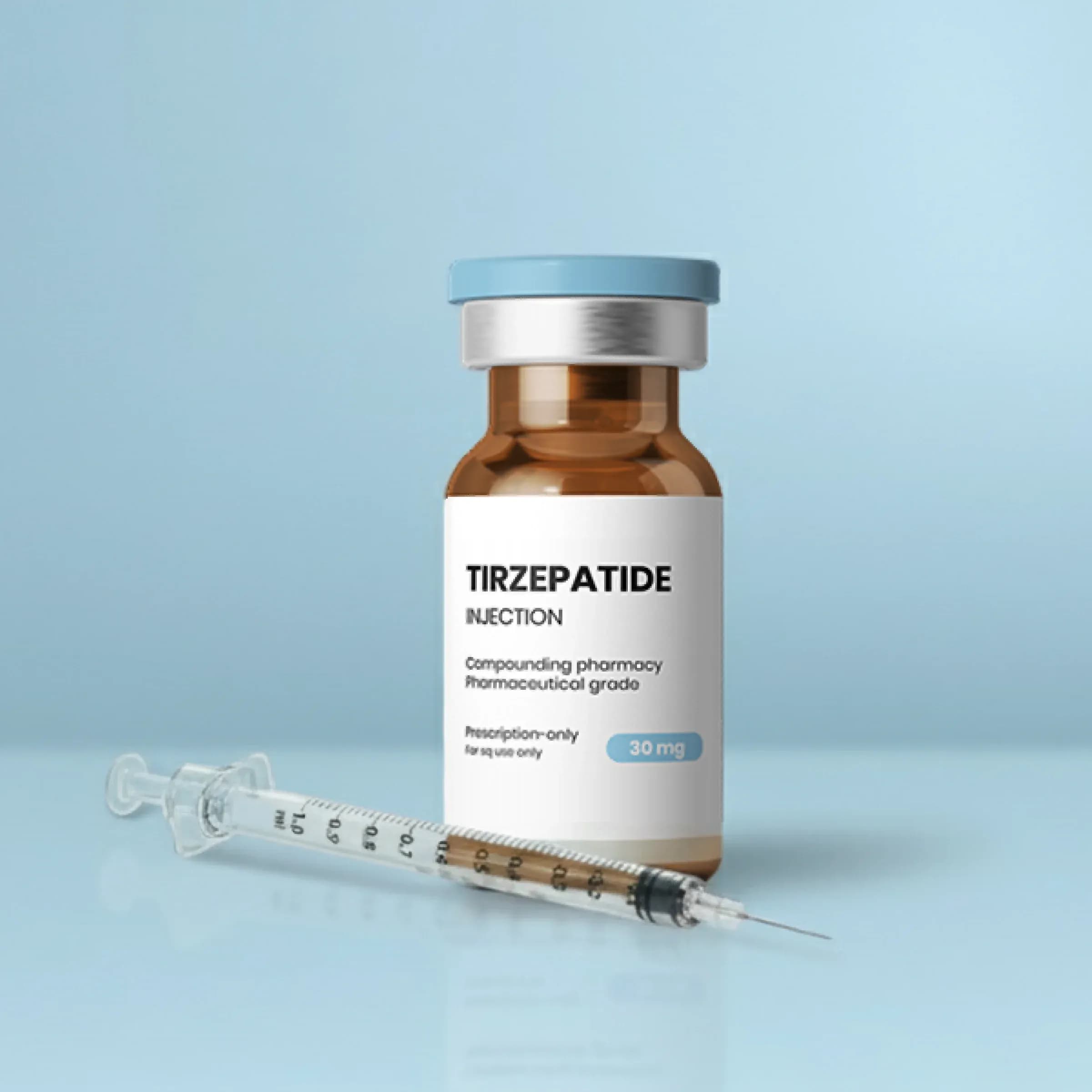
Telehealth weight loss is medical weight-loss care delivered online. You answer health questions, a licensed clinician reviews them by message, phone or video, and if a prescription is right for you, a pharmacy ships the medicine to your home. For tirzepatide, that medicine is either FDA-approved Zepbound® or Mounjaro® from Eli Lilly, or compounded tirzepatide, which a licensed pharmacy prepares for one patient's prescription and which is not FDA-approved.
Two rules shape every program:
- Care happens where you are. Telehealth counts as care given at the patient's location, so the clinician typically needs a license in your state, with a few state exceptions (CCHP).
- A questionnaire alone is usually not enough. Most states consider an online questionnaire by itself inadequate to start the patient relationship a prescription needs. Some require an exam first, and some allow that exam by video (CCHP).
That's why the same program may ask for a video visit in one state and not in another. For every route to tirzepatide, brand and compounded, see how to get tirzepatide.
Checklist · November 2026
12 checks before you choose a tirzepatide provider
They work for any online program or local clinic, MaxLife included. Most take a minute or two, with no account or payment.
Is it legitimate?
Before you payA clinician licensed in your state
Your state's medical or nursing board license search.
A real medical review first
Health history, other medicines and past reactions, with room for your questions.
A pharmacy you can name
Your state board of pharmacy database, linked on the FDA's BeSafeRx page.
The medicine described honestly
Brand or compounded, never “same as Zepbound” or “for research use”.
A LegitScript seal you can verify
The company's web address in LegitScript's Verify Website search.
A track record you have read
The FDA warning letter database, plus the newest reviews.
What will you really pay?
Before you payOne all-in monthly price
Visits, medicine, supplies, shipping and labs, plus any membership fee.
The price at higher doses
What month 4 costs once your dose has gone up.
Prepay, cancelling and refunds
Months paid up front, notice to cancel, what is refundable.
Who helps after you start?
After you startA clinician between refills
How to reach one about side effects, by message, phone or video.
Refills and dose changes
Who approves each refill and decides when your dose goes up.
Clear directions for your vial
Your dose as the amount to draw, and when to discard the vial.
Sources: CCHP telehealth licensing and online prescribing summaries; FDA BeSafeRx and its page on unapproved GLP-1 drugs; LegitScript healthcare certification standards; the Zepbound® label on DailyMed. All checked November 2026.
Is the Program Legitimate? Checks 1 to 6
These six checks take about 10 minutes and need no account or payment.
1. A clinician licensed in the state where you are
Ask who reviews your intake: a physician (MD or DO), a nurse practitioner or a physician assistant. Then look the license up on your state's medical board or board of nursing website; each has a free search. Nurse licenses, including nurse practitioners, are also in the national Nursys database, and a physician assistant's national certification can be checked with NCCPA. Which clinicians may prescribe it, from OB-GYNs to nurse practitioners, is explained in who can prescribe tirzepatide.
2. A real medical review before any prescription
A legitimate program asks about your health history, your other medicines and past reactions before anything is prescribed, and lets you ask questions. It has to: the Zepbound label lists people who must not take tirzepatide, such as anyone with a personal or family history of medullary thyroid carcinoma or MEN 2 (Zepbound label). The FDA warns against any company that does not require "a screening and prescription by a licensed doctor" (FDA).
Already taking tirzepatide? Ask whether the program will consider your current dose. People who switch to MaxLife from another program most often want exactly that, to keep their dose instead of starting over. Expect to send proof of your current prescription and the date of your last injection; our guide to switching to tirzepatide covers the steps.
3. A pharmacy you can name and look up
Ask which pharmacy will fill your prescription before you pay. Compounded tirzepatide for one patient comes from a state-licensed 503A pharmacy. Look it up in your state board of pharmacy's database, which the FDA links state by state on its BeSafeRx page. The FDA's advice is plain: "If your online pharmacy is not listed, you should not use that pharmacy." A pharmacy in another state usually needs a license in yours too. Our 503A vs 503B guide walks through the check step by step.
4. The medicine described honestly
You should know whether you would get brand Zepbound® or Mounjaro®, or compounded tirzepatide. Compounded tirzepatide is not FDA-approved, is not a generic, and is not "the same as" an approved drug. On March 3, 2026, the FDA sent warning letters to 30 telehealth companies, mostly for claims implying sameness with approved products and for branding that made the telehealth company look like the maker (FDA).
Walk away from tirzepatide sold "for research purposes" or "not for human consumption": the FDA says these products are sold illegally and are of unknown quality (FDA). The FDA's full list of red flags is in is compounded tirzepatide safe?
5. A LegitScript certification you can verify
LegitScript certifies healthcare websites, and Google, Microsoft and Meta rely on its certification to decide who may advertise prescription care (LegitScript). A telehealth company has to meet nine standards to earn it, including licenses where its patients are, prescriptions only after care by a licensed professional, accurate marketing, and disclosure of its legal and regulatory history (LegitScript).
A seal on a website is only a picture, so check it: enter the company's web address in the "Verify Website" search on LegitScript's own site. Keep in mind that certification reviews the business, not the quality of a medicine.
6. Its track record: FDA warning letters and reviews
Search the company's name in the FDA's warning letter database. A warning letter tells a company the FDA found a violation, often in its marketing. Read what it was about and how the company answered; the FDA itself notes that later contact with a company "may have changed the regulatory status" of the issues.
MaxLife has one, and we state it the same way: FDA Warning Letter 721453 of February 20, 2026 concerned statements on MaxLife's old website. MaxLife responded on February 24, 2026, revised its website and publishes its response.
Reviews help too, if you read them for what they are: they show how customers felt about service and delivery, not whether a medicine is safe. Read the newest ones, not only the average.
What Will You Really Pay? Checks 7 to 9
Get each answer in writing, from the program's own pricing page or terms.
7. One all-in monthly price
Ask what the price includes: the clinician's review and follow-up, the medicine, syringes and other supplies, shipping and any lab tests. Add any membership or program fee before you compare two programs. A price "per 4 weeks" means 13 payments a year, not 12.
8. The price at higher doses
Tirzepatide starts at a low dose and goes up in steps, each after at least 4 weeks on the current dose, according to the Zepbound label. So the dose you pay for in month 4 is often higher than in month 1. Ask what you will pay at each dose. Most compounded programs in our November 2026 price index charge one price for all doses, while brand Zepbound® costs more as the dose goes up.
9. Months paid up front, cancelling and refunds
A low headline price often needs several months paid at once: 12 of the 16 programs whose terms we checked for the price index require that for the price they advertise. Ask what you pay if you stop after one month, how much notice cancelling takes, and whether medicine already prepared for you can be refunded. Named prices and their fine print are in our guide to the cheapest tirzepatide online.
Who Helps After You Start? Checks 10 to 12
The first prescription starts treatment; it doesn't finish it. Good ongoing medical support is what separates a program from a checkout page.
10. A clinician you can reach between refills
The FDA lists it as a red flag when a company "does not have a licensed doctor available to answer questions after you receive your medication" (FDA). Ask how you reach a clinician, by message, phone or video, and what happens if side effects start. The Zepbound label shows why it matters (Zepbound label):
- Stomach side effects such as nausea, vomiting and diarrhea can dehydrate you, and the label asks prescribers to check kidney function when that happens.
- Insulin or a sulfonylurea taken with tirzepatide raises the risk of low blood sugar, and the label says those doses may need to come down.
- Birth control pills may work less well. The label advises switching to a non-oral method, or adding a barrier method, for 4 weeks after you start and for 4 weeks after each dose increase.
- Surgery or a procedure with anesthesia: the label asks you to tell your providers beforehand that you take it.
- Severe stomach pain that won't go away, sometimes spreading to the back, is a warning sign of pancreatitis that the label tells prescribers to watch for.
11. A clear process for refills and dose changes
Ask how each refill is approved and who decides when your dose goes up or stays the same. The questions MaxLife members ask most after they start are just these practical ones: when the next refill ships, whether to move up a dose, and how much to draw for their dose. A program worth choosing has a clear answer to each before you sign up.
12. Clear directions for your vial
Compounded tirzepatide usually comes in a multi-dose vial, and its strength can differ from one pharmacy to the next, so the amount you draw depends on the vial you have. In an August 12, 2026 letter to state medical boards, the FDA said compounded vials often have different concentrations than approved products, that the volumes are not interchangeable, and that patients need clear instructions on when to throw a vial away. The FDA advises discarding a multi-dose vial 28 days after first use. Your written directions should show your dose as the amount to draw from your vial; our dosage calculator shows how strength and amount relate.
When Does a Local Clinic or Your Own Doctor Make More Sense?
An online program suits many adults who pay cash and want the medicine delivered. A local clinic or your own doctor is often the better choice in these situations:
| Your situation | Why in-person care or your own doctor may fit better |
|---|---|
| Your insurance covers Zepbound® or Mounjaro® | A covered brand can cost less than a cash price. Coverage is not common: 18% of employers with 200 or more workers covered GLP-1s for weight loss in 2026 (KFF). |
| You have Medicare Part D | If you qualify, the Medicare GLP-1 Bridge charges a $50 copay per fill for certain brands, including the Zepbound® KwikPen®, through December 31, 2027 (Medicare.gov). See the Medicare GLP-1 Bridge explained. |
| You take insulin or a sulfonylurea | Low blood sugar is a risk, and the label says to monitor your blood sugar and possibly lower those doses. |
| You have diabetic retinopathy or severe gastroparesis | The label asks for retinopathy monitoring and does not recommend Zepbound® in severe gastroparesis. |
| You take warfarin or another pill that needs exact blood levels | Tirzepatide slows stomach emptying, which can change how pills are absorbed, and the label asks for monitoring. |
| You are pregnant or planning a pregnancy | The label says weight loss is not recommended in pregnancy and to stop when a pregnancy is recognized. |
| You are under 18 | Zepbound's safety and effectiveness have not been established in children. |
| You want face-to-face visits, measurements or lab work in one place | A local clinic sees you in person. |
Label facts in this table come from the Zepbound label, revised November 2026. Coverage details are in weight loss drugs covered by insurance.
A local clinic needs the same 12 checks. Some clinics and med spas sell compounded tirzepatide made by an outside pharmacy, so ask who prescribes it, which pharmacy fills it and what the monthly price includes. Whichever you choose, keep your regular doctor in the loop, especially before any surgery.
How Does MaxLife Answer These 12 Checks?
MaxLife is a telehealth patient management platform, not a pharmacy or a drug maker. Here is how it answers the checklist:
- Clinician and review: a licensed provider from our network reviews your intake, health history and records, may text or call with questions, and you can ask for a video visit. Completing the intake doesn't guarantee a prescription; the provider decides whether treatment is right for you.
- Pharmacy: licensed partner pharmacies prepare and ship your medicine, and your label names the one that filled it. Our pharmacy partners page names them.
- Medicine: compounded tirzepatide only. It is not FDA-approved, which means the FDA hasn't reviewed it for safety, effectiveness or quality, and it is not Zepbound® or Mounjaro®.
- Track record: LegitScript certified, rated 4.7 on Trustpilot from more than 620 reviews and A- by the Better Business Bureau, with the FDA letter and our response stated above. Our is MaxLife legit? page links every one of them.
- Price: $120 a month, flat and all-inclusive: a free online consultation, the medicine if prescribed, supplies, free expedited shipping and free ongoing medical support. The same price at every dose, with no membership fee and no hidden fees.
- Terms: cancel anytime with notice before your next billing period. Please keep in mind that medication costs aren't refundable, because each prescription is prepared just for you.
- After you start: before each refill you answer a short check-in (weight, current dose, appetite, side effects and the date of your last injection), and the provider approves each refill and dose. Switching? Send proof of your current prescription and the date of your last injection so the provider can consider your current dose.
- Directions: each box comes with syringes, alcohol swabs and printed instructions, and our pharmacy medication instructions page has guides from the partner pharmacies that publish them.
When another option may suit you better: if your insurance covers Zepbound® or Mounjaro®, your copay may well be lower than our price, and MaxLife offers compounded medicine only, not brand-name tirzepatide. To compare programs by name, see our best tirzepatide providers guide.
How we made this page: we researched it from the sources listed below. The MaxLife operations team reviews every page before it goes live, and a licensed clinician also reviews our medical articles.
Frequently Asked Questions
Compounded Tirzepatide: $120/mo Flat, All-Inclusive
MaxLife compounded tirzepatide: $120 a month, flat. All-inclusive, no membership fee, the same price at every dose. A licensed provider decides.
Check Your EligibilityThis article is for informational purposes only and is not a substitute for professional medical advice, diagnosis, or treatment. Individual results vary. Pricing, insurance coverage, and compounding regulations described here are subject to change; verify current details with your insurance provider, the manufacturer, or your prescriber before making treatment decisions. Compounded medications are not FDA-approved.
Sources
- Zepbound (tirzepatide) prescribing information, DailyMed (revised November 2026; checked November 24, 2026)
- Center for Connected Health Policy: Cross-State Licensing (checked November 24, 2026)
- Center for Connected Health Policy: Online Prescribing (checked November 24, 2026)
- FDA: FDA's Concerns with Unapproved GLP-1 Drugs Used for Weight Loss (content current as of October 1, 2026)
- FDA BeSafeRx: Locate a State-Licensed Online Pharmacy
- FDA press release, March 3, 2026: FDA Warns 30 Telehealth Companies Against Illegal Marketing of Compounded GLP-1s
- FDA: Warning Letters database
- FDA letter to the Federation of State Medical Boards on compounded GLP-1 vials, August 12, 2026
- FDA Warning Letter 721453, MaxLife Technologies Inc., February 20, 2026
- LegitScript: Certification and Verify Website search (checked November 24, 2026)
- LegitScript: Healthcare Certification standards (checked November 24, 2026)
- NCSBN: License Verification with Nursys
- NCCPA: Verify PA Board Certification
- KFF: 2026 Employer Health Benefits Survey
- Medicare.gov: Weight loss drugs and the Medicare GLP-1 Bridge (checked November 24, 2026)
How to Get Tirzepatide Legally and Safely
November 13, 202610 min
Switching From Semaglutide to Tirzepatide, or Zepbound to Compounded
November 14, 202611 min
Tirzepatide Cost: Price Per Month With and Without Insurance
August 20, 202610 min
Medicare GLP-1 Bridge Explained: Who Qualifies and How to Use It
November 20, 20269 min