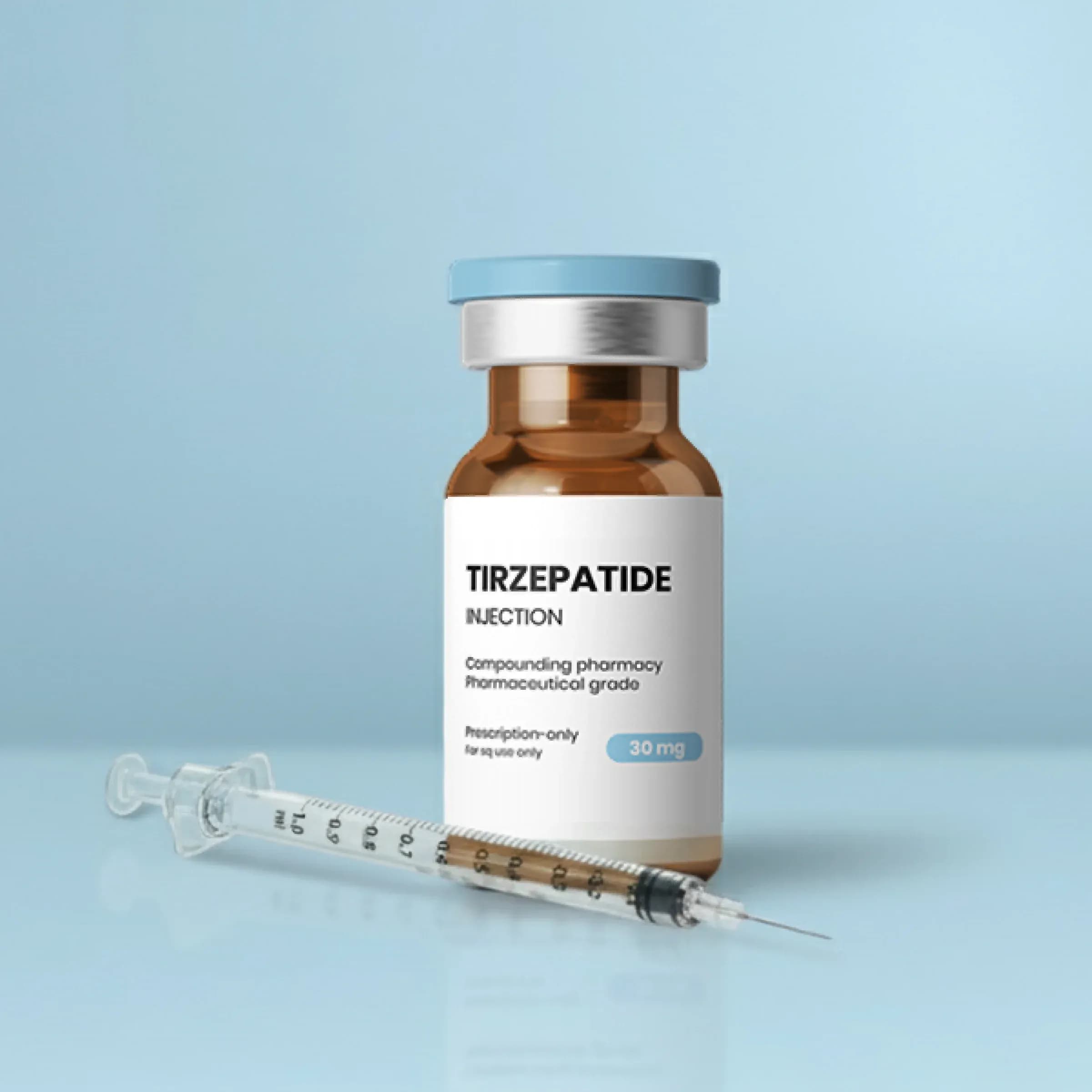
Which Supplements Can You Take With Tirzepatide? Magnesium, Probiotics, Fiber and Electrolytes
Pricing is accurate as of November 2026 and subject to change.
Key Takeaways
- The labels measured a swallowed pill's absorption: after the first tirzepatide dose its peak level was 55% lower and came an hour later, with no meaningful change by week 6.
- The Institute of Medicine assumed every form of magnesium can cause diarrhea, so the 350 mg daily limit from supplements applies to glycinate too.
- Creatine raises creatinine, a kidney blood marker, by about 0.14 mg/dL without kidney harm in trials: tell whoever orders your blood tests.
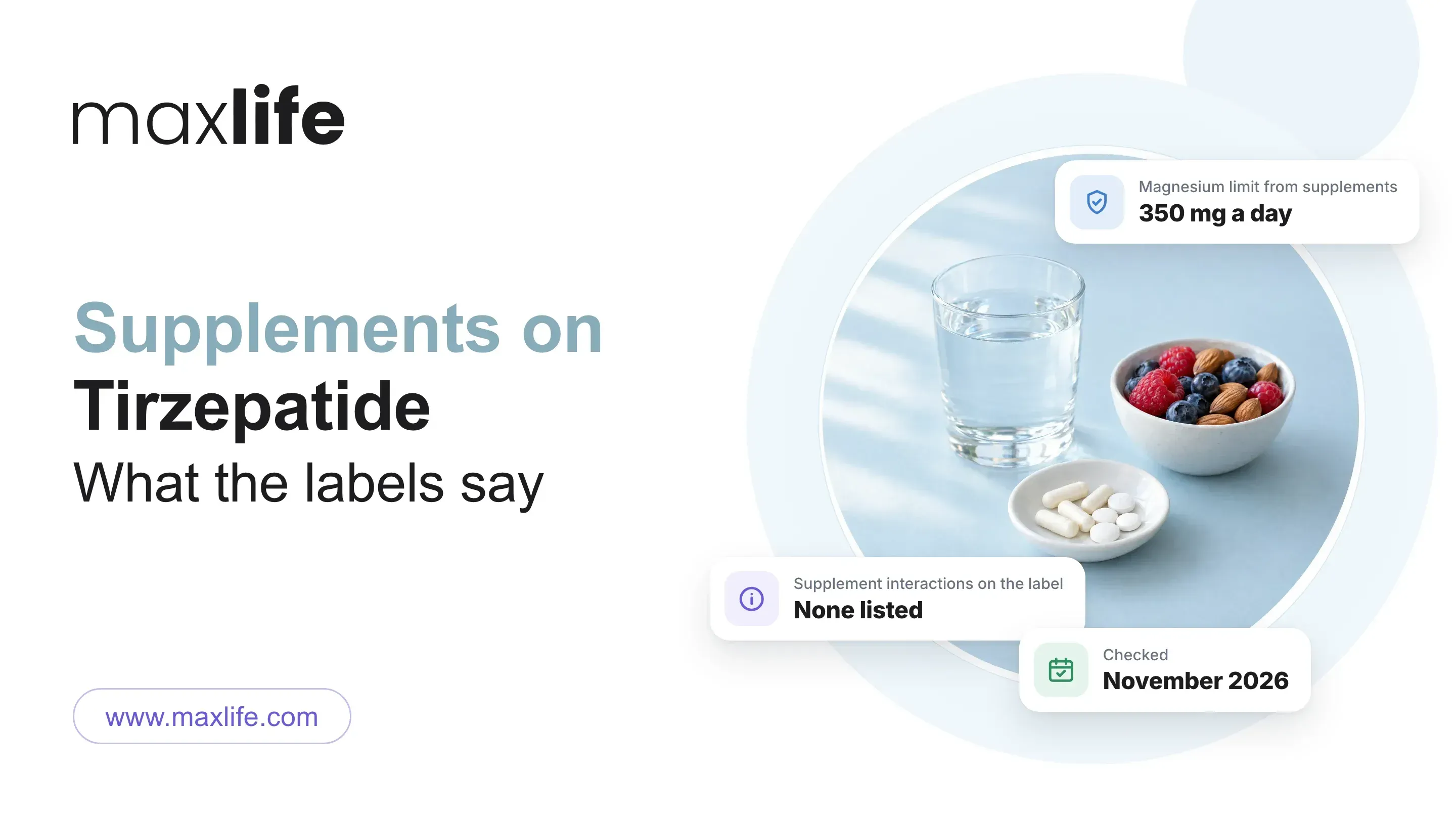
Most everyday supplements can be taken with tirzepatide (Zepbound®, Mounjaro®), but none has been tested together with it. The FDA labels for both brands, updated in November 2026, name no vitamin, mineral or supplement that tirzepatide interacts with. They do raise three points that matter when you add one: tirzepatide slows how fast your stomach empties, its stomach side effects can stack with a supplement's, and vomiting or diarrhea can dehydrate you, which the labels link to kidney injury. No supplement has been shown to add weight loss on tirzepatide. Tell your provider and pharmacist everything you take.
Below, we go through magnesium, probiotics, fiber, electrolytes, multivitamins (with vitamin D, B12 and iron) and creatine, one at a time. Pills and powders sold as "GLP-1 boosters" are a different question, answered in our guide to GLP-1 supplements.
Can You Take Supplements With Tirzepatide?
Yes, in most cases, as long as your prescriber and pharmacist know what you take. The Zepbound Medication Guide asks you to "tell your healthcare provider about all the medicines you take, including prescription and over-the-counter medicines, vitamins, and herbal supplements," and to keep a list to show your provider and pharmacist. The Mounjaro label says the same.
The drug interaction section of both labels lists only two groups:
- Insulin and sulfonylureas. Tirzepatide lowers blood sugar, so the dose of these diabetes medicines may need to come down.
- Medicines you swallow. Tirzepatide slows stomach emptying, which "has the potential to impact the absorption" of oral medicines. Prescribers watch pills that need a steady blood level, such as the blood thinner warfarin, and the labels give specific advice for birth control pills, explained in our post on tirzepatide and birth control.
Tirzepatide is also handled differently from most pills. The body breaks it down like a protein, and lab studies found it has little effect on the liver enzymes behind many drug interactions, according to the labels' pharmacology section.
What the labels don't cover matters too. No study has tested magnesium, probiotics, fiber, electrolyte mixes or creatine together with tirzepatide: we found no randomized trial of any of these combinations when we searched PubMed in November 2026. Supplements themselves are not reviewed by the FDA for safety before they are sold, as the NIH's National Center for Complementary and Integrative Health (NCCIH) explains, so "natural" doesn't mean checked.
Three label facts shape every answer below:
- Slower stomach emptying. It is strongest after the first dose and fades over time.
- Stomach side effects. In the Zepbound weight-loss trials, nausea affected 25% to 29% of people (8% on placebo), diarrhea 19% to 23% (8%), constipation 11% to 17% (5%) and vomiting 8% to 13% (2%), mostly while the dose was going up. A supplement that upsets your stomach adds to these. Our tirzepatide side effects guide has the full list.
- Fluids and kidneys. The labels report kidney injury, mostly in people who became dehydrated from nausea, vomiting or diarrhea, and ask you to drink fluids.
Labels and NIH sources · November 2026
Everyday supplements on tirzepatide: what to watch
None of these has been tested together with tirzepatide. Each line comes from the Zepbound® and Mounjaro® labels, MedlinePlus, the NIH, the Institute of Medicine or studies published in 2025 and 2026.
Magnesium
Too much from supplements causes diarrhea, already a common tirzepatide side effect. Adult limit from supplements and medicines: 350 mg a day.
Ask first if: You have kidney disease, ongoing vomiting or diarrhea, or take antibiotics such as ciprofloxacin.
Fiber, such as psyllium
Fullness and bloating on top of a slower stomach. Take each dose with at least 8 ounces of liquid and add fiber slowly.
Ask first if: You have had a bowel blockage or trouble swallowing, or have severe gastroparesis.
Probiotics
A long record of apparently safe use in healthy people, but little safety data, and some products hold microbes not on the label.
Ask first if: You have a serious illness or a weakened immune system.
Electrolyte mixes
Fluids matter most when nausea, vomiting or diarrhea hits. Many mixes add potassium or magnesium.
Ask first if: You have kidney disease or take an ACE inhibitor, an ARB or spironolactone.
Multivitamin, vitamin D
Can cover small gaps from eating less. It does not replace a blood test when you are at higher risk.
Ask first if: You had weight-loss surgery, have a digestive condition or long-lasting nausea and vomiting.
Vitamin B12
Metformin can lower B12. Some compounded vials list an added B vitamin on the pharmacy label.
Ask first if: You take metformin: its label asks for a B12 test every 2 to 3 years.
Iron
Constipation, diarrhea and nausea are common, the same effects tirzepatide can cause. Space it 2 hours from calcium and antacids.
Ask first if: A blood test has not shown that you need it.
Creatine
Not tested with tirzepatide. It raises creatinine, a kidney blood marker, without kidney harm in trials.
Ask first if: You have kidney disease or kidney blood tests coming up.
Supplements sold for blood sugar, such as berberine
Could add to the blood sugar lowering of tirzepatide and may interact with medicines.
Ask first if: You take insulin or a sulfonylurea.
Tell your provider and pharmacist about every supplement and its dose. The label facts come from studies of Zepbound and Mounjaro; compounded tirzepatide is not FDA-approved and has not been studied with supplements.
Sources: Zepbound and Mounjaro labels on DailyMed, November 16, 2026 versions; Institute of Medicine, Dietary Reference Intakes, 1997; MedlinePlus pages on psyllium, ciprofloxacin, iron, potassium and dehydration; NCCIH on probiotics and berberine; metformin label; de Souza Almeida and colleagues, 2026; Simancas-Racines and colleagues, 2026. Checked November 24, 2026.
Do You Need to Time Supplements Around Your Tirzepatide Shot?
Usually not. Tirzepatide is injected, so a supplement in your stomach can't block it. The timing question runs the other way: tirzepatide slows how fast pills leave your stomach. The Zepbound label measured this with acetaminophen (Tylenol®). After the first dose, its peak level was 55% lower and came 1 hour later, but by week 6 there was no meaningful change, and the total amount absorbed stayed the same.
Where timing does matter is between supplements and your other pills:
- Magnesium, calcium, iron and zinc can block some antibiotics. MedlinePlus says to take them at least 6 hours before or 2 hours after ciprofloxacin, for example.
- Iron should be taken at least 2 hours apart from milk, calcium and antacids (MedlinePlus).
- Psyllium fiber should not be taken within 3 hours of digoxin, aspirin or nitrofurantoin (MedlinePlus).
Your pharmacist can check the spacing for your exact list. If you take a medicine that needs a steady blood level, ask your prescriber whether it should be checked after you start tirzepatide or move up a dose.
Is It Safe to Take Magnesium With Tirzepatide?
For most healthy adults, yes, within the limit. The Institute of Medicine set the upper limit for magnesium from supplements and medicines at 350 mg a day for adults; magnesium from food doesn't count toward it. The first sign of too much is diarrhea, which is already one of tirzepatide's most common side effects.
You may read that some forms, such as magnesium glycinate, won't loosen your stools. The Institute of Medicine noted that it isn't known whether all magnesium salts behave alike and assumed that all of them can cause diarrhea, so stay within the limit whichever form you buy.
Your kidneys matter here. Too much magnesium builds up mainly in people whose kidneys don't work well, and the tirzepatide labels warn about kidney injury from dehydration. Ask your provider before taking magnesium if you have kidney disease, or if you have vomiting or diarrhea that won't stop. Some people take magnesium for constipation; our guide to GLP-1 nausea and constipation relief covers which laxative types to ask about. No study has shown that magnesium adds weight loss on tirzepatide.
Can You Take Probiotics With Tirzepatide?
Yes, for most people. The NCCIH says probiotics have "an extensive history of apparently safe use, particularly in healthy people," although few studies have looked at their safety in detail. The risk is higher for people with a serious illness or a weakened immune system, and some products have been found to contain microbes that aren't on the label.
No study has tested probiotics with tirzepatide. For constipation in adults, a 2014 review of 14 studies found some evidence of benefit, especially for Bifidobacterium lactis, according to the NCCIH. Their effect on weight is small, about half a kilogram in pooled trials, as our GLP-1 supplements guide explains.
Should You Take a Fiber Supplement on Tirzepatide?
Food comes first. Adults need 22 to 34 grams of fiber a day, depending on age and sex, and the NIDDK advises adding it a little at a time and drinking enough liquids. On tirzepatide, smaller meals often mean less fiber; our GLP-1 diet guide lists easy food sources.
If you use a fiber supplement such as psyllium, MedlinePlus says to:
- drink at least 8 ounces (240 mL) of liquid with each dose
- not use it for constipation for longer than 1 week unless your doctor says so
- tell your doctor first if you have had a bowel blockage, trouble swallowing, kidney disease or diabetes
- call your doctor if you get stomach pain, nausea, vomiting or trouble swallowing
Going slowly fits tirzepatide well, since it already slows your stomach and makes you feel full sooner. If fiber leaves you bloated or more nauseated, tell your provider.
Do You Need Electrolytes on Tirzepatide?
Most people need fluids more than electrolyte products. The Zepbound and Mounjaro Medication Guides say "it is important for you to drink fluids to help reduce your chance of dehydration," because diarrhea, nausea and vomiting can cause a loss of fluids that may lead to kidney problems. In the Zepbound trials, low blood pressure was also more common on the medicine (1.6% vs 0.1% on placebo) and sometimes came with stomach side effects and dehydration.
Signs of mild dehydration include thirst, a dry mouth, peeing less, darker urine, headache and muscle cramps, according to MedlinePlus, which suggests sipping water or sports drinks that contain electrolytes. Call your provider if nausea, vomiting or diarrhea doesn't go away, and get emergency care for fainting or confusion.
Read the label of electrolyte powders and tablets: many add potassium or magnesium. Extra potassium can build up if your kidneys don't work well or if you take certain blood pressure medicines, such as ACE inhibitors, ARBs or spironolactone (MedlinePlus). If either applies to you, ask before using them every day.
Should You Take a Multivitamin, Vitamin D or B12 on Tirzepatide?
A standard multivitamin is a fair question for your provider, but a blood test tells you more than a guess. Here is what the research shows as of November 2026:
- In the trials, deficiencies weren't more common. A 2026 analysis of the SURMOUNT trials (4,726 people on Zepbound or placebo) found vitamin deficiency reported in 0.99% of people on tirzepatide and 1.07% on placebo. Vitamin and mineral levels weren't measured routinely, and the authors, several of them Lilly employees, said that limited what could be concluded.
- Many people start with gaps. A 2026 analysis of national survey data found that adults who qualify for GLP-1 medicines were somewhat more likely to fall short on magnesium, vitamin D, potassium, fiber and vitamins A, C, E and K, before any treatment.
- Some people need closer checks. A 2026 review found the clearest signals for iron, vitamin B12, vitamin D, calcium, magnesium and zinc, mostly mild, and suggested targeted blood tests for people with past weight-loss surgery, digestive conditions, a poor diet, older age or long-lasting nausea and vomiting. A 2025 joint advisory from four obesity and nutrition societies also lists preventing nutrient shortfalls as a priority on GLP-1 medicines.
Two more notes:
- Vitamin B12 if you take metformin. Many people on Mounjaro also take metformin. The metformin label says it may lower B12 (about 7% of people in 29-week trials dropped below normal) and asks for a B12 test every 2 to 3 years. Some compounded tirzepatide products list an added B vitamin on the pharmacy label, so read your vial's label and tell your provider before adding the same vitamin.
- Iron only after a blood test. Iron supplements commonly cause constipation or diarrhea, and nausea at higher doses (MedlinePlus), the same effects tirzepatide can cause.
For biotin and "hair, skin and nails" products, see our post on tirzepatide and hair loss: biotin can throw off some blood tests.
Is Creatine Safe With Tirzepatide?
Creatine is one of the most studied supplements, but it hasn't been tested with tirzepatide. A 2026 paper in Clinical Nutrition proposed creatine to help protect muscle during GLP-1 weight loss and noted that "no randomized clinical trial has directly evaluated" it during that treatment.
One thing to know: creatine raises creatinine, the blood marker most labs use to estimate kidney function. A 2026 analysis of 26 trials found creatinine rose by about 0.14 mg/dL on creatine, which makes kidney function look lower on the usual estimate, while a direct measure showed no change; the authors put it down to how creatine is processed, not kidney damage. Because the tirzepatide labels ask prescribers to check kidney function in people with vomiting or diarrhea, tell whoever orders your blood tests that you take creatine.
Protein and strength training remain the basics for keeping muscle: see our guides to protein shakes on a GLP-1 and exercise on a GLP-1.
Can Supplements Boost Weight Loss on Tirzepatide?
No. No supplement has been shown to add weight loss on top of tirzepatide. Products sold as "GLP-1 boosters" don't contain a GLP-1 medicine. Berberine, sometimes called "nature's Ozempic," is being studied for diabetes and may interact with medicines, according to the NCCIH; anything sold to lower blood sugar deserves a question first if you also take insulin or a sulfonylurea. Our guide to GLP-1 supplements covers boosters and berberine in detail.
If hunger comes back or your weight stalls, the answer is a conversation about your dose and habits, not an extra pill. See why you might not be losing weight on tirzepatide, or the semaglutide version if you take Ozempic® or Wegovy®.
When Should You Ask Before Adding a Supplement?
Ask your provider or pharmacist first if any of these apply to you:
- You have kidney disease, or you have vomiting or diarrhea that won't stop.
- You take insulin or a sulfonylurea, and the supplement is sold for blood sugar.
- You take a medicine that needs a steady blood level, such as warfarin, or a blood pressure medicine that can raise potassium.
- You have had a bowel blockage or trouble swallowing, or you have severe gastroparesis (the Zepbound label doesn't recommend it for severe gastroparesis).
- You are pregnant, planning a pregnancy or breastfeeding.
Bring your list, with doses, to every visit and refill. That is what the Medication Guide asks for, and it lets your provider and pharmacist catch a problem before it starts.
How MaxLife Fits
Members often ask our care team about supplements, diet and exercise alongside their medicine. MaxLife doesn't sell supplements. A licensed provider from our network reviews your online intake, which takes about 2 minutes, and decides whether compounded tirzepatide is right for you. Before each refill, a short check-in asks about your weight, current dose, appetite and side effects. If a supplement seems to upset your stomach, say so there; the provider reviews your answers before approving each refill and dose.
MaxLife's compounded tirzepatide is $120 a month, flat: all-inclusive, the same price at every dose, with no membership fee. Compounded tirzepatide is prepared by a licensed pharmacy for one patient's prescription and is not FDA-approved, which means the FDA hasn't reviewed it for safety, effectiveness or quality. It is not Zepbound or Mounjaro, and it hasn't been studied with supplements either, so the label facts above are the reference and your provider decides what applies to you. If your insurance covers a brand, it may cost you less. MaxLife is a patient management platform, not a pharmacy or a drug maker; read more in is compounded tirzepatide safe?
How we made this page: we researched it from the sources listed below. The MaxLife operations team reviews every page before it goes live, and a licensed clinician also reviews our medical articles.
Frequently Asked Questions
Compounded Tirzepatide: $120/mo Flat, All-Inclusive
MaxLife compounded tirzepatide: $120 a month, flat. All-inclusive, no membership fee, the same price at every dose. A licensed provider decides.
Check Your EligibilityThis article is for informational purposes only and is not a substitute for professional medical advice, diagnosis, or treatment. Individual results vary. Pricing, insurance coverage, and compounding regulations described here are subject to change; verify current details with your insurance provider, the manufacturer, or your prescriber before making treatment decisions. Compounded medications are not FDA-approved.
Why trust our experts

April Foster, DO MPH
Reviewer
Board Certified Family Medicine Physician licensed nationwide providing collaborative oversight to NPs, PAs, and RN. Also specializing in telemedicine services nationwide.
Sources
- Zepbound (tirzepatide) prescribing information and Medication Guide (DailyMed, November 2026)
- Mounjaro (tirzepatide) prescribing information and Medication Guide (DailyMed, November 2026)
- Metformin hydrochloride tablets prescribing information (DailyMed)
- Institute of Medicine: Dietary Reference Intakes for Calcium, Phosphorus, Magnesium, Vitamin D, and Fluoride, magnesium chapter, 1997
- MedlinePlus: Psyllium
- MedlinePlus: Ciprofloxacin
- MedlinePlus: Taking iron supplements
- MedlinePlus: Dehydration
- MedlinePlus: High potassium level
- NCCIH: Probiotics, usefulness and safety
- NCCIH: Using dietary supplements wisely
- NCCIH: Berberine and weight loss
- NIDDK: Eating, diet and nutrition for constipation
- NIDDK: Treatment for constipation
- Almandoz JP et al. Nutritional status with tirzepatide in obesity: post hoc analysis of SURMOUNT-1 to 4. Obesity Pillars, 2026
- Babazadeh D et al. Diet quality and micronutrient intake among US adults eligible for GLP-1 receptor agonist medications. Journal of Nutrition, 2026
- Simancas-Racines D et al. Micronutrient risk with GLP-1 receptor and dual incretin agonists in obesity. Obesity Pillars, 2026
- Mozaffarian D et al. Nutritional priorities to support GLP-1 therapy for obesity: a joint advisory. American Journal of Clinical Nutrition, 2025
- Ostojic SM, Galyean S. Creatine for glucagon-like peptide-1-associated muscle loss. Clinical Nutrition, 2026
- de Souza Almeida A et al. Impact of creatine supplementation on kidney health: a systematic review and meta-analysis. International Urology and Nephrology, 2026
Can You Increase GLP-1 Naturally? Do GLP-1 Supplements Work?
November 15, 20269 min
GLP-1 Constipation and Nausea: What Helps and How Long It Lasts
November 15, 20269 min

Protein Shakes on a GLP-1: Do They Cause Weight Gain, and How Much Protein Do You Need?
November 15, 20269 min
Tirzepatide Side Effects: What's Common, What's Serious, What Helps
November 12, 202613 min